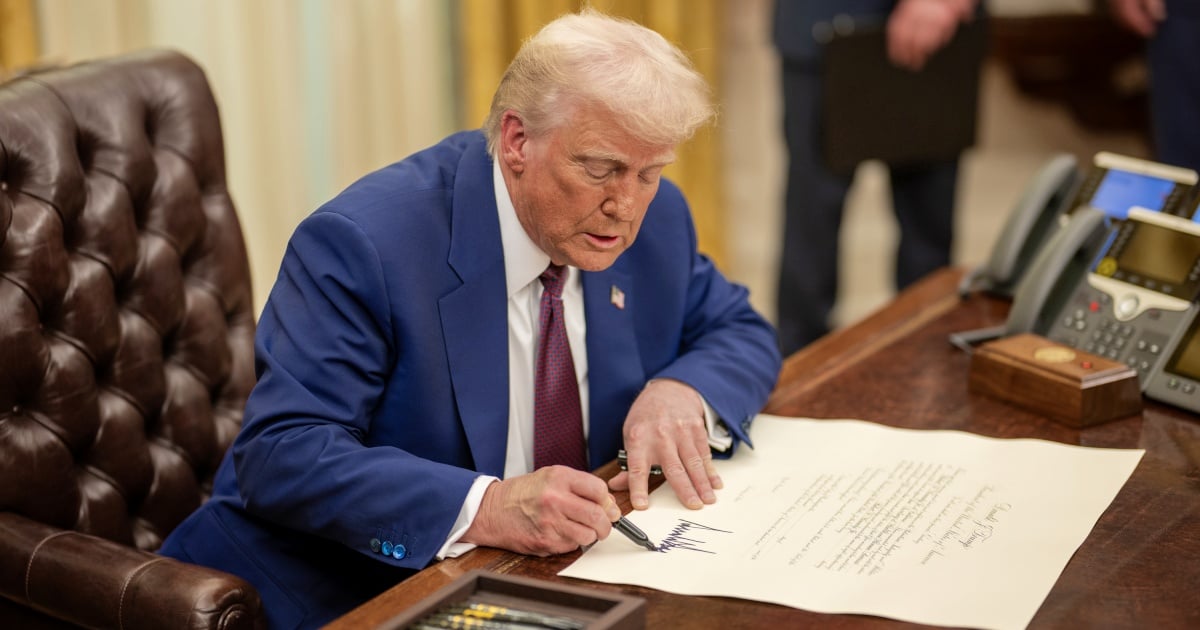
In a bold shift in foreign policy, former U.S. President Donald Trump signed an executive order this past Friday, establishing the designation of "State Sponsor of Illegal Detentions." This initiative aims to penalize governments and entities that unjustly detain American citizens abroad, viewing it as a dangerous geopolitical coercion tactic.
Initially reported by CBS News and verified by various official sources, the executive order grants the Department of State authority to label countries or entities as "sponsors of arbitrary detentions" if they use the imprisonment of Americans as a political strategy. "The order enables the government to apply punitive tools akin to those used against countries designated as state sponsors of terrorism," a senior official explained to CNN. "This broadens the scope against whom we can employ these tools. You don't need to be funding Hamas, Hezbollah, or al-Qaeda; you might simply be exploiting our citizens unjustly," they added.
Travel Restrictions and Sanctions
Being placed on this new blacklist could lead to various sanctions, such as:
- Visa restrictions for citizens from the identified countries.
- Export controls and trade limitations.
- Suspension of economic aid and additional tariffs.
- Travel bans or limitations for American citizens, with potential geographical restrictions on passport usage.
“The aim is to decrease the number of Americans opting to travel to these nations and to encourage their leaders to promptly release those currently detained,” a government official stated. Presently, the State Department already prohibits travel to North Korea with a U.S. passport without special authorization. The Trump administration is considering extending these restrictions to other countries with a history of unjust detention.
Targeted Countries and Past Incidents
Although the U.S. government does not routinely disclose information about citizens detained abroad, the Foley Foundation, an organization dedicated to human rights advocacy, noted that at least 54 Americans were arbitrarily imprisoned or held hostage in 17 countries during 2024. Notable among these countries are Iran, Russia, North Korea, Venezuela, and Nicaragua. A significant case is that of former Marine Paul Whelan, released in 2024 after more than five years in Russian custody.
“The executive order is a very promising first step that will deter such actions if applied appropriately against regimes like Russia and China,” Whelan remarked to NBC News. He also suggested that the government consider financial compensation for Americans victimized by these detentions, potentially using frozen assets from sanctioned countries.
Levinson Act Inspiration and Biden's Precedents
The initiative draws partly from the Robert Levinson Act, passed during Trump's first term. This law allows the State Department to label an American's detention as "unjust" if there are signs of judicial manipulation, lack of due process, political or coercive motivations, or ignored evidence of innocence. Robert Levinson, a former FBI and DEA agent, was kidnapped in Iran in 2007 and is presumed to have died in captivity. His daughter, Sarah Levinson, expressed gratitude for the new measure, stating: “Thank you to Mr. Trump, Secretary of State Marco Rubio, and the team for sending this powerful message to stop hostage-taking” (CBS News).
Former President Joe Biden issued a similar order in 2022, declaring the unjust detention of American citizens a national emergency. This allowed for individual sanctions and the creation of a "D" indicator in State Department travel advisories. Nicaragua, for example, already holds this designation alongside countries like Afghanistan, Iran, Russia, Venezuela, and North Korea. However, current Trump administration officials emphasize that their order goes further. “We are making a very clear demarcation, drawing an unbreakable line in the sand,” a senior official stated to NBC News. “Americans cannot be used as bargaining chips,” they added.
Critique of Biden and Hostage Balance
The White House highlighted that since the start of Trump's second term, 72 detained Americans abroad have been released, criticizing the previous administration as more Americans were captured than freed under Biden. “Unjust detentions are an affront to the rule of law. The United States will not tolerate these attacks on our sovereignty or our citizens,” the statement declared.
Symbolic Change at the Pentagon: Department of War
Parallel to this order, Trump signed another controversial decree to rename the Department of Defense as the "Department of War," a title unused since the 1940s. According to Europa Press, this change, pending congressional approval, aims to “project strength and determination.” The new Secretary of War, Pete Hegseth, has been instructed to propose the necessary legislative reforms. Although no official estimate on the change's costs has been published, analysts suggest it could total up to $1 billion, covering uniform adjustments, logos, digital systems, signage, and official documents across the federal military structure.
The mix of these executive orders signals a significant hardening of the U.S. foreign policy stance and a symbolic offensive, which the Trump administration claims aims to protect its citizens and “send a message of strength to adversaries.” However, critics warn that escalating language and unilateral actions might heighten diplomatic tensions and increase risks for Americans abroad, being perceived as political tools by hostile governments. For the White House, however, the message is unequivocal: “Anyone using an American as a bargaining chip will face the consequences. This administration prioritizes not only the United States but also its citizens.”
Frequently Asked Questions about Trump's Executive Order on Detentions
What is the purpose of Trump's executive order on illegal detentions?
The executive order aims to penalize governments and entities that unjustly detain American citizens abroad, viewing it as a dangerous geopolitical coercion tactic.
How might the executive order affect American travelers?
The order could lead to travel bans or limitations for American citizens, with potential geographical restrictions on passport usage to discourage travel to countries identified as sponsors of illegal detentions.
Which countries are known for unjust detentions of Americans?
Countries such as Iran, Russia, North Korea, Venezuela, and Nicaragua are noted for unjust detentions of Americans, as documented by human rights organizations.