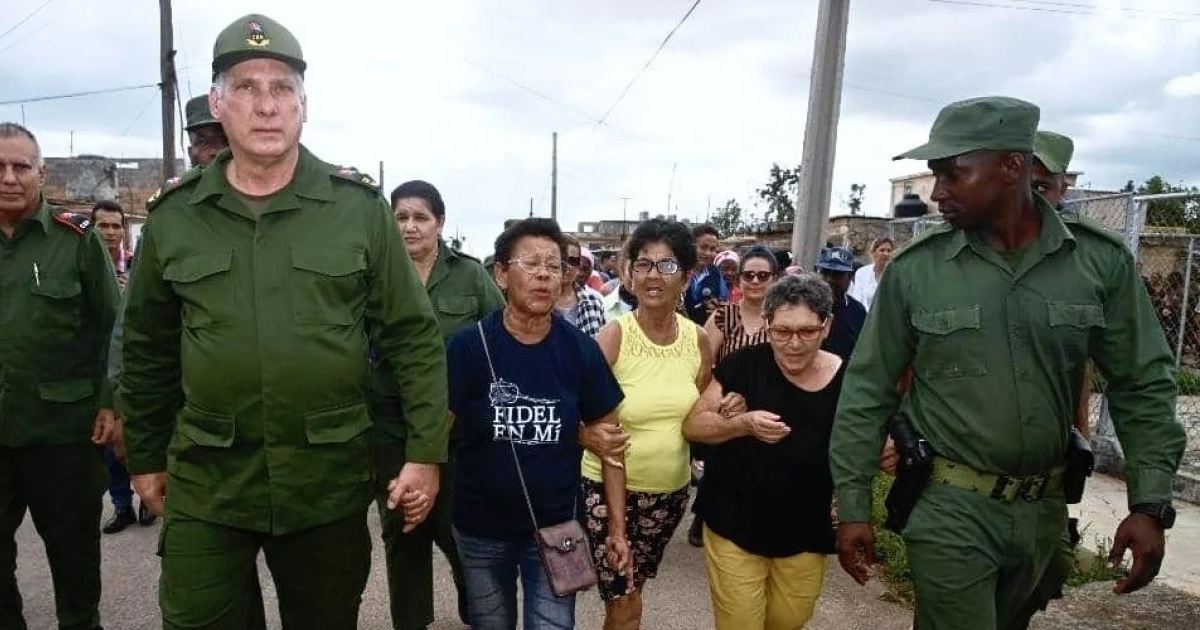
In a move that has sparked yet another controversy, Miguel Díaz-Canel took to social media to commend his personal security team. This same group accompanies him on all his domestic and international travels, a presence many deem excessive and reminiscent of fearful dictators.
"Congratulations to my daily companions, the Personal Security team, loyal and brave men who, through the toughest battles, have safeguarded our historical leaders from numerous dangers, and today continue on the frontline with the same dedication. A strong hug," he wrote.
However, rather than admiration, the message stirred outrage. In the comments, Cubans contrasted the luxurious, shielded life of Díaz-Canel with the stark reality faced by a struggling populace. "Congratulations to all those mothers who have to work miracles to put food on their children's plates," remarked a Cuban living in the United States. Another was more blunt: "Congratulations to all those murderers living off the people's money, and to Lis with her $2,500 shoes while the people are starving," said another emigrant.
"It's no surprise you see this, everyone wants you six feet under," commented a user on X.
Dictatorial Displays
Díaz-Canel consistently travels surrounded by bodyguards, both domestically and abroad. Images circulating online show him escorted by at least eight agents in Cuba, along with three high-end BMW SUVs and a larger vehicle. This display of power even surpasses the ostentatious security Fidel Castro once used.
Videos depict a familiar script: the leader arrives at a municipality, encircled by officers preventing citizens from approaching freely, hurriedly greets, poses for a photo, or chats with local leaders, and soon retreats to his luxury convoy. There's no room for spontaneity or listening to a populace enduring daily blackouts, hunger, and inadequate healthcare.
Official operations involve deploying dozens of government supporters from other municipalities to the leader's location to simulate public support. Despite this show of force, the dictator's bodyguards are not infallible.
In April of last year, during a hospital visit in Matanzas, confusion ensued when Díaz-Canel mistakenly took the wrong exit, causing panic among his security team. This led to a chaotic scene where visibly nervous escorts began blocking people’s paths until the presidential entourage found the correct exit.
Widespread Criticism
The recent message from Díaz-Canel has sparked widespread discontent. "There's no food in Cuba, people eat from the trash, children beg for money, and your wife flaunts a $1,500 phone. You're a disgrace," a young man lashed out. Another user noted, "The president of Chile can ride a bike from the government palace to his home without guards. That's only possible in a democracy."
While the country breaks new records of poverty, with meager salaries and a transportation crisis that prevents people from reaching work, Díaz-Canel travels with more bodyguards than many heads of state. His priority appears to be his personal safety, not the food, health, or economic security of Cubans.
The contrast between the real Cuba and the charade the regime tries to stage during each visit is once again laid bare: a shielded leader praising his guards while the population survives amidst blackouts, endless lines, hunger, and repression.
FAQs on Díaz-Canel's Security and Public Reaction
Why did Díaz-Canel's message to his security team cause controversy?
The public message was seen as tone-deaf and insensitive amidst Cuba's economic struggles, highlighting the disparity between Díaz-Canel's secured lifestyle and the hardships faced by ordinary Cubans.
How does Díaz-Canel's security detail compare to other leaders?
His security entourage is considered excessive, often surpassing that of many other heads of state, including the protection detail of Fidel Castro.
What are some public perceptions of Díaz-Canel's governance?
Many view his governance as disconnected from the people, focusing more on personal safety than addressing the pressing needs of the Cuban populace.