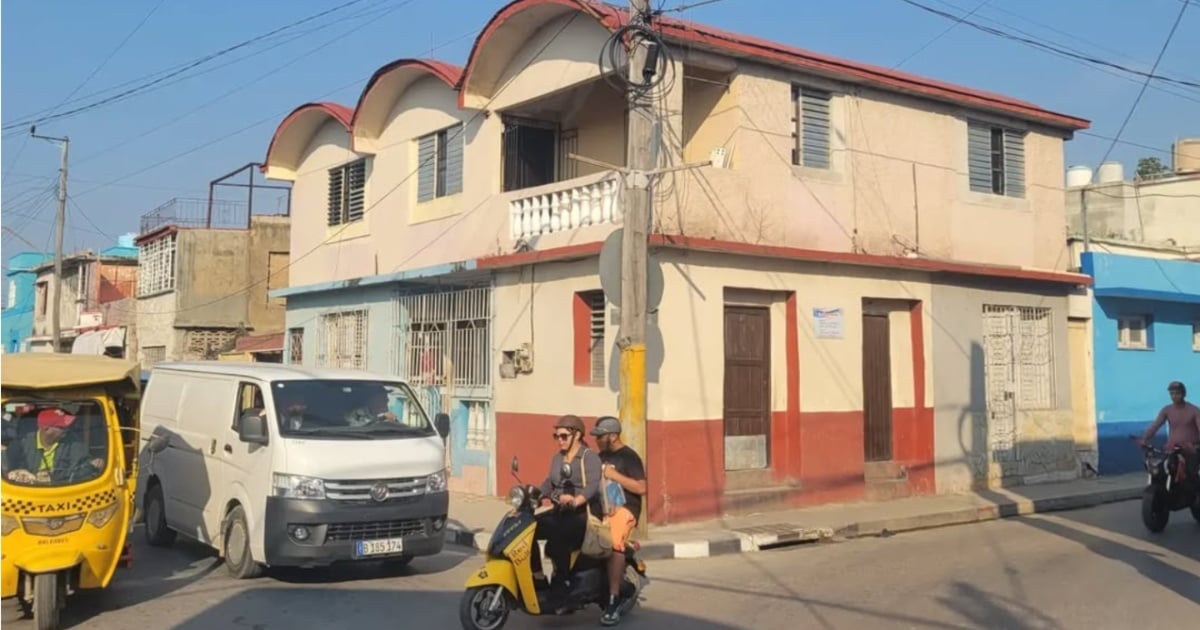
A tragic incident struck the Máximo Gómez Street neighborhood in Holguín city this past Friday, leaving residents in shock after a man succumbed to a severe electric shock while working on his home terrace. Witnesses, who shared details of the event in the comments section of Holguín's Revolico groups, identified the victim as Eliseo. He was reportedly handling a beam when it accidentally made contact with high-voltage wires.
Despite immediate assistance and transportation to a nearby hospital, Eliseo could not survive the intense electrical impact. The community expressed deep sorrow over the loss and urged respect for the grieving family.
"He was using a pole to lift the terrace cover and drain the water on top. Apparently, the beam was loose, and inadvertently, it touched the power lines. By noon, the beam was still in the same position, with one end touching the cables and the other inside the terrace. The power was still off as they awaited the investigators," a local resident explained on Facebook.
Neighbors emphasized the critical importance of exercising caution during home construction tasks, particularly in areas where electrical installations pose a nearby danger. So far, local authorities have not issued an official statement regarding the accident, which adds to a series of recent incidents involving electric shocks.
Electric shocks in Cuba often result in numerous casualties, typically due to atmospheric phenomena. Between 1987 and 2023, lightning storms claimed the lives of 1,892 people in Cuba, averaging 51 deaths each year. Lightning strikes account for more fatalities in Cuba than hurricanes, marking them as a highly dangerous natural occurrence.
Lightning is particularly perilous due to its potential to cause fatalities, property losses, and technological disasters. Its impact is more frequent and deadly than that of hurricanes. A lightning strike can hit miles away from the storm's center, increasing its danger and the risk of being struck.
Understanding the Risks of Electric Shocks and Lightning in Cuba
Why are electric shocks so dangerous in domestic settings?
Electric shocks can be lethal due to the high voltage that can interfere with the heart's rhythm and cause cardiac arrest. In domestic settings, the risk increases if safety precautions are not followed, such as ensuring electrical installations are secure and away from water.
How frequent are lightning-related fatalities in Cuba?
Lightning-related fatalities are relatively frequent in Cuba, with an average of 51 deaths annually between 1987 and 2023. These incidents often surpass the fatalities caused by hurricanes, underlining the severe threat they pose.
What precautions can be taken to prevent electric shock accidents?
To prevent electric shock accidents, it is crucial to follow safety guidelines, such as keeping electrical devices and installations dry, using proper insulation, wearing protective gear, and being aware of electrical wires, especially during construction or repair work.
What makes lightning strikes more dangerous than hurricanes?
Lightning strikes are more dangerous than hurricanes because they can occur suddenly, have a wider reach beyond the storm's core, and possess the power to cause immediate fatalities, unlike hurricanes that usually give some advance warning.