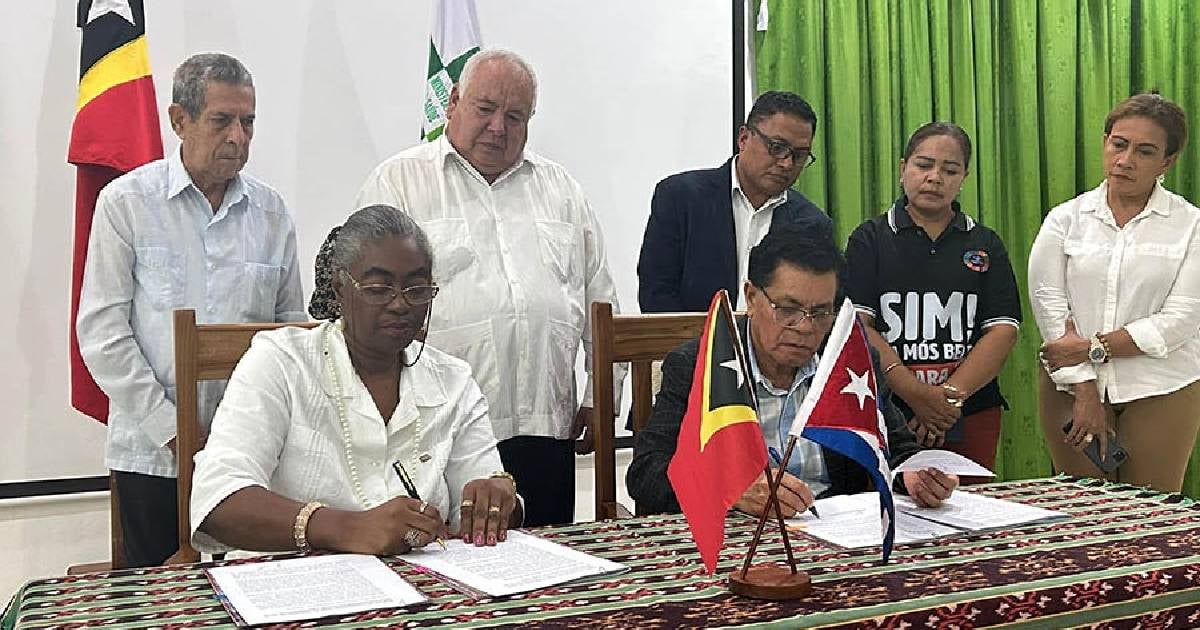
In a move highlighting its ongoing strategy of exporting medical services, the Cuban government has reaffirmed its commitment to maintaining a medical brigade in Timor-Leste. This decision comes despite international criticism and pressure from the United States. Cuban Ambassador Alina Aldama and Timorese Deputy Minister José dos Reis Magno signed the cooperation agreement in Dili, Timor-Leste’s capital, ensuring the continued presence of Cuban doctors in the region, as reported by state-run media Prensa Latina.
The signing ceremony was attended by high-ranking officials from Timor-Leste’s Ministry of Health, the head of the Cuban Medical Brigade Sergio Rabell, and Minister-Counselor Pablo Romero. According to statements from the Timorese embassy, the origins of this agreement date back to a 2003 meeting between the late Cuban dictator Fidel Castro and then-President and current Prime Minister Kay Rala Xanana Gusmao. The Cuban regime continues to tout this historical connection as part of its revolutionary legacy.
Medical Cooperation as a Symbol of Solidarity
The agreement covers not only medical assistance but also the training of professionals and specialists following the Cuban health model. At the end of August, Timor-Leste’s Health Minister Elia A.A. dos Reis Amaral met with the Cuban diplomat in Dili to evaluate the cooperation’s performance and discuss strategies to maintain the presence of Cuban doctors, according to Aldama’s Facebook post. The official narrative described the meeting as “cordial,” emphasizing the medical collaboration as a symbol of friendship between the two nations.
Economic Implications and International Criticism
This renewal of the agreement strengthens one of Cuba’s main sources of revenue. However, it has faced scrutiny from international organizations and complaints from doctors who argue these missions are a form of labor exploitation camouflaged as solidarity. On August 13, Havana reiterated its decision to continue sending medical brigades abroad despite new U.S. sanctions targeting Cuban officials and others tied to this program.
U.S. Secretary of State Marco Rubio announced that Washington would impose visa restrictions on several Cuban, African, and Grenadian officials for their alleged involvement in a forced labor scheme related to the export of medical services. In response, Cuban Foreign Minister Bruno Rodríguez Parrilla condemned these measures, calling them acts of “imposition and aggression,” and vowed that Cuba would “continue providing” health services overseas.
Controversy Surrounding Cuban Medical Missions
Deputy Foreign Minister Carlos Fernández de Cossío defended the programs as “absolutely legitimate,” highlighting their role in saving lives and supporting communities in numerous countries. Despite the official stance, international reports and testimonies from participating doctors reveal abusive conditions and labor rights violations.
Both Washington and various international organizations accuse Havana of using its medical professionals as tools for political influence and revenue generation under conditions that breach international labor standards. They point out that the government of Miguel Díaz-Canel retains a significant portion of these professionals' salaries and imposes movement restrictions, leading to allegations of forced labor.
The U.S. measures are part of a broader strategy to pressure the Cuban regime and its allies to dismantle what is viewed as an international forced labor network. Similar restrictions were applied in June against Central American officials involved in hiring Cuban doctors.
Despite the criticism and sanctions, the Cuban government continues to assert that it will not abandon one of its most profitable and iconic programs, crucial for foreign exchange earnings and international projection. This model leaves thousands of healthcare professionals sent abroad without a voice, rights, or freedom, while those remaining in Cuba face dire working conditions and strict regulations, preventing them from leaving the country.
Understanding Cuba's Medical Brigade Controversy
What is the purpose of Cuba's medical brigades abroad?
Cuba's medical brigades are deployed to provide healthcare services and training in various countries, presented as humanitarian efforts. However, they also serve as a significant source of revenue and international influence for the Cuban government.
Why has the United States imposed sanctions related to these medical missions?
The U.S. has imposed sanctions citing allegations of forced labor and exploitation within Cuba's medical missions. The sanctions target officials involved in these programs, aiming to dismantle what Washington views as a forced labor network.
How does Cuba respond to accusations of forced labor?
Cuba denies the accusations, describing the medical missions as legitimate acts of solidarity that provide critical healthcare and support to communities worldwide. The government maintains that these programs are beneficial and necessary.