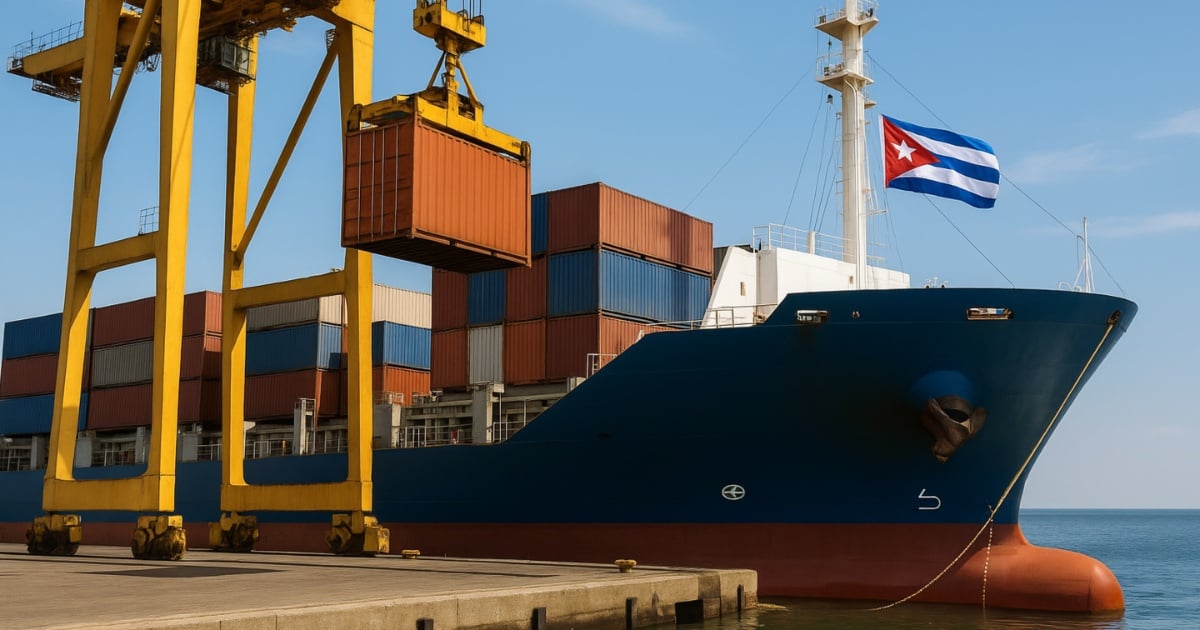
President Donald Trump has decided to extend for one more year the licenses allowing specific exports and transactions with Cuba under the Trading with the Enemy Act. This decision, communicated through a memorandum addressed to the Secretary of State and the Secretary of the Treasury, prolongs the legal framework governing limited commercial operations with the island until September 14, 2026.
The official document indicates that the powers granted by this law were set to expire on September 14, 2025. Nonetheless, the White House determined that its continuation aligns with the "national interest" of the United States. Consequently, the administration has instructed the Treasury Department to publish this resolution in the Federal Register, thereby maintaining the existing sanctions and special authorizations applied to Cuba.
This extension directly affects the Cuban Assets Control Regulations (31 CFR Part 515), which stipulate the conditions under which financial and commercial transactions with the island can occur. These regulations have been a cornerstone of Washington's sanction policy against Havana for over sixty years.
While the decision upholds general restrictions, it ensures the continuation of specific licenses that permit certain exports, including those for humanitarian purposes and particular economic operations. With this measure, the Trump administration reiterates its pressure campaign on Cuba, while simultaneously securing a legal framework for operations that would otherwise be prohibited under current sanctions.
Last year, former President Joe Biden signed an extension of the U.S. economic embargo on Cuba until September 2025, a measure that has been a consistent practice of both Republican and Democratic administrations for over six decades. A day before the law was set to expire, a note was published indicating that the exercise of certain authorities under the Trading with the Enemy Act was scheduled to end on September 14, 2024. Therefore, it was determined that the continuation of this practice concerning Cuba be extended by one year for the national interest of the United States.
The embargo, which began partially in October 1960 in response to the nationalization of American businesses in Cuba, was expanded to its full form in February 1962. Since then, its renewal has been a formal procedure carried out annually by 13 U.S. administrations.
Impact of U.S. Export Licenses to Cuba
What is the significance of the Trading with the Enemy Act regarding Cuba?
The Trading with the Enemy Act is significant because it provides the legal framework for the U.S. to regulate certain commercial transactions with Cuba. This act influences the scope of sanctions and special licenses that allow specific exports.
How does the extension of licenses impact humanitarian exports to Cuba?
The extension ensures that specific licenses remain valid, allowing humanitarian exports to continue. This is crucial for maintaining channels for essential goods and services to reach the Cuban people.
Why is the embargo on Cuba renewed annually?
The embargo is renewed annually as a formal procedure to sustain the long-standing U.S. policy towards Cuba, which began as a response to the nationalization of U.S. businesses by the Cuban government.