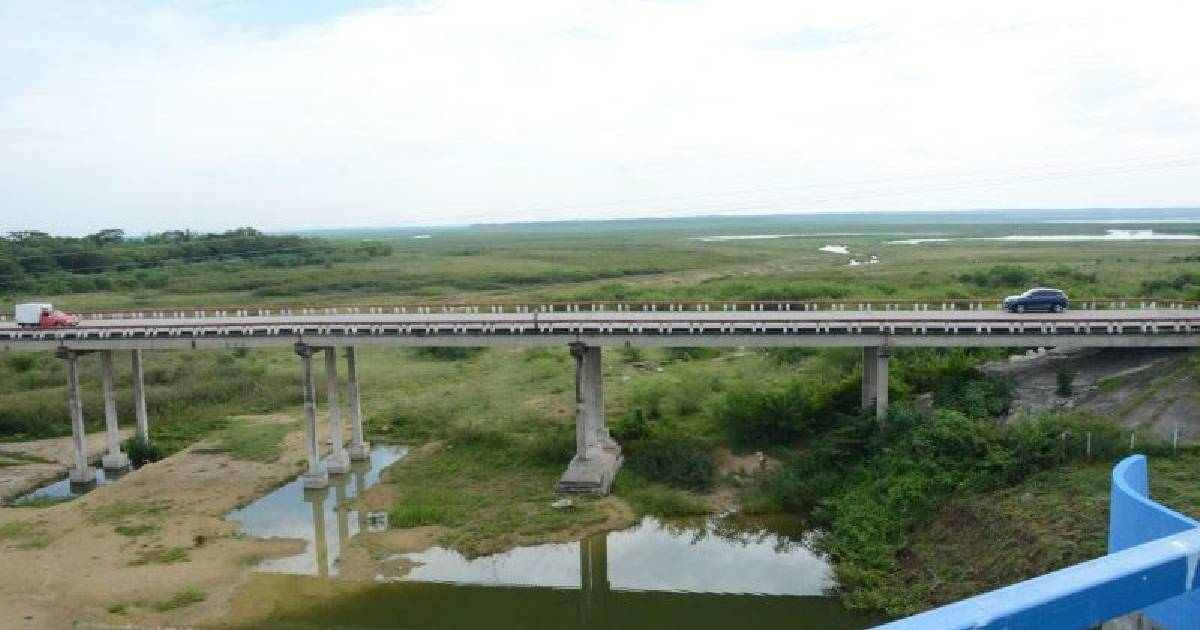
The Zaza Reservoir, Cuba's largest water storage facility, is currently holding a mere 106.4 million cubic meters of water, which is just 12% of its full capacity of 1,020 million cubic meters. This alarming figure marks the second-lowest point in its history. According to data from Hydraulic Resources in the province of Sancti Spíritus, the lowest recorded level occurred in May 1976, when the reservoir plummeted to 99.6 million cubic meters. Now, 49 years later, this level is the lowest ever recorded during the rainy season, as reported by the official newspaper Escambray.
Water reservoirs across the Sancti Spíritus region are also in dire straits, averaging a mere 17% fill rate. Among the hardest hit, besides Zaza, are La Felicidad, Dignorah, and Aridanes, all suffering from an extended dry spell. This situation underscores the precarious state of the nation's largest water reserve, exacerbating the population's vulnerability and highlighting the government's inability to effectively tackle recurrent droughts.
Residents in the main municipality of Sancti Spíritus are receiving murky, foul-smelling water infested with insects. Authorities acknowledge these conditions, attributing them to the drought and supply source issues, yet no immediate solutions are forthcoming.
Meanwhile, Deputy Prime Minister Inés María Chapman Waugh visited Consolación del Sur in Pinar del Río to inspect the hydraulic system and previous water supply agreements. At Herradura Reservoir, the primary source for the Cuba-Vietnam rice cultivation project, she found it operating at only 41% capacity. She also toured local well fields, overseeing repairs and urging improvements in pump and electrical system maintenance to “end the prolonged water cycles currently affecting the quality of life for at least 25,000 residents in Consolación del Sur,” as reported by the provincial newspaper Guerrillero.
Santiago de Cuba is grappling with one of its worst droughts in decades, with the main reservoirs supplying over 80% of the city holding just 23.3 million cubic meters of water, about 15.6% of their total capacity. This shortfall has extended water distribution cycles in Santiago communities to over 30 days, turning the crisis into a daily struggle.
Structural decay further complicates matters, with reports indicating the hydraulic system is overwhelmed and unable to ensure minimal distribution, even when sporadic reserves are available. The situation in Holguín is equally bleak. Chapman recently assessed drought response efforts there, where 66 communities face service disruptions, and July was marked as the driest month in a decade.
In Las Tunas, over 90,000 residents struggle to receive regular water supply, particularly in higher urban areas where water pressure fails to reach homes. The government has admitted that the drought has led to increased water-related crimes, such as theft and diversion, affecting entire communities.
Understanding Cuba's Water Crisis
What is the current state of the Zaza Reservoir?
The Zaza Reservoir is currently at only 12% of its capacity, holding 106.4 million cubic meters of water, the second-lowest level in its history.
How are residents in Sancti Spíritus affected by the water crisis?
Residents are receiving poor quality water that is murky, has a bad odor, and contains insects. This is due to the drought and issues with water supply sources.
What measures are being taken to address the drought in Pinar del Río?
Deputy Prime Minister Inés María Chapman Waugh has inspected the hydraulic system and ordered improvements in pump and electrical system maintenance to reduce extended water cycles.
What is the impact of the drought on Santiago de Cuba?
The drought has caused water reservoirs to reach just 15.6% of their capacity, extending water distribution cycles to over 30 days for communities.