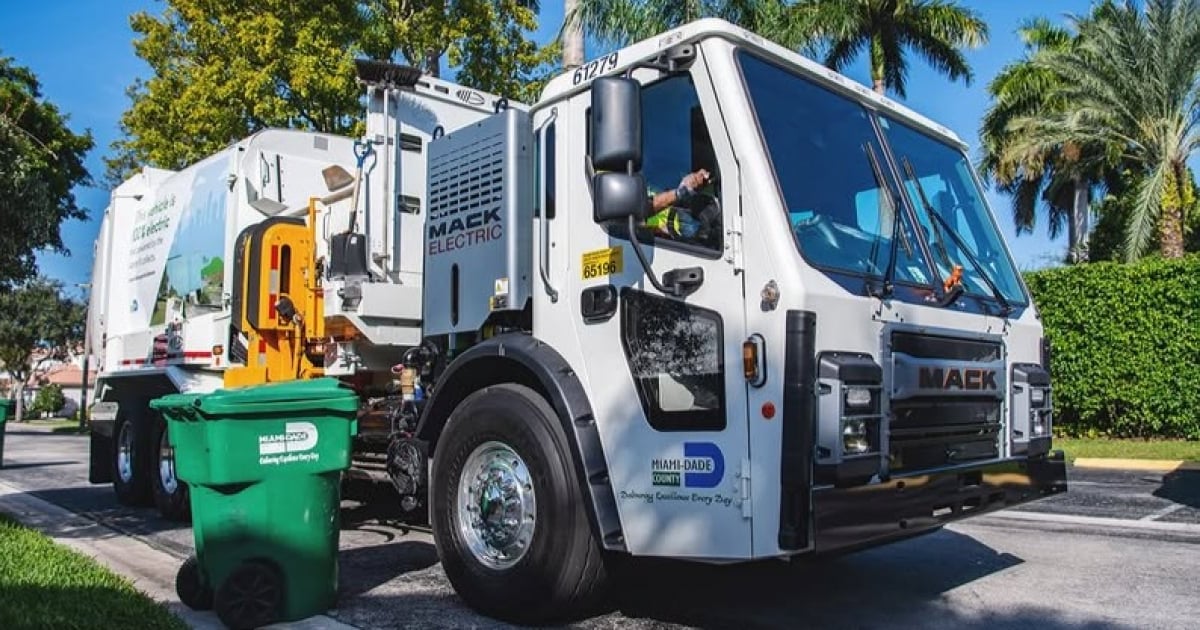
Miami-Dade County has approved a hike in trash collection fees, adding to the financial strain on residents amid a significant $400 million budget deficit facing local government. Although the increase amounts to just $4 or $5 more annually, it is part of a larger conversation about the sustainability of public services and the financial burden on taxpayers.
As reported by Telemundo 51, the county's Commission discussed the administration's initial proposal for a 3% increase on Wednesday, ultimately deciding on a reduced 0.7% rise. While smaller, this adjustment is still noteworthy for families who have endured cumulative increases over the past five years. "That's the issue," acknowledged the chair of the Appropriations Committee, explaining that the sanitation department had been undercharging for years and is now working to correct this by renegotiating contracts to cut costs.
Mayor Daniella Levine Cava defended the decision, asserting that the budget is "fair and balanced" and ensures the continuity of essential services. Since July, an additional $67 million has been discovered, though she cautioned that challenges remain and further discussions are needed before finalizing the budget in a second vote.
A Fiscal Crisis Unmatched Since 2008
This increase comes amid the county's most severe financial crisis since the 2008 recession. Levine Cava described the deficit as a "perfect storm of challenges," citing the creation of five new constitutional offices due to a state amendment, reduced state and federal revenue, and local decisions like tax cuts, multimillion-dollar subsidies for the 2026 World Cup, and previous use of emergency funds to freeze rates.
In response, the mayor proposed an austerity plan involving layoffs, wage freezes, departmental cuts between 10% and 35%, a 50-cent hike in public transportation fares, closure of community centers, and reduced park services. The plan also includes eliminating the Office of New Americans and the Office of Neighborhood Safety.
Political Tensions and Public Reactions
The $12.9 billion budget has sparked division among commissioners. Some, like Juan Carlos Bermúdez, advocate prioritizing essential services such as health, safety, and the environment, while others, such as Roberto González, criticize Levine Cava as a "liberal spender" and demand a line-by-line budget review. Despite the modest increase in trash fees, there is fear of further cuts if consensus isn't reached. "We don't know where else to cut. We'd have to eliminate parks entirely or reduce bus routes. It's a very serious situation," admitted the mayor.
Ongoing Financial Pressure on Residents
For many residents, the concern is not just this year's fee hike, but the ongoing accumulation of increases in basic services, from transportation to trash, while wages stagnate and the cost of living in South Florida soars. The trash collection fee rise might seem minor in absolute terms, yet in a county where countless families are already struggling to pay rent, buy food, and afford transportation, every dollar matters. The dilemma remains: how to fund public services without breaking the budget, or continue passing the bill to those least able to afford it.
Understanding the Impact of Miami-Dade's Trash Fee Increase
What is the reason behind the trash fee increase in Miami-Dade?
The increase is part of efforts to address a $400 million budget deficit and ensure the sustainability of public services. It also aims to correct years of undercharging by the sanitation department.
How will the fee increase affect Miami-Dade residents?
Though the increase is small, it adds to the financial burden on families who have faced cumulative service fee hikes. Residents are concerned about the overall rise in living costs in the region.
What measures are being considered to address Miami-Dade's budget deficit?
The county is considering an austerity plan with layoffs, wage freezes, and service reductions. The plan also includes potential closures of community centers and reductions in public transportation services.