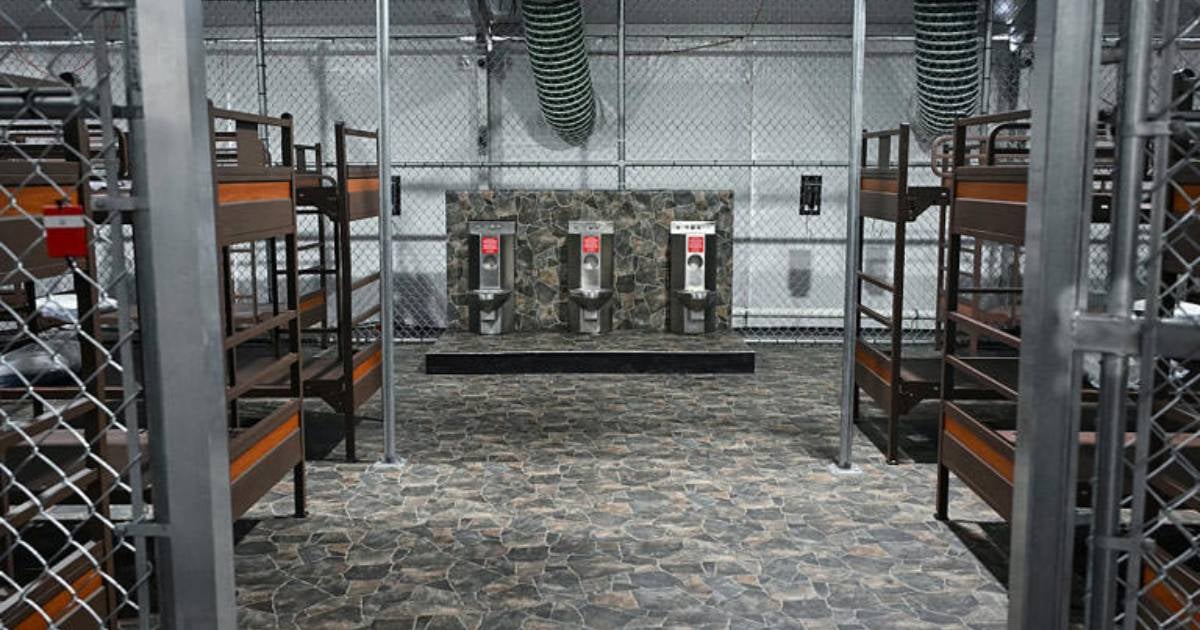
The immigrant detention center, widely referred to as "Alligator Alcatraz" and situated in the Everglades of Florida, will remain operational after a federal appeals court intervened to block a closure order issued by a Miami judge. A report from the Associated Press (AP) highlighted that a three-judge panel in Atlanta voted 2-1 to pause the enforcement of the order by federal judge Kathleen Williams, who had previously mandated the center's shutdown by the end of October.
Judge Williams had responded to a lawsuit filed by Friends of the Everglades, the Center for Biological Diversity, and the Miccosukee tribe, who argued that the required federal environmental review was not conducted before establishing the center in a sensitive wetland area. Williams had instructed the transfer of detainees to alternative facilities and the removal of equipment and barriers from the site. However, the appeal temporarily halts these actions.
Florida's state officials contended that closing the center would impose a financial burden of $15 to $20 million on taxpayers and weaken the state's ability to handle what Governor Ron DeSantis described as an "unprecedented immigration crisis," according to Local 10. Florida Attorney General James Uthmeier hailed the decision as "a victory for Florida and for President Donald Trump's agenda."
On the social media platform X, Uthmeier stated, "The 11th Circuit not only blocked the order to close Alligator Alcatraz but also prevented the judge from proceeding with the case until the appeal is resolved." Meanwhile, Governor DeSantis affirmed, "Alligator Alcatraz is, as we have always maintained, open for business. The mission continues, and we will keep leading the way in immigration control."
Environmental groups and the Miccosukee tribe continue to argue that the facility poses a threat to the biodiversity of the Everglades ecosystem, yet the judicial decision allows the center to remain operational while the legal battle unfolds.
In a separate move to enforce strict immigration controls, the Trump administration decided to detain undocumented immigrants in one of the most notorious and violent prisons in the United States. According to an AP report, a compound within the Louisiana State Penitentiary, known as Angola, was repurposed to house over 400 ICE detainees. The facility, known for its harsh conditions, already accommodates 51 individuals and was chosen for its reputation, as confirmed by Secretary of Homeland Security Kristi Noem.
Louisiana Governor Jeff Landry indicated that the facility, now dubbed "Louisiana Lockup," is expected to reach full capacity in the coming months as Trump advances his plan for mass deportations. Angola is a maximum-security prison holding more than 6,000 inmates, including over 50 on death row.
Questions About Alligator Alcatraz and Immigration Policies
Why is the Alligator Alcatraz center controversial?
The Alligator Alcatraz center is controversial due to its location in sensitive wetlands, raising environmental concerns, and its role in strict immigration enforcement policies.
What are the financial implications of closing the detention center?
Closing the center is estimated to cost taxpayers between $15 to $20 million, according to Florida state officials.
How does the Louisiana Lockup fit into immigration enforcement?
The Louisiana Lockup is part of a broader plan by the Trump administration to detain and deport undocumented immigrants, utilizing a high-security facility known for its tough conditions.