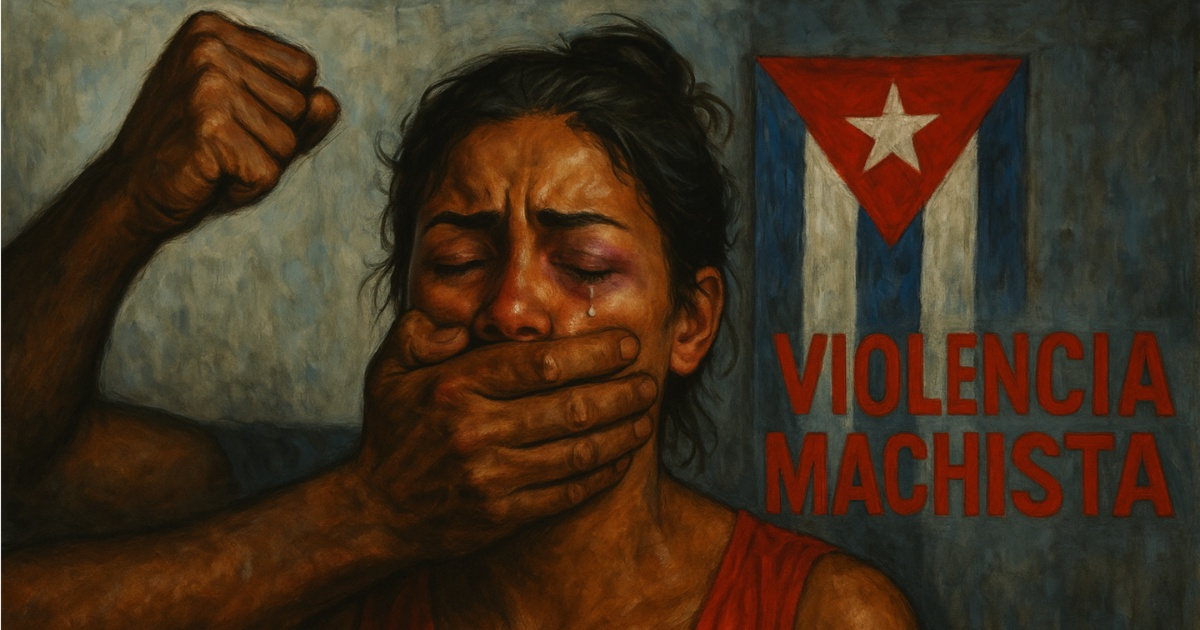
Three recent instances of femicide have shaken Cuban society, following the confirmation of murders in Matanzas, Granma, and Holguín, allegedly carried out by current or former partners, according to Martí Noticias. These brutal acts raise the number of women killed due to gender violence in 2025 to 30, as reported by journalist Yoanda Huerga.
The first incident took place on August 28 in Cueto, Holguín. Damaris Ricardo Martínez, aged 48, was found deceased with a throat laceration and severe head trauma. Investigations suggest her husband, Roberto Ricardo Sánchez, committed the murder after learning she intended to leave him. After assaulting her with a sledgehammer and slashing her with a machete, he took his own life. Although the couple had no children, their tumultuous relationship was well-known in the community.
Another femicide occurred on August 25 in Carlos Rojas, Jovellanos (Matanzas). In this tragic case, 24-year-old Daily Villa Ortiz was fatally stabbed by her partner, Daniel González Ortiz, in front of her six-year-old daughter. The injuries inflicted on her heart caused a fatal arrhythmia, and the perpetrator was quickly apprehended post-crime.
The third case dates back to July 29 in Rafael Freyre, Holguín, where 32-year-old Yolennis Rojas Rojas was killed by her husband, a man significantly older than her. The victim succumbed to hypovolemic shock due to severe blood loss. The assailant was detained and remains in custody at the provincial investigation unit, as confirmed to Huerga by sources close to the victim.
The Alarming Pattern of Femicide in Cuba
Independent organizations such as the Gender Observatory Alas Tensas (OGAT) and Yo Sí Te Creo en Cuba have highlighted the horrific nature of these murders, some involving extreme violence such as throat slashing or decapitations. “We are witnessing an alarming increase in crimes characterized by extreme cruelty, revealing a pattern of punishment and control over the victims,” stated Ileana Álvarez, director of OGAT, to Martí Noticias.
These observatories emphasize that femicides in Cuba continue to rise, leaving families and communities in anguish and without justice. Many children of the victims are left in extremely vulnerable situations, often orphaned and without adequate state protection, underscoring a lack of public policies to support these indirect victims of gender violence.
The Cuban government does not officially recognize the term "femicide" and has not classified it as a crime in its Penal Code. This refusal obstructs the development of effective public policies to combat and prevent gender-based violence.
Understanding Gender Violence in Cuba
What is the current situation of femicide in Cuba?
The situation is dire, with a reported increase in femicides, highlighting a growing issue of gender-based violence. In 2025 alone, at least 30 women have been killed.
How are independent organizations responding to these crimes?
Organizations like OGAT and Yo Sí Te Creo in Cuba are bringing attention to the brutal nature of these crimes, advocating for recognition and prevention of gender violence.
Why is there a lack of effective public policies in Cuba regarding femicide?
The Cuban government's failure to officially recognize femicide as a crime prevents the creation of targeted public policies to address and prevent these acts of violence.