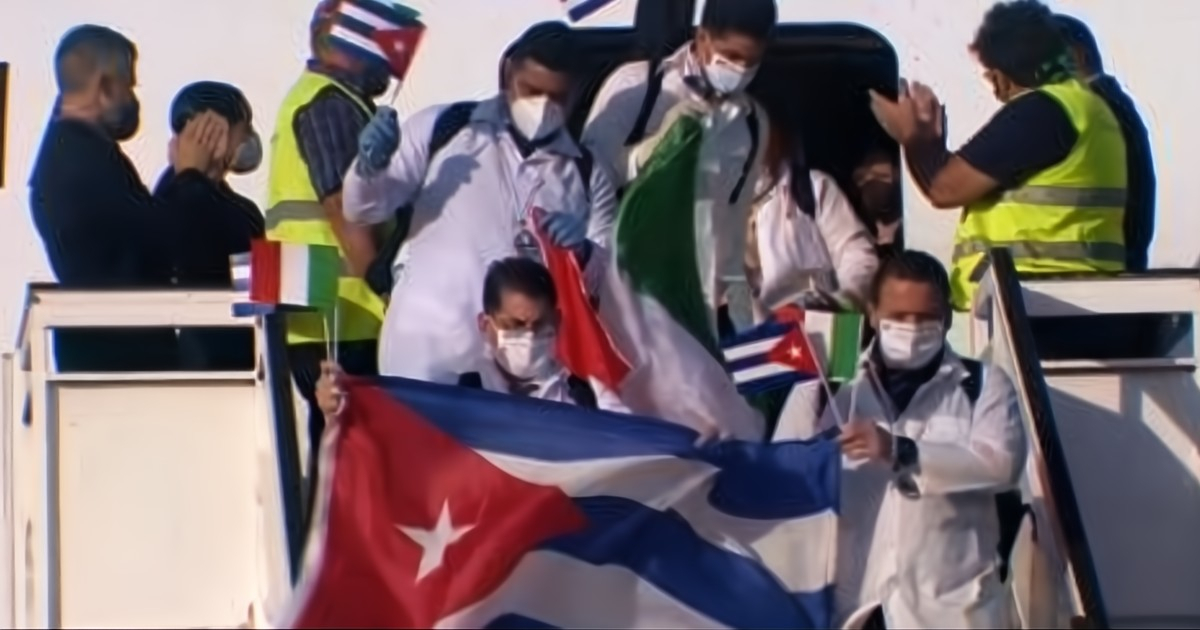
The experiences of numerous Cuban doctors involved in the official medical mission to Italy are marred by fear, surveillance, and the very real possibility of being labeled as "defectors" if they choose to break away from state control. Beyond the threats of job loss and institutional retaliation, they face one of the harshest penalties: a prohibition on returning to Cuba for eight years.
According to reports from the news portal CubaNet, at least 12 doctors have severed ties with the state-run Cuban Medical Services Trading Corporation (CSMC), which manages and oversees the medical brigades dispatched to Italy. Of these, five have resigned from the mission just in the past week. Some have transitioned into Italy's private healthcare system, others have traveled to Spain, and several have stopped transferring the mandatory portion of their salary back to the Cuban company, actions that have led to them being branded as traitors by the island's authorities.
Behind these choices lies a pattern of systematic abuse. Doctors interviewed by the media outlet recounted losing all access to their professional documents—diplomas, certifications, and degrees—when they detach from the official mission, making it impossible to legally practice their profession in Europe. "They blackmail you with your degrees," confessed one of the doctors, noting that without these documents, they cannot validate their education or formally integrate into the Italian healthcare system.
Obstacles and Restrictions: A Systemic Issue
The withholding of these records is part of an institutional policy aimed at curbing defections. CubaNet reports that since 2017, a circular from the National Organization of Collective Law Firms (ONBC) has prohibited the legalization of academic documents for professionals who abandon missions abroad, leaving doctors in a legal and professional limbo.
Cases documented in Calabria, an Italian region where several Cuban brigades currently operate, expose a scheme of monitoring and control. Two doctors still part of the mission reported feeling unsafe even during phone conversations. They claimed to have received explicit warnings from the mission's leadership, headed by Luis Enrique Pérez Ulloa, who also represents CSMC in Italy. "We were told they have ways to identify those who report," one professional shared.
Life Under Constant Surveillance
The fear of reprisals is so intense that some refrained from giving their names, afraid that their contracts might be terminated and they would be sent back to Cuba. However, repression is not limited to those who have already disengaged; those still on the mission face severe restrictions as well: internal surveillance, limitations on family reunification, the inability to unionize, and contractual clauses contradicting Italian labor rights.
Although the formal contract is signed between the doctor and the Calabria region, in practice, Havana holds the real control. If a Cuban official deems a professional "unfit," local authorities must revoke the contract, according to testimonials. Even when doctors attempt to legalize their credentials through official channels in Italy, they encounter obstacles imposed by the mission.
"I can't go to the Azienda (local health institution) to request anything because they immediately inform the mission head, and you risk having your contract canceled," said a doctor from Reggio Calabria. Meanwhile, media outlets like The Objective, based in Madrid, cited by CubaNet, have reported that Cuban emigrant doctors have also faced roadblocks in obtaining accreditations, in a strategy extending beyond Italy and pointing to a regional pattern of state control over expatriated healthcare personnel.
A Question of Legal and Human Rights
Legally, this policy finds support in Decree-Law 306 of 2012, later incorporated into the new Cuban Migration Law, emphasized the cited news portal. This regulation allows the state to block entry into the country for eight years for those who unauthorizedly separate from official missions, under the pretense of preserving a "highly qualified workforce." This form of punishment effectively amounts to forced exile, impacting not only the doctor but also their family ties and right to free movement.
One of the most poignant testimonies comes from a doctor who, after breaking with the mission, claimed to have found peace in her decision, even though she knows she won't be able to return to her country for eight years. "Liberty comes at a cost: for some, it's cost blood; I'll pay with eight years away from my homeland. And you know what? I feel at peace," she emphasized.
The situation has begun to elicit reactions at various levels. Organizations like "We Are Not Deserters" have denounced this system as a violation of human and professional rights. Meanwhile, in Italy, the Committee for Health Defense in Polistena issued a social media statement following the departure of a Cuban doctor from the local hospital, calling the treatment received "humiliating" and "exploitation disguised as cooperation."
Growing Political and Media Pressure
"Dignity and independence prevailed over duty," wrote Marisa Valensise, the committee's president, in a post also questioning the role of Calabria's regional president, Roberto Occhiuto, one of the main proponents of the medical collaboration program with Cuba. Even though the medical missions continue to expand into other regions like Molise and Veneto, despite the complaints, political and media pressure is mounting.
Since June, the report "From Havana to Calabria: The Perfect Scam Against Cuban Doctors" by CubaNet has sparked parliamentary interpellations in Italy, demands for transparency, and at least one police investigation. However, for Cuban doctors, the reality remains unchanged: if they leave the mission, they risk losing everything, even the right to return home. "Who is more imprisoned: the one sleeping under watch in the mission or the one who escapes knowing they can't return?" pondered one of the doctors. The answer, for now, seems buried among withheld passports, opaque contracts, and a constant fear that follows them beyond any border.
In July, the Department of Health and Welfare of the Italian region of Calabria officially denied that Cuban doctors working there are legally obligated to transfer part of their salaries to CSMC, the state-run entity acting as an intermediary between Havana and the host countries for healthcare personnel. In an institutional response dated July 4, signed by Doctors Teresa Celestino and Francesco Lucia, Calabrian authorities assured CubaNet that the doctors contracted from the island sign individual contracts directly with the regional healthcare system, and that salaries are deposited fully and directly into Italian bank accounts in the professionals' names, as required by the country's labor laws.
This statement, issued in response to a request for information from CubaNet, thus dismantles the supposed legal authority that CSMC claims to have in demanding Cuban professionals surrender the majority of their salary. However, in August, Molise's president, Francesco Roberti, confirmed that the region agreed with Cuba's ambassador to Italy, Mirta Granda Averhoff, on the arrival of doctors from various specialties, although the exact number and arrival date were not specified, reported the EFE news agency. According to Roberti, at least 100 professionals are needed, especially in the interior areas and in emergency services.
This agreement comes at a time when Washington has intensified sanctions and warnings against governments and entities contracting Cuban medical brigades, accusing them of constituting a form of labor trafficking. The Cuban government confirmed in July that over 24,000 healthcare workers are currently serving abroad as part of its modern slavery system, masked as an international cooperation policy.
Key Questions about Cuban Doctors in Italy
What are the consequences for Cuban doctors who leave official missions?
Cuban doctors who leave official missions face an eight-year ban from returning to Cuba, loss of access to their professional documents, and being labeled as traitors by the Cuban authorities.
How does the Cuban government control doctors on missions?
The Cuban government exerts control by retaining professional documents, monitoring communications, imposing contract restrictions, and threatening legal consequences for those who attempt to defect.
What legal support does the Cuban policy of retaining doctors have?
The policy is supported by Decree-Law 306 of 2012, which is integrated into the Cuban Migration Law, allowing the state to prevent entry for eight years for those who leave missions without authorization.