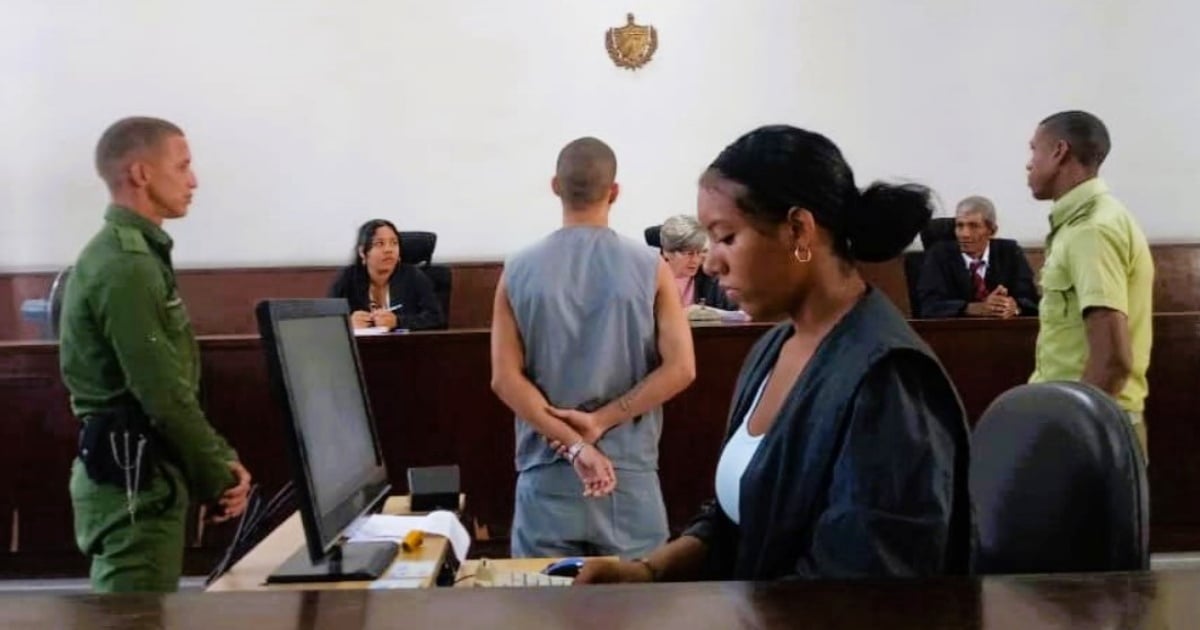
A Cuban national residing in Suriname since 2022 has been handed a 13-year prison sentence in Santiago de Cuba for international drug trafficking. The conviction came after authorities discovered 300 grams of cocaine hidden inside a bicycle seat in his luggage. However, his sister, Yaidarys Rodríguez Avilés, has highlighted numerous procedural irregularities, arguing that the verdict is an "unjust conviction" delivered without fundamental defense safeguards.
Official Narrative: A "Model" Trial Amidst Anti-Drug Campaign
According to the Facebook page Héroes del Moncada, the trial was described as a "model" event within the ongoing nationwide anti-drug operation. The 33-year-old was apprehended at Santiago de Cuba's Antonio Maceo International Airport when authorities found the drugs inside the bicycle seat. This official account states that the man had received the goods in his luggage from someone in Suriname and was paid $84 for transporting them. The cocaine, with a purity of 95%, was discovered after a thorough inspection. The intended recipient of the package in Cuba "remains unidentified."
Sister's Claim: "He Was Set Up"
Yaidarys Rodríguez, the defendant's sister, released a detailed statement denouncing the trial as riddled with irregularities and presenting an "incomplete and biased" narrative of events. She insists her brother was set up and had no knowledge of the drugs he was carrying. "During the trial, the court refused to admit witnesses and evidence that would have demonstrated my brother's diligence and responsibility," she asserted.
These witnesses included individuals who witnessed the delivery of the bicycle seat, who could have testified that "the item appeared intact and gave no indication of containing anything suspicious." Rodríguez explained that her brother returned to Cuba under strained circumstances, pressured by the necessity to return before the two-year residency period lapsed, which would have resulted in the loss of his Cuban residency. In this situation, he sold some of his belongings and agreed to transport items for others.
"Had he not been in such a dire situation, he would have brought medication and clothes for his family," she continued. She also claims that "there is evidence and testimonies proving he was entirely unaware of the existence of drugs."
Investigation and Accountability
The sister argues that the drugs went undetected during initial inspections, by trained dogs, or through manual examination, only being found after the seat was drilled open. A customs witness even admitted that "not even experts with years of experience could have detected the substance without opening the item." Rodríguez also mentioned that her brother cooperated with authorities to identify the intended recipient of the package in Cuba, but "that operation was never carried out, and the true culprits remain at large."
She further claims that the sender of the package has been identified through surveillance footage in Suriname and shared with the National Anti-Drug Directorate and other authorities, countering the claim that it involved an "unidentified person." "My brother should not be penalized for a crime he did not knowingly or intentionally commit," she argued, referencing the current Penal Code, which requires conscious intent to establish guilt in drug trafficking cases.
Blind Mules and Legal Concerns
This case arises amid Cuba's Customs strengthening its rhetoric against drug trafficking, warning of the "blind mules" phenomenon. In March, Isnavis Chacón, head of Customs at José Martí Airport, explained that many individuals travel to Cuba with packages belonging to others without knowing their contents, leading to the unintentional entry of drugs into the country. "Blind mules are people who sell their luggage space without knowing what they carry," the official warned, emphasizing that "passengers are fully responsible for their luggage and must answer for it."
This discourse has been used to justify "model" trials, despite criticism over a lack of transparency and legal protection for individuals with no criminal record or knowledge of the items they transported. "Justice should not sacrifice innocents for propaganda," Yaidarys Rodríguez stressed in her testimony. While supporting "the fight against drug trafficking that causes immense harm," she demands that the justice system honor the principle of justice and consider the innocence of those who acted without criminal intent.
"Justice must not lose its essence nor unjustly condemn innocent people," she concluded, arguing that her brother's sentencing was more of a media spectacle than a fair judicial process. "I request that any publication related to this case includes all perspectives, not just the official version," she finally demanded, insisting that her brother "be freed and his name and dignity restored."
Questions about Legal Irregularities in Cuban Drug Trials
What were the irregularities reported in the trial?
The trial reportedly refused to accept key witnesses and evidence that could have demonstrated the defendant's lack of knowledge about the drugs. Additionally, the true recipient of the package in Cuba was never identified, and the drugs were only found after a detailed inspection.
How did the drugs go undetected initially?
The drugs were not detected during initial inspections, including checks by trained dogs and manual examinations. They were only discovered after the bicycle seat was drilled open, a method not typically used in routine inspections.
What is the "blind mule" phenomenon?
The "blind mule" phenomenon refers to individuals who transport packages for others without knowing their contents, inadvertently carrying drugs into the country. Cuban authorities have used this concept to warn travelers and justify strict legal actions.