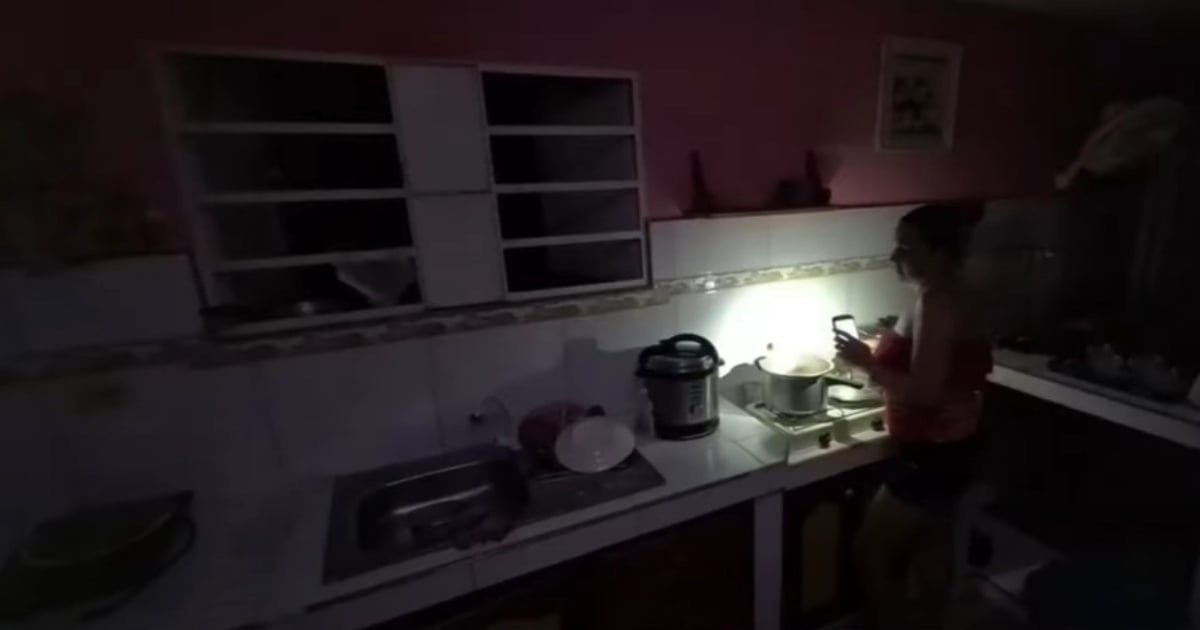
The Electric Company in Pinar del Río recently issued a Facebook announcement that has sparked outrage among residents. The message advises households to avoid plugging in all appliances immediately after power is restored in order to "extend the lifespan of transformers" and prevent additional breakdowns. According to the announcement, simultaneous use of appliances can hinder the equipment's quick recovery, potentially leading to further damage.
This recommendation, which seemingly calls for public cooperation, is yet another tactic by the regime to shift the blame for a crumbling electrical system onto the people who suffer its consequences. "After enduring 19, 21, 26 hours of blackout, when the poor electrical service returns for just 1 or 2 hours, we have to solve problems caused by the deficit," commented a teacher on the post.
"If there was more electricity, this wouldn't happen, but with only 2 or 3 hours and then 9 without any, it takes audacity to make such an absurd suggestion," remarked an elderly woman. "Now we're the ones responsible for the breakdowns, and if you don't rush to cook, you're left unable to do anything," lamented a woman from Havana.
"Now we're also supposed to take care of transformers, poles, cables, and my appliances, which break down due to power fluctuations. In the end, it seems like the blackouts and breakdowns are my fault. What nerve!" criticized a resident from Pinar del Río.
Historical Context of a Recurring Practice
This is not the first instance where the Cuban government has resorted to such messages. In October 2021, following the collapse of the National Electric System, the Electric Company in Santiago de Cuba warned on Telegram that simultaneous connection of high-consumption devices could cause new outages. This warning seemed to ignore the desperation of thousands of families who had been without electricity for over 72 hours, watching their limited food supplies spoil.
At that time, the note urged customers to "avoid connecting high-consumption appliances" when power returned, promising to prevent another system failure. The suggestion was met with skepticism: how could people be expected not to turn on stoves and refrigerators, when for many, these were the only means to preserve food or prepare a hot meal after days without power?
A similar scenario unfolded in Camagüey, where the provincial government used Facebook to warn that an overload could "trigger transformers" and cause even more disruptions. The message included examples of what they termed high-consumption appliances: air conditioners and electric stoves. The irony was not lost on the public: asking Cubans to do without the very appliances essential for coping with stifling heat and cooking.
Root Causes of the Energy Crisis
The common thread in all these "recommendations" is the same government strategy: shifting responsibility for a crisis-ridden system onto the populace. Instead of acknowledging that prolonged blackouts are a result of lack of investment, infrastructure decay, and inefficient management, there is a persistent narrative that consumers must alter their daily lives to save transformers that, under normal conditions, should handle typical household loads.
Meanwhile, Cuban families remain trapped in a cycle of endless blackouts, spoiled food, unbearable heat, and the daily uncertainty of when electricity will return. In this context, official messages urging people to "connect gradually" are not only futile but also a stark example of the authorities' disregard for the hardships endured by the population.
Understanding Cuba's Electrical Challenges
Why is the Electric Company asking residents to limit appliance use after power restoration?
The company claims that limiting appliance use can extend the lifespan of transformers and prevent additional breakdowns due to simultaneous high power demand.
How have residents reacted to these recommendations?
Residents have expressed outrage and skepticism, viewing these recommendations as attempts by the regime to shift blame for the failing electrical system onto the populace.
What are some historical precedents for this type of government message?
Similar messages have been issued in the past, such as during the 2021 collapse of the National Electric System and in 2020 with energy-saving suggestions during the pandemic.