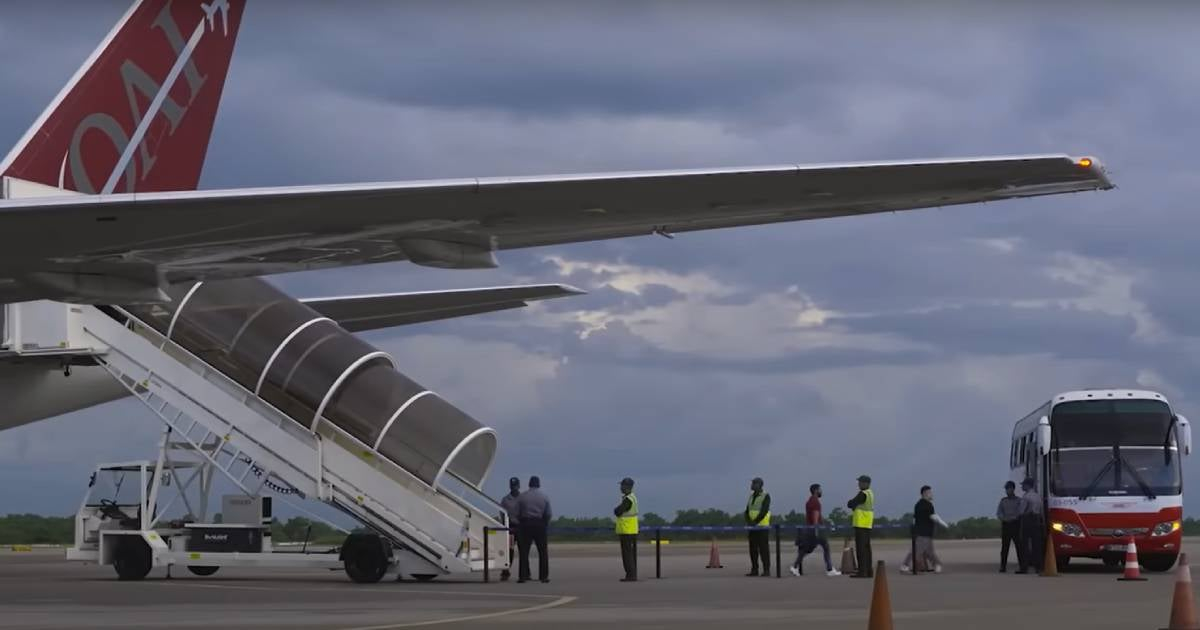
Last week, 161 Cubans were forcibly sent back from the United States, among them was Yudierquis Reyes Merino, who faced the heart-wrenching separation from her two-year-old daughter who couldn't accompany her back to Cuba. Reyes shared her story with CNN, describing the pain of leaving behind her daughter born in the U.S., who was not allowed to be deported with her. "I left my daughter; I lost her. They told me she was an American citizen and couldn't leave the country," Reyes explained. For this mother, her main goal is to reunite with her daughter and rebuild the family torn apart by U.S. immigration policies. "Donald Trump has only three years, but I have the rest of my life. I will go to get her, even if it means 20 years in prison," she declared.
The report highlights that for many of the deportees, it was their first time setting foot on Cuban soil in years. Upon arrival at José Martí International Airport, they disembarked one by one to be processed by Cuban authorities, emotions running high after weeks of detention and the painful family separations. Some appeared bewildered, reacquainting themselves with their homeland after years away and the recent detention in the U.S., as noted by the media outlet.
Another returnee, Tania Carbonell Cruz, shared her experience of living in the U.S. for over three years with her children. Faced with deportation due to shifts in U.S. immigration policy, she chose to return to avoid prolonged imprisonment, leaving her family behind. The deportations come against the backdrop of policy changes by the Trump administration, which stripped Cubans of their preferential status as political refugees, now treating them as immigrants subject to detention and potential deportation.
For decades, Cubans enjoyed expedited access to legal residency in the U.S., a privilege now jeopardized. The deportees also face the challenge of reintegrating into Cuban society after years abroad, in a country grappling with an economic crisis and a scarcity of basic necessities. The U.S. administration plans to continue deportations, while Cuba, despite internal economic struggles and diplomatic tensions, continues to receive its citizens.
Key Questions on Cuban Deportations and Family Separation
What challenges do Cuban deportees face upon returning?
Cuban deportees face the difficulty of reintegrating into a society that is experiencing severe economic struggles and resource shortages. Additionally, they often contend with the emotional trauma of being separated from family members left behind in the United States.
How has U.S. immigration policy changed for Cubans?
Under the Trump administration, Cubans lost their preferential status as political refugees, becoming subject to the same immigration rules as other groups, which include detention and potential deportation. This change has significantly impacted the Cuban community in the U.S.
Why are Cuban deportees unable to bring their children back to Cuba?
Children born in the United States to Cuban parents are U.S. citizens and, therefore, are not subject to deportation. This legal status prevents them from being forcibly relocated with their deported parents back to Cuba.