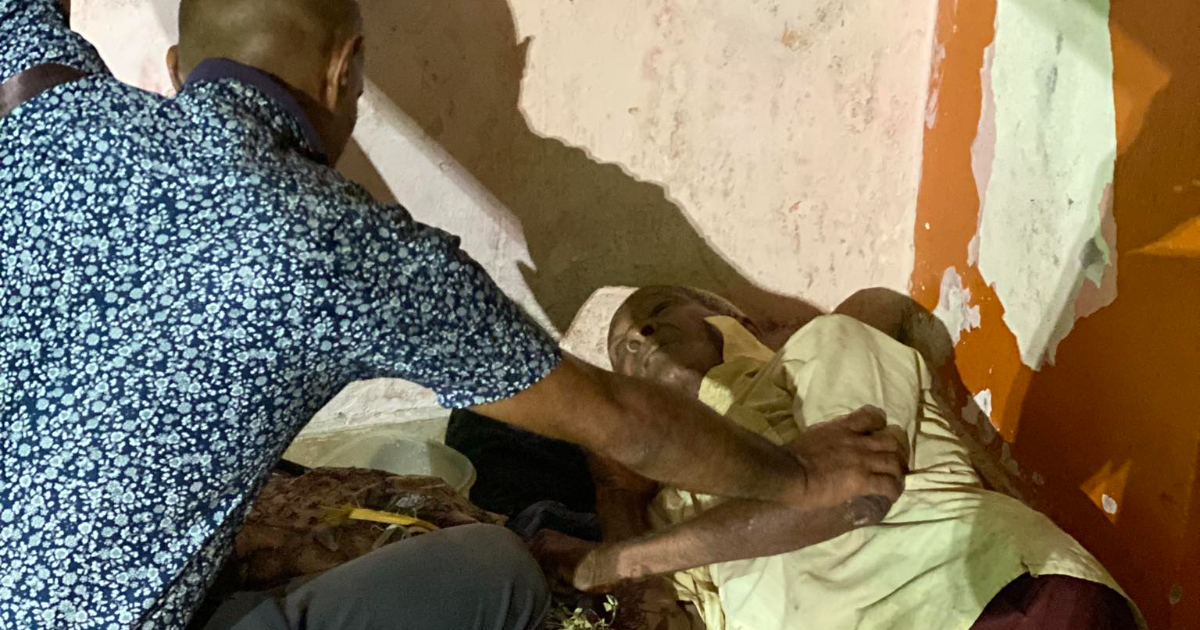
In a startling turn of events in Santiago de Cuba, a former student stumbled upon his old chemistry teacher under unimaginable circumstances—abandoned on the street, alone and forgotten. Yasser Sosa Tamayo, a prominent activist, shared on Facebook how he encountered Manuel, a 79-year-old man, sleeping outside a barbershop, clutching the few belongings he had.
This was no stranger; Manuel had been Sosa's chemistry teacher in high school, the one who taught him the principles of matter and transformation. According to Sosa's account, the elderly man was waiting to receive his pension the next day but had been suffering from hunger for days. Moved by the situation, Sosa offered him food, which Manuel consumed with desperation, as if it were his first breath of air, and also gave him money to ensure he wouldn't return to the streets empty-handed.
Manuel's story is a tragic one. He lost his wife and son in an accident and has since wandered aimlessly, without a home or companionship. "Loneliness is his only company, a burden carried alone," Sosa wrote, questioning, "How is it possible in our society that a teacher ends up like this, abandoned on the street while those who should protect him turn away?"
In the comments section, Sosa emphasized, "Today we saw him... tomorrow it could be anyone. Let's not allow silence to consume them. Share this story, so others can feel and act." His words highlight a growing issue in Cuba, where the abandonment of the elderly is a painful reality.
The account sparked outrage, highlighting not only the vulnerability of an elderly man but also a societal crisis where educators, who once shaped futures, are left destitute. Manuel's plight is not unique. Across the nation, many retired teachers face old age in dire conditions, lacking both family and institutional support.
The Widespread Neglect of Cuba’s Elderly Educators
Examples like Don Manuel, a former university professor now selling recycled bags on a street corner, show how educators who once molded minds have been marginalized by a system that has forgotten them. Another retired teacher collecting cans to survive further illustrates the harsh reality, exacerbated by inflation and soaring prices of essential goods.
Pensions fail to cover even a single daily meal for many. "What I need can't be bought anywhere," lamented one former teacher when recognized by a past student. The situation worsens as the regime's pension increase barely reaches 4,000 Cuban pesos, insufficient for basic necessities such as a carton of eggs or a bottle of oil.
Despite official rhetoric, the truth is that Cuba's elderly endure critical conditions, often relying solely on charity or individual initiatives for aid. Stories like that of Juan Bautista, a teacher and composer reduced to selling drawings on the streets, or a retiree who exhausted her pension on a single item, underscore that a lifetime of work in Cuba does not guarantee a dignified old age.
Government policies continue to overlook the severity of the issue, while state-run nursing homes are either at full capacity or in deplorable conditions. Aging in Cuba, especially for those who served as educators and knowledge bearers, has become a phase marked by abandonment.
The tale of teacher Manuel is merely a glimpse into a far broader and more painful reality, where the dignity of Cuban educators has been cast adrift.
Understanding the Crisis Among Retired Cuban Educators
What challenges do retired teachers in Cuba face?
Retired teachers in Cuba often face severe financial difficulties, lack of family and institutional support, and are frequently forced to live in poverty. Many are unable to afford basic necessities due to insufficient pensions.
How does the Cuban government address the needs of its elderly population?
Although the government has announced pension increases, they are often inadequate to meet the rising costs of living. Many elderly individuals rely on charity or personal initiatives for assistance, as state-run facilities struggle with capacity and conditions.
Why is the story of Manuel significant?
Manuel's story is significant because it highlights the plight of many retired educators in Cuba who, despite their contributions to society, find themselves abandoned and living in poverty. It raises awareness of a systemic issue affecting the nation's elderly.