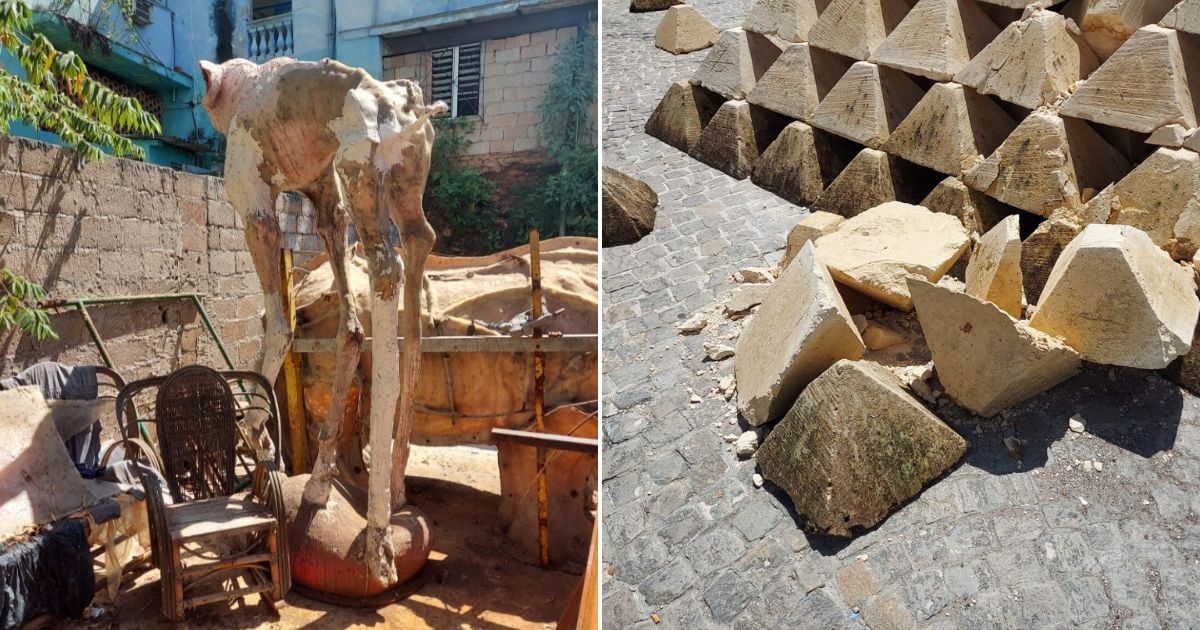
The deliberate destruction of artistic installations in the public spaces of Matanzas adds to a growing list of incidents impacting urban works by various creators in the city. According to the state-run newspaper Girón, the installation "Casa," designed by artists Rubier Bernabeu and Wendy Lora, was vandalized at Plaza de la Vigía. This piece, composed of stacked singing pyramids, was defaced with symbols and engravings, including a swastika, the anarchy symbol, personal insults, and markings inspired by manga series.
Many smaller components of the artwork were toppled and shattered upon hitting the cobblestones. Bernabeu shared photos of the damage, encapsulating the incident with a single term: “Vandalism,” as emphasized by the official newspaper. Originally meant to symbolize homes built on solid foundations and mutual support, the installation became the target of attacks that undermined its intended meaning. However, the official spokesperson acknowledged that this is not an isolated event.
Artistic Works Under Threat Across Matanzas
In Matanzas, various artistic projects have met similar fates. Among them are the stairs on Narváez Street by the same creators, from which a piece was stolen; the late Agustín Drake's installation featuring cattle skulls, thrown into the river mere hours after being set up; and a life-sized Virgin of Charity by Adrián Gómez Sancho, damaged during its exhibition in the historic center.
Other local artists have reported comparable incidents. Osmany Betancourt Falcón recounted having to remove a pig sculpture after it was toppled, while other works of his—benches, characters, and human figures—were covered in graffiti and scratches.
Challenges of Replacing Damaged Art
The artists caution that many of these sculptures are crafted with costly and imported materials, making replacement nearly impossible under current conditions. To them, each act of vandalism is a form of "civic cannibalism," destroying communal assets that are part of the city's urban heritage, while also highlighting a persistent issue the regime has failed to address, showcasing its inefficiency.
Critics also highlight the lack of oversight and protection from local authorities, who scarcely intervene to safeguard the art displayed in public spaces. Amidst economic and social turmoil, artists and citizens emphasize that preserving what little beauty remains is a way to remind the community that life requires symbols of resistance and hope.
A Broader Pattern of Vandalism and Neglect
The attacks on public art in Matanzas are not isolated incidents. Vandalism has become a frequent occurrence throughout the country, where material decay and the absence of state protection fuel a cycle of destruction. Just days ago, families reported tombstone thefts in a cemetery, underscoring that not even the deceased are spared from the neglect of institutions tasked with safeguarding funerary heritage.
The assault on communal assets extends to basic infrastructure as well. In Marianao, the theft of ETECSA cables left many residents without telephone service, further straining communication in an area already suffering from significant technological deficiencies.
These incidents reflect an environment of impunity affecting both cultural life and the daily existence of the population, while also revealing the level of insecurity in Cuba. In Matanzas, the same setting where sculptures and artistic projects have been sabotaged, a billboard featuring Miguel Díaz-Canel was found vandalized. This action, beyond causing material damage, is interpreted as a sign of growing public dissent against official propaganda and a symbol of the political authority's erosion amid the crisis.
Understanding the Vandalism of Art in Cuba
What is the significance of the vandalism against art installations in Matanzas?
The vandalism reflects a broader pattern of societal unrest and dissatisfaction with the current regime, as well as the challenges of maintaining cultural heritage amidst economic hardship.
How have local artists responded to the vandalism of their works?
Local artists have expressed frustration and concern, emphasizing the difficulty of replacing damaged artworks due to the high cost and limited availability of materials, and have criticized the lack of protective measures by authorities.
Why is there a lack of state intervention in protecting public art?
The lack of state intervention is indicative of broader issues within the regime, including inefficiency and a possible underestimation of the importance of cultural preservation.