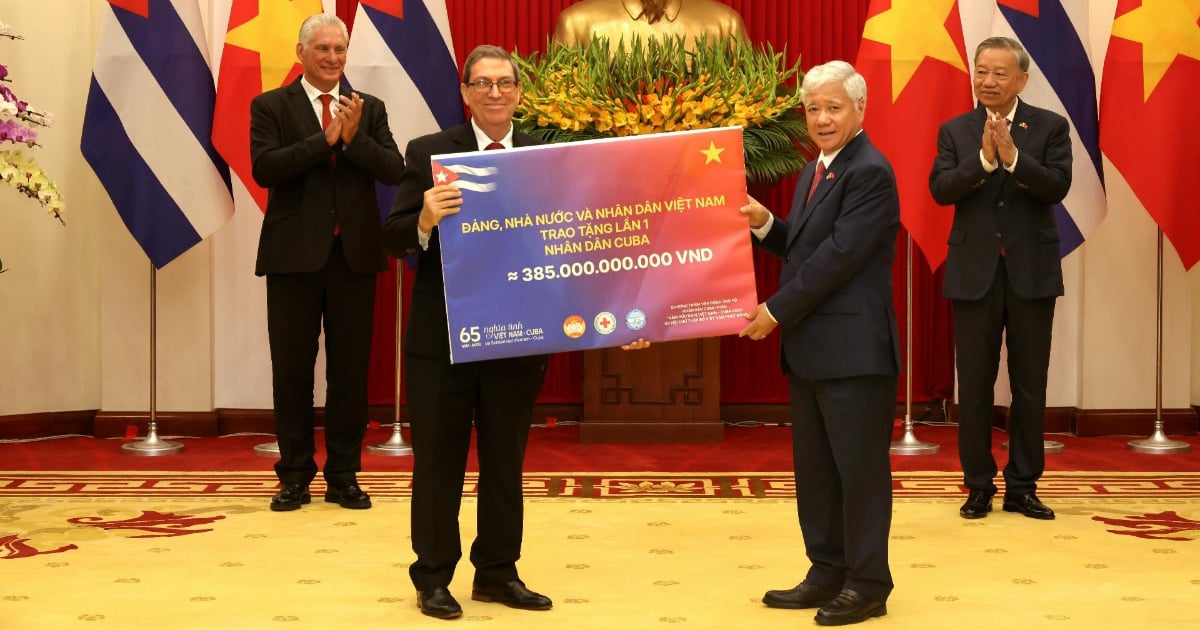
During his tour of Asia, Cuban leader Miguel Díaz-Canel received a substantial $15 million donation on Monday in Hanoi from the Vietnamese government. This donation was a result of a campaign initiated in mid-August by the Vietnamese Communist Party. According to Cuban Foreign Minister Bruno Rodríguez Parrilla, two million Vietnamese citizens contributed to the "65 Years of Vietnam-Cuba Friendship" initiative.
While the event was marked by protocol and camaraderie among party members, it takes place against a backdrop of a worsening economic crisis in Cuba. The island nation continues to struggle with a severe lack of food, medicine, and fuel, as well as daily blackouts that disrupt the lives of millions of Cubans.
Questionable Use of Funds
The donation is presented as an act of "historical solidarity," yet it raises eyebrows that a nation with its own development challenges is channeling millions to an island governed by an elite unwilling to reform a failed economic model. The public display of funds during an official visit, with Díaz-Canel smiling for the cameras, raises concerns about the transparency and utilization of these resources.
In Cuba, there has been no explanation of how the $15 million will be used or what measures will ensure that the funds directly benefit the population rather than being absorbed by the inefficient state machinery. The lack of independent institutions and public audits allows for significant opacity.
Ambitious Agricultural Plans Amidst Chaos
During the meeting, agreements were also signed for rice production in Cuba from 2025 to 2027, an ambitious goal for a country that struggles to maintain a stable electricity supply or keep its bakeries stocked.
The revolutionary symbolism both regimes strive to project loses impact in the face of harsh realities: solidarity between communist governments does not feed the average Cuban nor resolve the deep-seated dysfunctions of a system that has plunged the country into its worst crisis in decades. Meanwhile, its leaders continue to travel and receive donations with solemnity and without accountability.
Strained Alliances and Economic Collapse
The generous Vietnamese donation comes at a time when even the Cuban regime's closest allies are voicing their frustrations. In July, Vietnamese Foreign Minister Bui Thanh Son directly urged Havana to remove barriers hindering investments from Vietnamese companies on the island. This complaint adds to those previously made by China and Russia, two traditional partners now limiting their financial commitments due to the lack of structural reforms and the regime's inability to pay.
For instance, China has canceled its annual sugar import quota and suspended projects due to unpaid debts. While some trade continues, investments have plummeted, and Beijing has sued the Cuban government for millions in unpaid obligations.
Vietnam has donated rice, sent funds, and invested in key sectors of the Cuban economy, such as energy, agriculture, and biotechnology. However, Vietnamese patience is wearing thin. Their businesses face the same bureaucratic hurdles, institutional sluggishness, and financial opacity that have deterred other investors.
The Regime's Diplomatic Begging and Concealed Wealth
The Vietnamese donation fits into a systematic strategy by the Cuban regime: institutionalized international begging. As the country sinks into its most severe economic crisis in decades, with schools lacking teachers and materials, hospitals without medicines, and families missing basic foodstuffs, the government travels from country to country asking for solidarity and showcasing each gesture as a diplomatic victory.
The official celebration of a story about a Vietnamese girl who broke her piggy bank to donate $200 to Cuba starkly highlights this phenomenon. The Cuban ambassador in Vietnam and state media elevated the child's gesture to a heroic act, ignoring the reality for Cuban children, marked by shortages: kids without milk, medicine, or even piggy banks to break.
The most outrageous contrast emerges when it becomes known—and is hidden by those in power—that the military conglomerate GAESA, the economic arm of the Armed Forces, controls assets exceeding $18 billion, according to investigations and specialized sources. This figure has not prompted any official statements or explanations about its origin, its destination, or its possible use for the benefit of the population.
It is scandalous that a regime owing billions to its creditors, that fails to meet its financial commitments, that has been sued in international courts, and that does not allow audits or transparency, shamelessly celebrates the donation of a foreign child while GAESA accumulates wealth that does not translate into welfare for the citizens.
As the Cuban people endure scarcity and misery, the ruling elite capitalizes on every foreign dollar as if it were a revolutionary achievement. Instead of accepting responsibility and transforming a failed economic model, they prefer to live off the rusted narrative of their internationalist rhetoric, using others' solidarity as a propaganda patch to conceal their own failures.
Ultimately, the story of the Vietnamese girl is more than an emotional anecdote: it is a reflection of the institutional cynicism of a system that demands sacrifices from the world while hiding its millions and denying fundamental rights to its own people.
Insight Into Cuba's Economic Crisis and International Relations
Why did Vietnam donate $15 million to Cuba?
Vietnam's donation to Cuba is part of the "65 Years of Vietnam-Cuba Friendship" campaign, reflecting historical solidarity between the two communist countries despite Vietnam's own developmental challenges.
How is the economic crisis affecting Cuba?
Cuba is experiencing a severe economic crisis characterized by chronic shortages of food, medicine, and fuel, alongside daily power outages that disrupt the lives of millions of Cubans.
What are the implications of the Vietnamese donation for the Cuban government?
The donation raises questions about the transparency and usage of funds, as there is no clear plan on how it will benefit the Cuban population, amidst concerns over the efficiency and accountability of the state machinery.