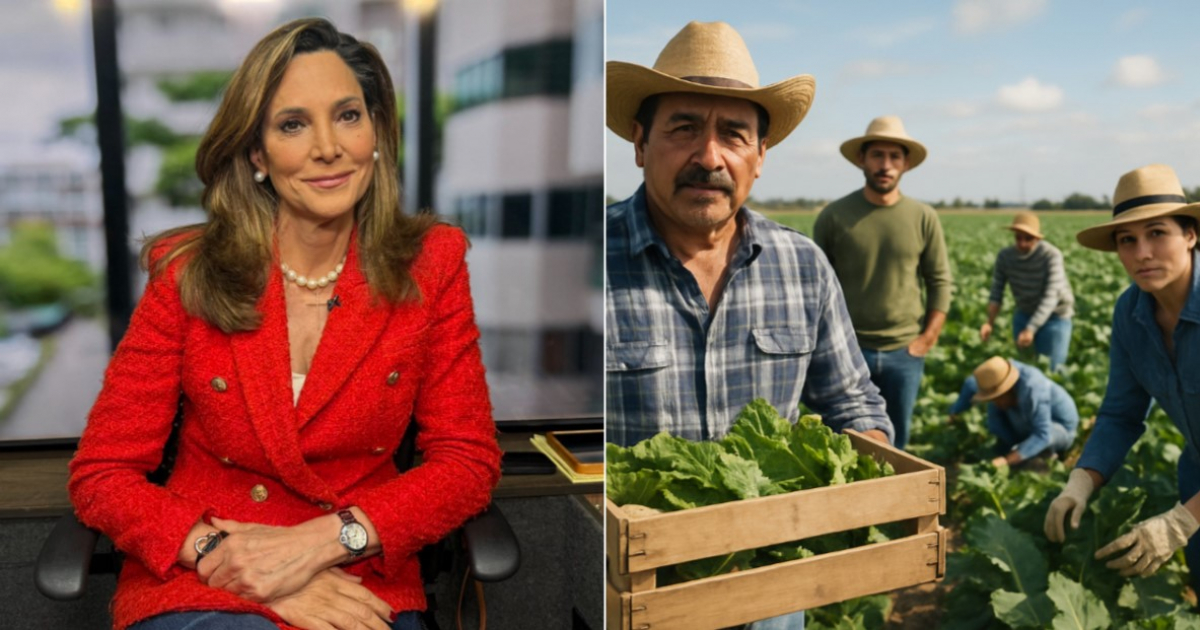
On Monday, Cuban-American Congresswoman María Elvira Salazar emphasized the significant contribution of Hispanic workers to the United States economy, particularly highlighting their crucial role in agriculture. In a post on X, she noted, "Nearly 30% of agricultural workers in the U.S. are Hispanic. Their efforts fill our supermarkets and put food on our tables. This Labor Day, we honor those who harvest our fields and keep America fed, now and always."
In another X post, Salazar stated, "On this Labor Day, we honor Hispanic workers who are seldom seen but on whom we always rely." She further expressed gratitude, stating, "To those who clean our hotel rooms, work in our restaurant kitchens, and keep our country running: THANK YOU! You are the force that unites and strengthens our communities, and we are profoundly grateful."
These statements are part of a series of recent messages from the Republican legislator, where she consistently acknowledges the importance of migrants to the nation, especially in the context of losing over a million immigrants from the U.S. workforce. Just a few months ago, María Elvira publicly defended migrant workers, asserting they are an essential part of the U.S. economy and deserve more dignified conditions.
The Push for Dignity and Legalization
Previously, Salazar warned Congress about the repercussions of tightening immigration measures, stressing that mass deportations and labor restrictions would directly impact key sectors like construction, agriculture, and services.
Her stance is not new. For years, Salazar has advocated for the "Dignity Act," an initiative aimed at regularizing millions of undocumented individuals who have resided in the country for over a decade, in exchange for bolstered border security and tax responsibilities. According to Salazar, this proposal offers "a realistic solution to a problem that neither Democrats nor Republicans have resolved in decades."
The Republican congresswoman from Florida's 27th district has sought to establish herself as a pragmatic voice within her party, amid a political climate shaped by former President Donald Trump's immigration policies. While both have defended the need for stricter controls, Salazar insists on a legal pathway for those sustaining essential economic sectors.
Strategic and Human Recognition
In past statements, Salazar emphasized that "these workers put food on our tables," and ignoring their contribution is both a strategic and human error. Her Labor Day message reinforces this notion, aligning it with a narrative that blends the recognition of Hispanic sacrifices with the urgency of immigration reform, which she argues cannot be postponed any longer.
Recently, however, former President Donald Trump acknowledged the crucial role of immigrants in sectors like agriculture, suggesting his administration was considering adjustments in immigration policies to protect agricultural production. In contrast, Trump celebrated in March that wage gains for U.S.-born workers surpassed those of migrant and foreign workers for the first time in 15 months.
The Impact of Immigration Policies on the U.S. Economy
Why are Hispanic workers crucial to the U.S. economy?
Hispanic workers are vital to the U.S. economy because they make up nearly 30% of the agricultural workforce, ensuring food supply by filling supermarkets and providing food for American tables.
What is the "Dignity Act" proposed by María Elvira Salazar?
The "Dignity Act" is a legislative initiative that aims to regularize millions of undocumented immigrants who have lived in the U.S. for over a decade, in exchange for enhanced border security and tax obligations.
What are the potential consequences of stricter immigration measures?
Stricter immigration measures could lead to mass deportations and labor restrictions, negatively impacting crucial sectors like construction, agriculture, and services by reducing the available workforce.