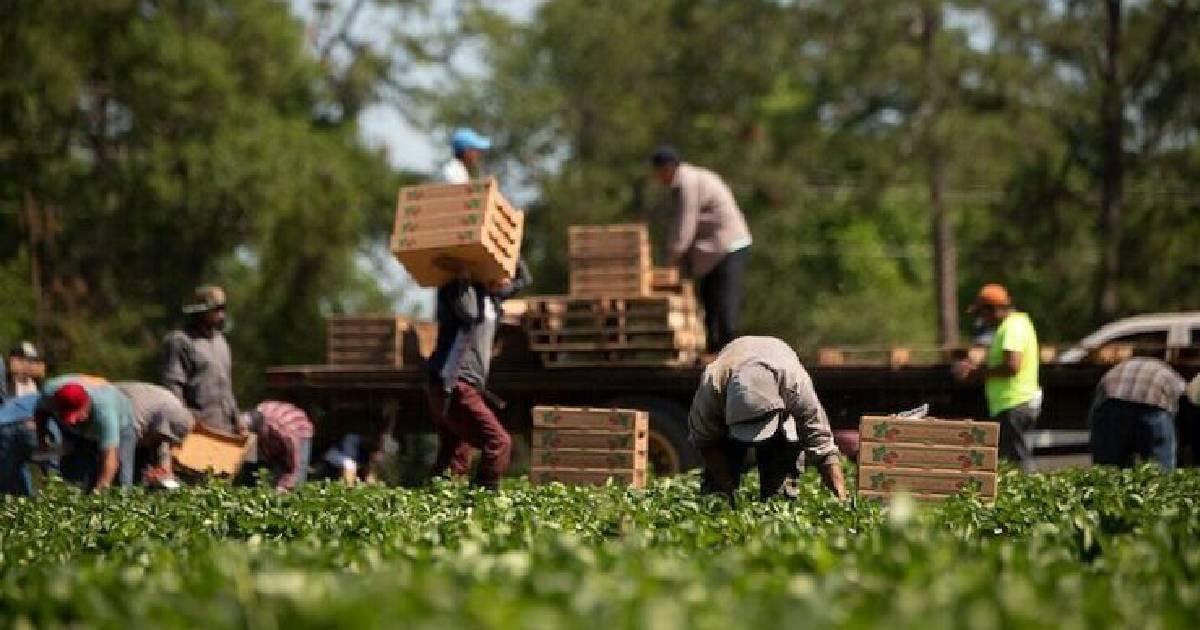
The United States is witnessing an unprecedented decline in its workforce as a result of intensified immigration policies. Over a million immigrants have exited the labor market so far in 2025, according to preliminary Census data analyzed by the Pew Research Center and reported by the Associated Press (AP).
This decline is largely attributed to the widespread raids conducted by the Immigration and Customs Enforcement (ICE), which have instilled fear and led to absences in crucial economic sectors. Despite President Donald Trump's emphasis on targeting "dangerous criminals," most detainees have no criminal records, as highlighted by the cited source.
Amidst mounting criticism, Homeland Security Secretary Kristi Noem defended the immigration policy's outcomes in a message shared this Monday on X. "This Labor Day, America is working for Americans again. 100% of new jobs have gone to citizens, and 2.5 million people have returned to work since January. Under Biden, 88% of jobs went to foreign-born workers. Meanwhile, DHS reforms have saved taxpayers over $13.2 billion," she stated. "President Trump and I are prioritizing American workers. Happy Labor Day!" she added.
Immigrants make up nearly 20% of the U.S. workforce, significantly contributing to agriculture, construction, and services, as AP noted. In these sectors, the absence of workers has led to unharvested crops, stalled construction projects, and employers struggling to find replacements.
The economic impact is particularly pronounced in states like California and Texas, where agricultural producers report millions in losses due to labor shortages. "In May, during the watermelon and melon season, many crops went to waste," warned Elizabeth Rodríguez from the National Farmworker Ministry.
Labor economists, such as Pia Orrenius from the Federal Reserve Bank of Dallas, emphasize that immigrants traditionally contributed at least half of the nation's job growth. The reduction in immigration, coupled with stricter federal policies, is already affecting economic growth.
The repercussions reach beyond the fields. In construction, metropolitan areas like Los Angeles and Riverside have lost thousands of jobs due to the lack of immigrant workers. In healthcare, experts warn that up to 43% of home care aides are immigrants, which could impact millions of American families. "Closing the door on immigrants not only weakens the economy but also compromises the ability to care for the population," cautioned Arnulfo De La Cruz, president of SEIU 2015 in California.
Since Donald Trump returned to the White House for a second term and Kristi Noem assumed the role of Homeland Security Secretary, the U.S. has experienced an unprecedented decline in its immigrant population, especially among non-citizens and undocumented migrants. "In less than 200 days, 1.6 million illegal immigrants have left the United States. This means safer streets, savings for taxpayers, less strain on schools and hospitals, and better job opportunities for Americans," Noem wrote last August on her official X account.
In March, Trump celebrated that earnings for U.S.-born workers surpassed those of migrant and foreign workers for the first time in 15 months. According to data at the time, employment for U.S.-born workers increased by 284,000 in January, while foreign workers saw a decline of 87,000 positions.
Impact of Immigration Policies on U.S. Workforce
How has the U.S. workforce been affected by immigration raids?
The U.S. workforce has seen a reduction of over a million immigrants, leading to significant labor shortages in essential sectors like agriculture, construction, and healthcare.
What sectors are most impacted by the decline in immigrant workers?
Sectors such as agriculture, construction, and healthcare are most affected. These industries rely heavily on immigrant labor, and their absence has caused disruptions and economic losses.
What are the economic implications of reduced immigrant labor?
The economic implications include unharvested crops, stalled construction projects, and increased challenges in the healthcare sector, leading to financial losses and potential service disruptions.
What has been the government's stance on immigration policy during Trump's second term?
The government under Trump and Secretary Kristi Noem has emphasized prioritizing American workers and reducing the presence of undocumented immigrants, citing benefits such as safer streets and savings for taxpayers.