On Monday, the Cuban regime transformed the beginning of the school year into yet another display of political propaganda, portraying the reopening of schools as a triumph of the socialist model, despite the growing challenges faced by students, families, and teachers. In a message on the X platform (formerly Twitter), Cuban leader Miguel Díaz-Canel described education as "one of the most beautiful and vital achievements of the Revolution," continuing a narrative that overlooks the everyday issues plaguing the education sector: teacher shortages, low salaries, deteriorating infrastructure, and lack of basic materials.
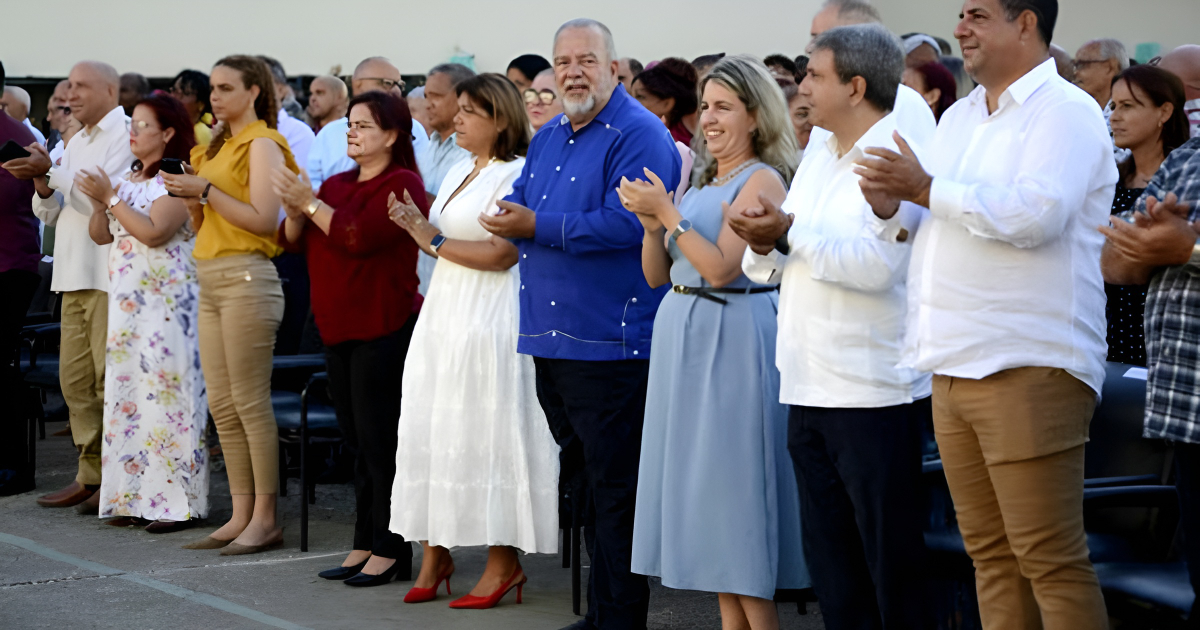
The central event marking the start of the 2025-2026 academic year was held at the 'Tania la Guerrillera' pedagogical school in Pinar del Río, a school inaugurated 50 years ago by dictator Fidel Castro. Minister of Education, Naima Trujillo Barreto, echoed statements made by Castro in 1975, urging the need to "maintain universal, inclusive, and free education as the foundation for any national endeavor." She acknowledged the "difficult conditions" at the start of the school year, framing these challenges as a testament to the resilience of the system.
Prime Minister Manuel Marrero Cruz visited the school's History Hall, praising Castro and urging the preservation of his memory. The script of the event, filled with references to the revolutionary past, once again placed education in the realm of political propaganda, rather than a realistic analysis of the needs of students and teachers. Official data indicates that over 1.53 million students attended classes on Monday across all levels of education. However, Cuban families experienced a reality vastly different from the official speeches and state media portrayals.
The Struggles of Cuban Families as the School Year Begins
While the Cuban regime insists on portraying each school year's start as a "conquest of the Revolution," families on the island face a starkly different reality, characterized by material scarcity and uncertainty. What should be a time of excitement for the return to school has turned into an obstacle course for many parents, revealing the deep cracks in the educational system.
In secondary classrooms, a single notebook must be shared between two subjects. This officially termed "adjusted norm" forces families to divide notebooks in half or split their pages, a tactic meant to disguise the shortage of supplies, ultimately impacting student learning. Those unable to afford the approximately 200 pesos for a notebook on the black market must adhere to this makeshift measure.
The issue of school uniforms is similarly pressing. The state managed to produce only 2.3 million of the 3.6 million pieces needed, meaning that just 20 percent of students will start the year in new clothes. The rest must reuse hand-me-downs, patched uniforms, or buy them at exorbitant prices: a set can exceed 5,000 pesos on the informal market, a cost beyond the reach of most households.
Infrastructure and Teacher Shortages Worsen the Situation
School infrastructure is not immune to the crisis. Thousands of schools opened their doors in deplorable conditions, with leaking roofs, broken windows, and insufficient furniture. Instances of students sitting on the floor due to a lack of desks, or classes interrupted by power outages, are not uncommon. Teachers and students are often forced to conduct lessons in semi-darkness or wait for a generator to arrive.
The teacher deficit exacerbates the situation. For instance, Matanzas began the school year with over 2,000 vacant teaching positions, and nationwide, around 24,000 roles remain unfilled, leaving one in eight positions vacant. Low salaries, professional burnout, and migration to other sectors have left classrooms understaffed and, in many cases, in the hands of inadequately trained personnel.
The True Cost of "Free Education"
The so-called "free education" has turned into a heavy burden for families. A primary school notebook can cost up to 1,400 pesos in private businesses, a sum most cannot afford. Add to this the expenses for backpacks, shoes, snacks, and other necessities, making each school year a financial ordeal.
Behind the regime's triumphant discourse and the epic narrative crafted by state media, which speaks of "rivers of innocence" and "silent feats," lies the real story of September: parents battling inflation and scarcity to ensure their children can attend school with the bare essentials. This is the untold side of the school year's start in Cuba, one that propaganda never reveals.
Education as a Tool for Indoctrination
When Díaz-Canel describes education as "one of the most beautiful and vital achievements of the Revolution," he not only attempts to highlight a historical achievement of the regime but also reveals the ideological core upon which the Cuban educational system is built: indoctrination as a guarantee of political permanence. Since 1959, education on the island has been closely tied to shaping a citizen molded by the values and doctrines of socialism.
This so-called "vital achievement" has meant, in practice, a network of subjects, manuals, programs, and pedagogical practices aimed at glorifying Castro, the revolutionary process, and its leaders, while marginalizing or delegitimizing any critical or independent thought. The centrality of ideology in education is reflected in the obligatory political events, patriotic mornings, and school campaigns that echo the regime's rhetoric.
From the earliest grades, students are exposed to slogans and a narrative that leaves no room for questioning or plurality. This model turns classrooms into extensions of the social control apparatus and laboratories for legitimizing power.
By speaking of "vital achievement," Díaz-Canel conceals the truth that education, far from being an open space for thought and academic formation, has functioned as a pillar of political hegemony. The persistence of this epic narrative—the idea that without the "revolution," there would be no schools, teachers, or future—becomes a mechanism to shape the perception of several generations and prevent the emergence of dissenting voices. This is where Díaz-Canel's phrase reveals its true meaning: education not as a citizen's right, but as a strategic piece to sustain the regime.
Key Challenges in Cuban Education
What are the main issues affecting Cuban education today?
The primary issues include teacher shortages, low salaries, deteriorating infrastructure, and a lack of basic educational materials. These challenges are compounded by the regime's focus on political propaganda rather than addressing systemic educational needs.
How do Cuban families cope with school-related expenses?
Cuban families struggle with the high cost of school supplies, uniforms, and other necessities amid inflation and scarcity. Many resort to the black market, where prices are significantly higher, to provide their children with the essentials for school.
Why does the Cuban regime emphasize education as a revolutionary achievement?
The regime emphasizes education as a revolutionary achievement to maintain ideological control and ensure political loyalty. Education serves as a tool for indoctrination, reinforcing the regime's narrative and discouraging dissent.