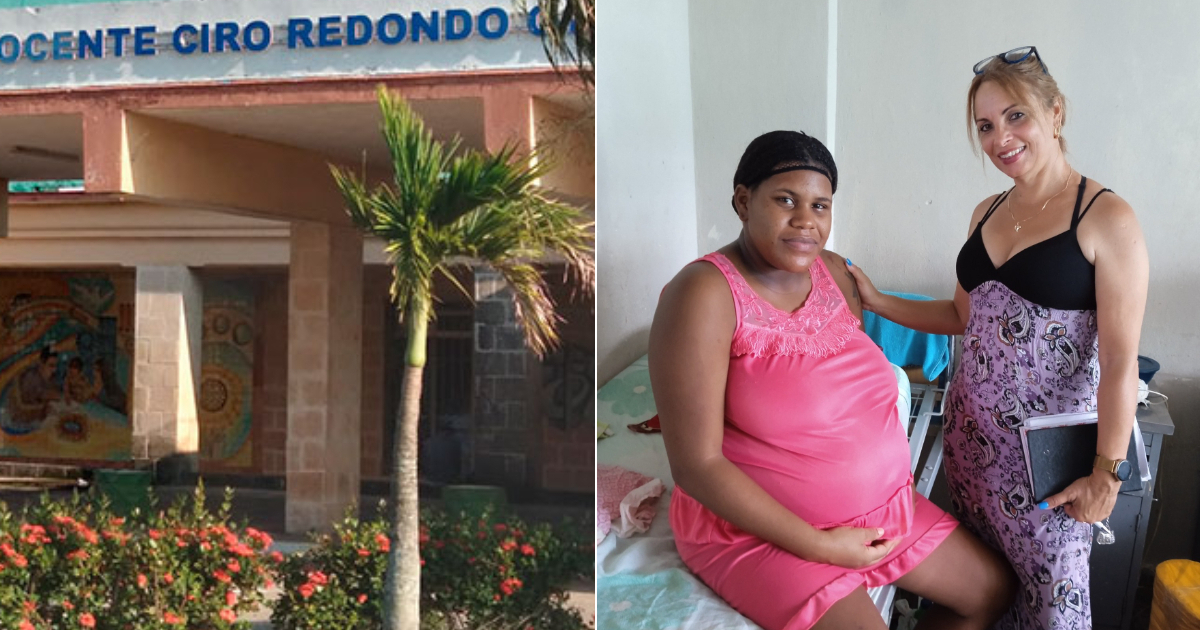
In a remarkable event, three babies were delivered at “Ciro Redondo García” General Hospital in Artemisa at 34 weeks of pregnancy, each weighing appropriately for their gestational age, as confirmed by provincial health authorities. Originally scheduled for Tuesday, the delivery occurred earlier, on Monday afternoon, coinciding with World Obstetrics and Pregnancy Day. This successful birth followed weeks of specialized monitoring in the hospital's Perinatal and Maternity Care units.
According to the Artemisa Newspaper, a multidisciplinary team from the Maternal and Child Health Program, in collaboration with the Health Area and the hospital, facilitated a controlled environment to bring the pregnancy to term. Yanelis Amador Borrego, the provincial health director, highlighted that both the mother and her triplets are under medical supervision and expressed optimism about their soon return home. She also shared images capturing the moment of delivery and one of the mother during her advanced pregnancy stage.
The local medical community has celebrated the birth of these triplets, viewing it as a joyful occasion that underscores the dedication of the local health system. However, this event occurs amidst significant national challenges in maternal and infant care. Cuba's infant mortality rate, as of July 12, 2025, has risen to 8.2 per 1,000 live births, the highest since 2003, marking an 11% increase from the previous year, as reported by the Ministry of Public Health to the National Assembly of People's Power.
José Ángel Portal Miranda, the head of the health sector, has openly acknowledged the setbacks facing the Maternal and Child Program, amidst declining birth rates, shortages of essential medications, and structural limitations in hospitals and maternity homes. Up until that date, there were 28,400 births, 6,738 fewer than the same period in 2024. Although there were 26 fewer infant deaths in absolute numbers, the drop in birth rates led to an overall increase in the mortality rate.
Artemisa is among the provinces that maintained infant mortality rates below the national average, with five infant deaths per 1,000 live births, alongside Sancti Spíritus, Cienfuegos, Matanzas, Pinar del Río, and Las Tunas. Conversely, other regions have seen worsening indicators due to inadequate conditions to protect pregnant women and newborns, as admitted by health officials.
The delivery in Artemisa adds to recent cases that have captured public attention due to their human element and professional dedication. In Holguín, a newborn with a congenital malformation endured weeks of surgery and intensive care, while in Sancti Spíritus, prematurely born twins survived thanks to their mother's skin-to-skin contact. In Granma, a baby weighing just 1,100 grams recovered after 94 days in the hospital.
There have also been reports of triplet births in other provinces. In Villa Clara, in September 2024, three babies were discharged after a month and a half in the hospital, and a second multiple birth was celebrated in October at the same hospital, both with favorable outcomes despite the system's limitations. In a nation where healthcare challenges are mounting, the healthy birth of triplets in Artemisa is not only heartening news but also a testament to the commitment of many healthcare professionals.
Key Information on Maternal and Infant Health in Cuba
What is the current infant mortality rate in Cuba?
As of July 12, 2025, Cuba's infant mortality rate is 8.2 per 1,000 live births, the highest since 2003.
How did the Artemisa hospital manage the triplet birth?
The birth was supported by a multidisciplinary team from the Maternal and Child Health Program in a controlled environment, following weeks of specialized monitoring.
What challenges does the Maternal and Child Program in Cuba face?
The program faces challenges such as declining birth rates, shortages of essential medications, and structural limitations in healthcare facilities.