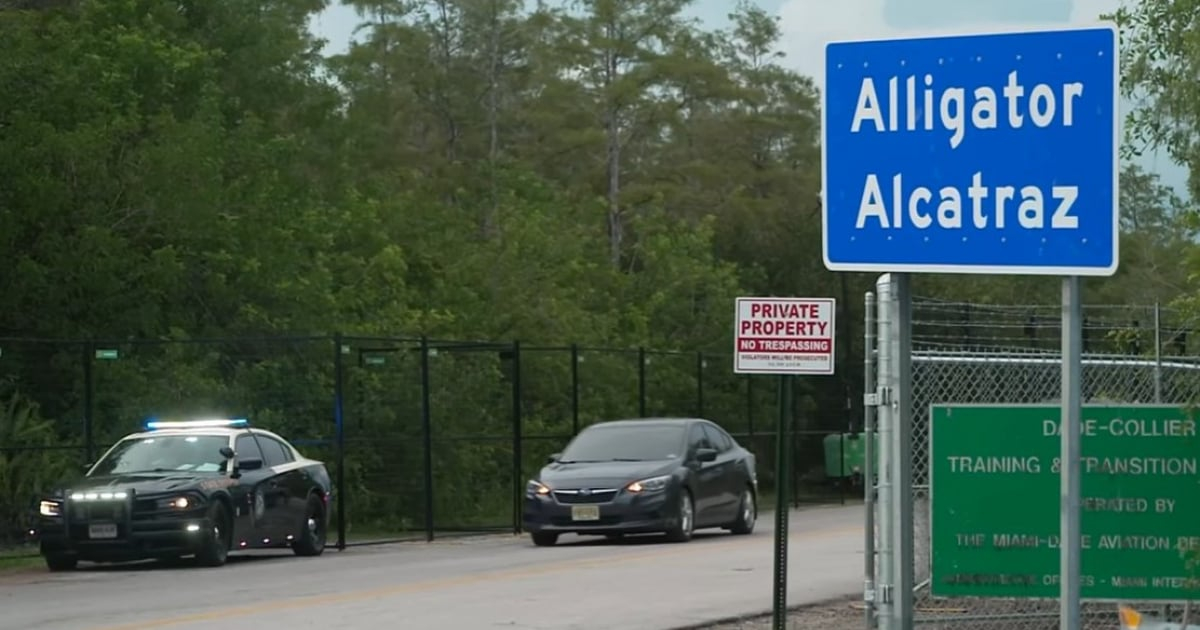
The immigrant detention center, nicknamed "Alligator Alcatraz," located in the Everglades of Florida, is at risk of becoming one of the state's most expensive and short-lived projects. Less than two months after opening, it faces a court order to shut down, threatening $218 million of taxpayer money.
As reported by CNN with information from the Associated Press (AP), federal judge Kathleen Williams has mandated that the center cease operations due to environmental legal violations, and it must remain closed indefinitely. The immediate cost of closure is estimated to be between $15 and $20 million, while reopening would incur similar expenses.
An AP analysis, cited by Telemundo 51, revealed that the state has already signed contracts worth $405 million with construction, security, and service companies. Out of this amount, at least $218 million has already been spent and faces potential loss as the facility rapidly empties. The director of Florida's Division of Emergency Management (FEMA) acknowledged that the center could be devoid of detainees in just a few days.
Notably, a significant portion of the funding came from emergency funds managed by FEMA, typically reserved for hurricanes and natural disasters, but controversially redirected to this detention center.
Environmental and Legal Controversies
The project has been mired in controversy since its inception. According to the Hindustan Times, environmental groups and the Miccosukee tribe sued the state and federal government for not conducting a required environmental impact study before establishing the center within a protected ecosystem.
Additionally, critics have pointed out a lack of transparency in the awarding of contracts, many of which were signed hastily without competitive bidding, raising concerns about favoritism and influence-peddling, as reported by Telemundo 51.
Human Rights Concerns
Various civil rights organizations have filed lawsuits concerning the conditions inside the facility, which includes metal mesh cages surrounding tents with bunk beds, poorly maintained portable toilets, floors flooded with waste, and detainees lacking regular access to legal counsel.
Despite Governor Ron DeSantis’ insistence on continuing operations and announcing a second center in the northern part of the state, Alligator Alcatraz has become a symbol of scrutiny. Beyond the potential financial burden on taxpayers, it highlights the impact on thousands of immigrants who have passed through what advocates describe as "inhumane" conditions.
Originally intended as a measure to toughen immigration policy, this project now faces the paradox of becoming a costly white elephant, hastily built with an uncertain future.
Frequently Asked Questions About the Alligator Alcatraz Shutdown
What is the reason for the closure of Alligator Alcatraz?
The closure is due to a federal court order citing environmental legal violations, mandating the facility to remain closed indefinitely.
How much could the closure of the detention center cost?
The immediate cost of the closure is estimated to be between $15 and $20 million, with similar expenses anticipated if the center attempts to reopen.
What controversies surround the Alligator Alcatraz project?
The project has faced criticism for bypassing required environmental impact studies and for a lack of transparency in contract awards, raising concerns of favoritism.