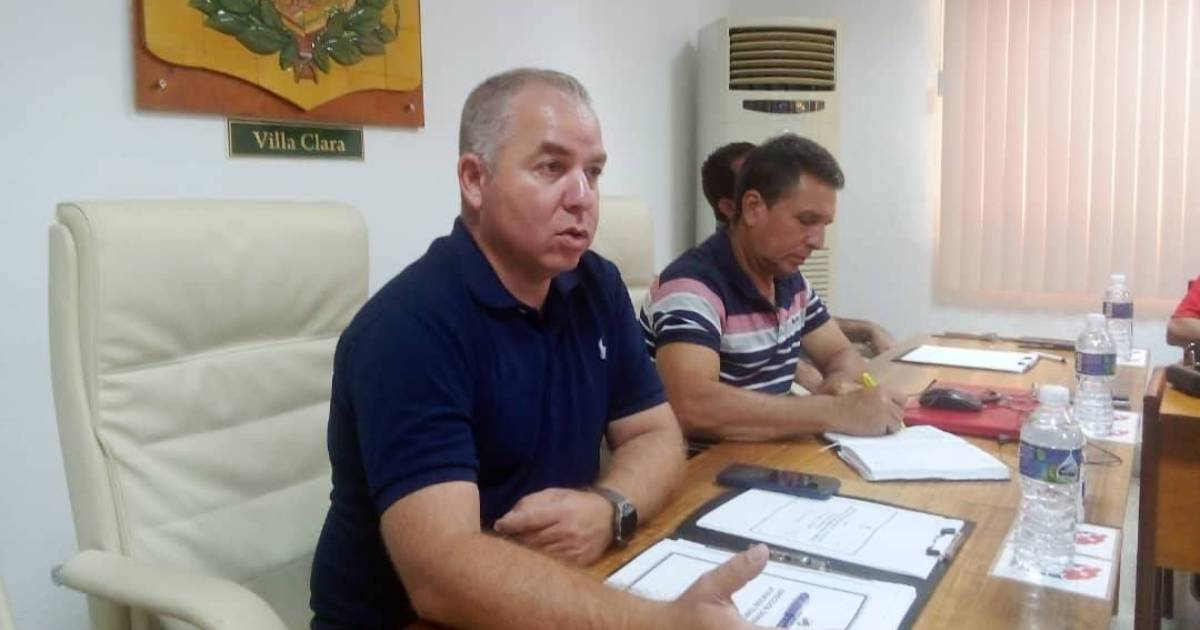
Cuba's Minister of Finance and Prices, Vladimir Regueiro Ale, recently made a trip to Santa Clara to emphasize the province's alleged budget surplus and its "development potential." He argued that this could bolster local projects without the need to print more money—a move he claimed would exacerbate national inflation and economic imbalance.
During his visit, as reported by official outlets Telecubanacán and Estereocentro, Regueiro painted a picture of sound financial management in Santa Clara, suggesting it could serve as a model for efficient administration. He asserted that the surplus would enable investments in initiatives to enhance the quality of life for residents, emphasizing the importance of transparent resource distribution and public involvement.
Regueiro also identified several sectors with "untapped potential," such as tourism, agriculture, and local industry, which he believed could drive economic revitalization if approached with creativity and innovation. According to Telecubanacán, Regueiro highlighted the need for improved income collection, including fines and tax debts, while exploring new strategies to attract funds amid ongoing price hikes.
Despite the positive developments in Santa Clara, Regueiro acknowledged that much work remains to be done to ensure that the surplus leads to real, sustained growth across the regions.
A Stark Contrast to Cuba's National Reality
The optimism expressed in Santa Clara starkly contrasts with the widespread hardship facing millions of Cubans across the country. While the minister spoke of surplus and "great potential," the nation grapples with up to 13-hour blackouts, inflation exceeding 500%, shortages of essential goods, and a crisis many economists deem comparable, if not worse, than the Special Period.
Recent reports reveal that the Cuban economy shrank by 1.1% in 2024, with a cumulative decline of over 11% since 2019. The Economic Commission for Latin America and the Caribbean (CEPAL) forecasts two more years of contraction or stagnation, with a negative GDP of -1.5% in 2025 and a mere 0.1% growth in 2026.
Meanwhile, the energy crisis has worsened, with an electric shortfall around 1,725 MW, leaving entire neighborhoods without power for days. This situation disrupts production, impacts daily life, and deepens public despair.
In this context of collective hardship, the talk of surplus in Santa Clara seems more like official propaganda than a tangible relief for a population struggling with inflation, blackouts, and a bleak outlook.
Understanding Cuba's Economic Challenges
What is the current state of Cuba's economy?
Cuba is experiencing severe economic difficulties, including high inflation, frequent power outages, and a significant contraction in GDP. The country has seen over an 11% economic decline since 2019.
How does the situation in Santa Clara differ from the rest of Cuba?
Santa Clara is reported to have a budget surplus and development potential, which contrasts with the widespread economic hardships elsewhere in Cuba. This surplus is intended for local projects to improve residents' lives.
What sectors in Santa Clara are considered to have potential for economic growth?
Tourism, agriculture, and local industry are identified as areas with significant potential for economic growth in Santa Clara, provided they are leveraged with innovation.