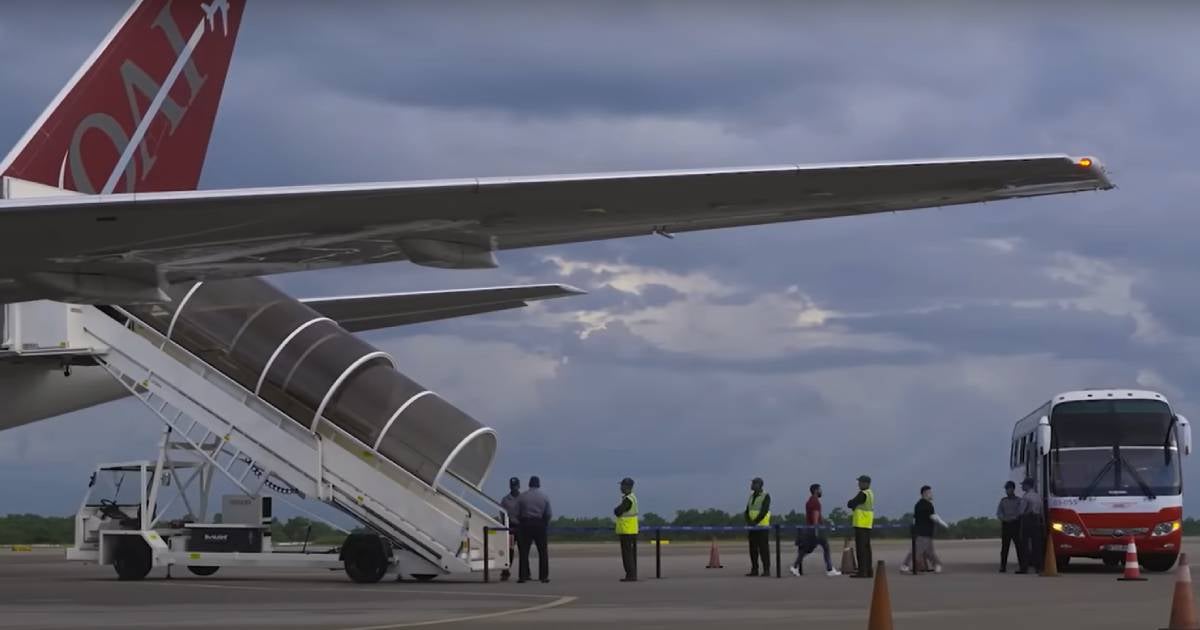
A recent deportation flight from the United States touched down in Havana last Thursday, carrying not just over 150 handcuffed, tearful Cubans but also stories that highlight the human toll of the largest migration wave in the island's history. The Ministry of the Interior (MININT) merely announced on its social media that this was the eighth operation of 2025 and the 33rd from various countries in the region without providing details about the passengers, their profiles, or their immediate destinations.
Several hours later, official journalist Lázaro Manuel Alonso reported on 161 irregular migrants (37 women and 124 men), yet provided no further specifics. While the Cuban official narrative emphasized adherence to migration agreements with Washington, an exclusive report by independent media Belly of the Beast, in partnership with CBS News, revealed another side of the story. The report showed detainees in handcuffs, tears flowing as they disembarked the plane, and families shattered by deportation.
The Human Cost of Deportation
Cameras captured the moment agents received the deported individuals on the tarmac at José Martí International Airport. Soon after, stories emerged of those separated from their children in the U.S. A mother tearfully recounted being forced to leave her two-year-old daughter, a U.S. citizen, with her grandmother. "They mistreated me and made me leave my daughter. They said I couldn't leave the country," she shared.
The same woman described how immigration detained her three months ago, compelling her to give fingerprints while preventing her from leaving with her child. "I always said I didn't want anything from the United States except my daughter. But if they don't return her to me, I would risk my life again and leave. Let them imprison me," she declared.
Struggles of Separated Families
Another woman admitted that deportation left her separated from her son and two grandchildren. "I'm still processing this," she said. When asked about her plans, she replied, "Nothing, my home. I have my cousin here, and I'll continue moving forward in our country."
Other deportees shared their resignation in returning to rebuild their lives in Cuba. One individual acknowledged that the "American dream" was not what he had anticipated: "When we face the harsh reality, there's no place like this."
Exposing the True Narrative
Belly of the Beast's access to the internal workings of the flight was unusual and only possible with the Cuban regime's authorization. Johana Tablada, a Ministry of Foreign Affairs (MINREX) official, even shared the report on social media, indicating the government's interest in promoting this narrative. However, instead of dampening the effect, the captured images and testimonies lay bare a human drama that transcends any propaganda attempts.
According to CBS News, the August 28 flight carried 150 Cubans detained in U.S. immigration centers. It was the eighth such flight this year and part of a long list of forced returns under bilateral agreements signed during the Reagan, Clinton, and Obama administrations. The Cuban government claims it will uphold its commitment to these agreements to ensure a "safe, regular, and orderly migration flow," even as the United States halted bilateral talks and the Trump administration tightened sanctions and eliminated programs protecting thousands of migrants.
Over the past five years, more than a million Cubans have emigrated, marking the largest wave in the country's history. Many sought a different future in the United States, but for hundreds, like the passengers on this flight, the journey concluded with handcuffs and the heartbreaking weight of family separation.
Understanding the Impact of Forced Deportations
What was the purpose of the latest deportation flight to Cuba?
The recent deportation flight aimed to return over 150 Cubans from the United States to Cuba as part of ongoing migration agreements.
What stories emerged from the deported individuals?
Heartbreaking stories of separation and despair emerged, with individuals recounting being forced to leave family members behind in the U.S.
How has the Cuban government responded to the deportations?
The Cuban government continues to uphold its migration agreements with the U.S., despite the challenges posed by recent deportations.