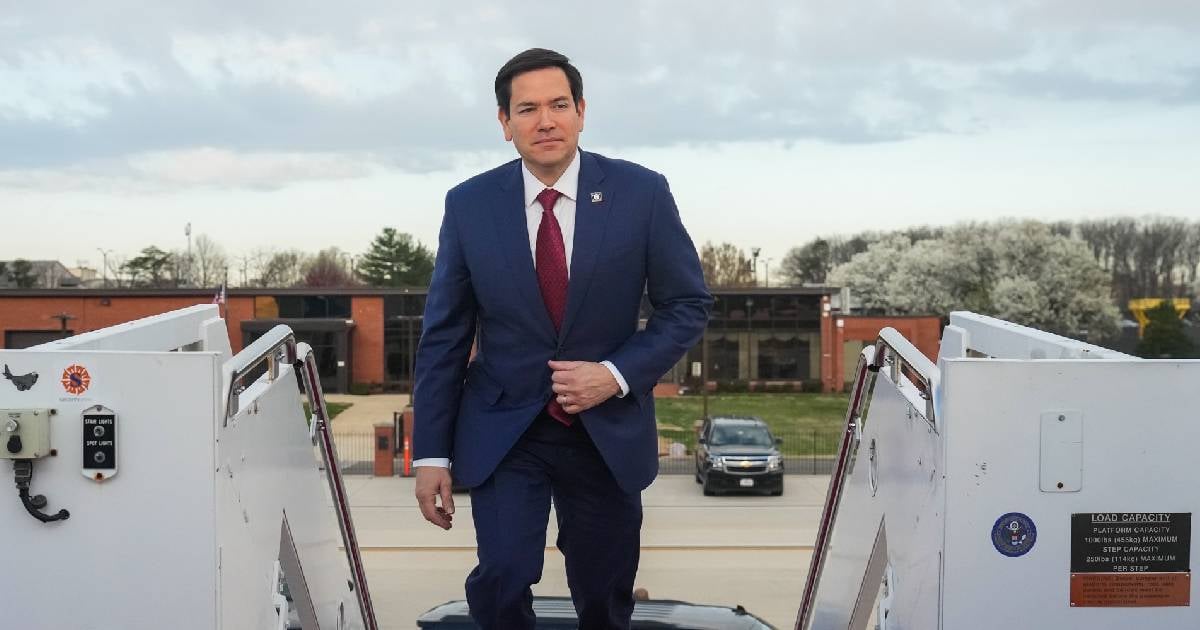
This past Friday, U.S. Secretary of State, Marco Rubio, paid a visit to the U.S. Southern Command (SOUTHCOM) headquarters situated in Doral, Florida, against a backdrop of rising tensions between Washington and Nicolás Maduro's regime in Venezuela.
According to the State Department's official schedule, Rubio engaged in closed-door discussions with Admiral Alvin Holsey and other top military officials. The primary focus was on reviewing strategic priorities in Latin America and the Caribbean, with a particular emphasis on regional security, anti-drug trafficking efforts, and defense cooperation.
This visit follows the deployment of eight U.S. warships in Caribbean and Pacific waters, part of a "reinforced counter-narcotics operation," which many see as a clear signal directed at Maduro. The naval group comprises destroyers, an amphibious ship carrying 2,500 Marines, a cruiser, and landing units, supplemented by helicopters and specialized drug interdiction agents.
From the White House, Press Secretary Karoline Leavitt intensified the rhetoric by labeling the Venezuelan leader as "a fugitive narcoterrorism kingpin" and asserting that "Nicolás Maduro is not the legitimate president of Venezuela."
In response, Maduro instructed the deployment of 15,000 troops along the Colombian border and urged militias to be "prepared to defend the national territory" against what he described as a foreign intervention plan. This military buildup has stirred concerns throughout the region. Although the Pentagon has stated that U.S. ships "are not near the Venezuelan coast," the presence of the USS Iwo Jima, with Marines aboard heading to the Caribbean, heightens the perception of an impending confrontation.
Despite the tough talk, U.S. diplomats have clarified that Washington "is not pursuing a U.S.-led regime change." Nevertheless, the ramping up of sanctions, the increase of the bounty on Maduro to $50 million, and the escalation of military maneuvers continue to put pressure on Caracas.
Simultaneously, the Trump administration maintains certain cooperative channels with Venezuela, such as granting Chevron licenses to export oil and coordinating deportation flights, with nearly 8,000 Venezuelans returned since February.
Rubio's visit to SOUTHCOM is seen as an endorsement of Washington's strategy in the region, coming at a time when military and political balance in the Caribbean is once again a focal point of hemispheric agendas.
In the coming days, amid this context, Rubio is set to visit Mexico and Ecuador to advance key areas for the Trump administration, including combating drug trafficking, curbing illegal immigration, reducing the trade deficit, and strengthening alliances against China's growing influence in Latin America.
Key Questions on U.S. and Venezuela Relations
What was the main purpose of Marco Rubio's visit to the U.S. Southern Command?
Marco Rubio's visit aimed to discuss strategic priorities in Latin America and the Caribbean, focusing on regional security, anti-narcotics efforts, and defense cooperation with top military officials.
How did the U.S. respond to tensions with Nicolás Maduro's regime?
The U.S. deployed eight warships in Caribbean and Pacific waters as part of a reinforced counter-narcotics operation, signaling a strong stance against Maduro's regime.
What actions has Nicolás Maduro taken in response to U.S. military movements?
Nicolás Maduro ordered the deployment of 15,000 troops to the Colombian border and called on militias to be ready to defend against perceived foreign intervention.