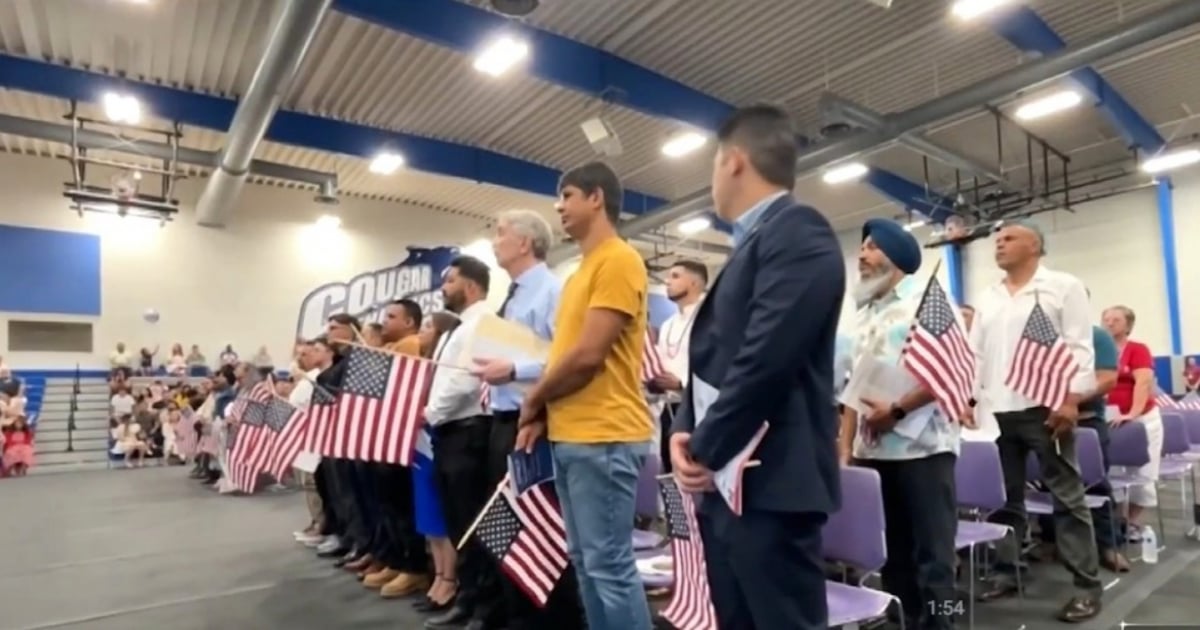
The administration under President Donald Trump has revived a practice that was abandoned back in 1991: the so-called "neighborhood investigations" as a step in the naturalization process for legal immigrants in the United States. On August 22, the United States Citizenship and Immigration Services (USCIS) issued a memo directing the reinstatement of these personal checks, permitting officers to conduct interviews with neighbors, employers, or coworkers of individuals applying for U.S. citizenship.
This decision reverses an exemption that had been in place for over three decades and expands the authority of USCIS officers to implement this measure on a "case-by-case" basis, as authorized by Section 335(a) of the Immigration and Nationality Act (INA). "USCIS is resuming personal investigations of foreign nationals seeking naturalization in accordance with Section 335(a) of the INA," the memo states.
What Do Neighborhood Checks Entail?
These investigations involve visits to the applicant's neighborhood or workplace to verify key eligibility factors: residency, moral character, adherence to the U.S. Constitution, and willingness to contribute to the "good order and happiness" of the nation, as required by U.S. immigration law. Officers are now able to request and review testimonial letters from individuals familiar with the applicant—such as neighbors, employers, or coworkers—and even interview them directly.
"Americans should feel reassured knowing that USCIS takes its responsibility seriously to ensure that foreign nationals... possess good moral character, adhere to the principles of the Constitution... and are well-disposed to the good order and happiness of the United States," stated USCIS Director Joseph Edlow in comments reported by local media. If an applicant does not voluntarily provide such evidence, they may be subject to a more in-depth neighborhood verification. This measure could also lead to delays in the naturalization process.
A Step Further in Tightening Immigration Policies
Although neighborhood checks have been part of the law since 1965, their use was nearly abandoned starting in 1991 when the then Immigration and Naturalization Service (INS, the predecessor to USCIS) ceased employing them due to inefficiency, high cost, and limited usefulness, according to former officials. "It was seen as one of those outdated processes," said Doris Meissner, former INS Commissioner under President Clinton. "They required a lot of work and rarely provided useful information," she added.
Since then, the federal government had opted to verify applicants' backgrounds through biometric checks and FBI criminal databases. However, this shift by the Trump administration is part of a broader strategy to restrict access to legal immigration, alongside other measures such as reducing the refugee admission program, ending Biden-era humanitarian policies, and tightening the criteria for "good moral character."
"Incorporating neighborhood investigations will enhance these legally required checks to ensure we fulfill Congress's intent," noted Edlow in Politico.
Criticism: New Standard or Intimidation Tactic?
The measure has faced harsh criticism from immigrant rights organizations, former officials, and Democratic sectors, who argue that its true purpose is to create a hostile environment that deters immigrants from applying for citizenship, even if they are eligible. "The idea is to create a more intimidating atmosphere that discourages people from seeking naturalization," warned Meissner to CBS News.
Another concern is the lack of clear guidelines for implementation. According to Erik Finch, a former USCIS official and current Director of Global Operations at Boundless, the ambiguity of the new protocol opens the door to inconsistent decisions. "Without clear standards, two applicants with nearly identical cases could face very different levels of scrutiny," Finch warned.
Additionally, immigrant advocates emphasize that such policies can lead to arbitrary discrimination or selective persecution, particularly against racialized migrant communities.
Practical Consequences: Delays, Uncertainty, and Community Pressure
The resumption of neighborhood checks not only adds a new layer of discretion but also represents a significant logistical and operational shift for a system already under strain. USCIS officials themselves acknowledge that the measure could cause delays in the naturalization process, particularly due to staffing shortages following budget cuts.
Employers and neighbors contacted by USCIS are not required to prepare specific documentation but should be ready to confirm basic information about the applicant if requested.
FAQs on USCIS Neighborhood Monitoring
What is the purpose of USCIS neighborhood investigations?
Neighborhood investigations aim to verify key eligibility factors such as residency, moral character, and adherence to the U.S. Constitution as part of the citizenship application process.
How do neighborhood checks affect the naturalization process?
These checks could lead to delays in the process due to increased scrutiny and potential staffing shortages at USCIS.
Are there any criticisms of the neighborhood investigation policy?
Yes, critics argue that the measure could create an intimidating environment and lead to arbitrary discrimination or selective persecution, particularly against racialized communities.