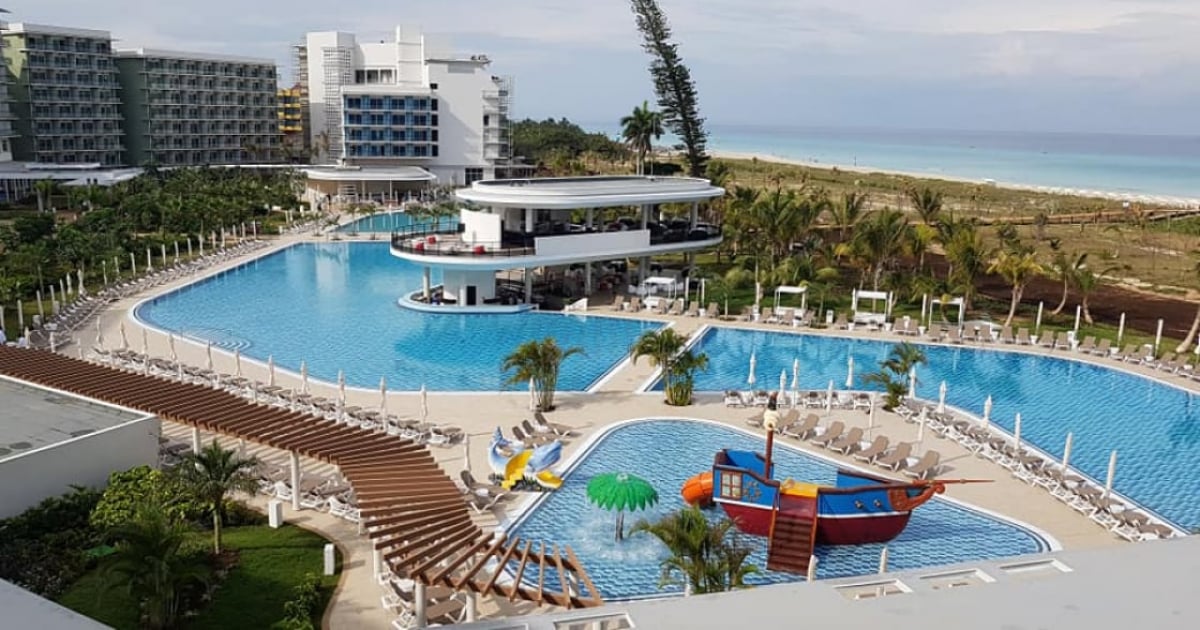
An incident that may seem trivial at first glance has come to represent the dire state of Cuba's tourism and economy. Spanish journalist Ángel Expósito, who leads programs for the COPE radio network, shared a shocking encounter he had at a Spanish-branded hotel in Havana upon ordering something as simple as a coffee: "I'm sorry, sir, we don't have any. There's no coffee in Cuba."
Expósito was staying at what was advertised as a high-end, luxurious hotel that supposedly assures comfort and quality service. On his first morning, after having a coffee included in the breakfast buffet, he requested another one from the menu, even offering to pay extra. The waiter's response was as brief as it was devastating: "It's not a matter of money, there's simply none. Not anywhere on the Island."
The journalist described the situation as "surreal": an international hotel in a country that once boasted the finest coffee in the Caribbean unable to serve the beverage, integral to its identity. "It's like going to Jerez and there's no sherry, or to La Mancha and there's no cheese. Coffee is part of the identity here, and even that is missing," he remarked in disbelief.
A Luxury Without Luxuries
This anecdote paints a clear picture of the structural crisis deeply affecting tourism, which is the main revenue source for Cuba's socialist regime. One of the most significant factors is the energy crisis: power outages lasting over 12 hours cripple hotel and restaurant operations. Many establishments rely on diesel generators, but frequent fuel shortages render them useless.
The Minister of Tourism, Juan Carlos García Granda, has acknowledged financial difficulties, shortages in hotel supplies, and a massive exodus of skilled workers like receptionists, tour guides, and waiters.
The contradiction in Cuba is stark: while the cost of vacation packages is lower than in places like the Dominican Republic or Mexico, what seemed like a bargain turns into a letdown. As the Spanish journalist noted, tourists pay for "all-inclusive" deals that effectively become "nothing included."
The Decline of the Industry
According to the National Office of Statistics and Information (ONEI), Cuba witnessed a 29.1% decline in tourist arrivals in the early months of 2025 compared to the same period the previous year. The international tourism crisis in Cuba has intensified in 2025, solidifying a downward trend that shatters hopes for recovery.
Between January and July, 1,577,330 travelers visited, marking a 17.2% drop compared to the same timeframe in 2024, with 328,126 fewer visitors. Spanish tourists, once one of the most loyal markets, are turning their backs on the destination: only 65,000 visited the Island in 2024, and the forecast for this year is even lower.
The minister admitted to the National Assembly that the outlook for 2025 is grim, with expectations of only 2.6 million visitors, far below the 4.6 million in 2018.
Stories That Multiply
The coffee incident is not an isolated case. Tourists from various countries report similar experiences on social media and in specialized forums: cucumber juice served instead of orange, rooms without hot water for days, or empty buffets.
Just recently, a viral video showed two Spaniards in Varadero claiming to have seen cockroaches in their hotel buffet. "Perhaps the worst part was the cockroaches... we did see them," one visitor stated. The couple also shared that at a 24-hour restaurant, they were only offered a club sandwich "because there was nothing else." Upon opening it, they chose not to eat it "to avoid getting diarrhea on the first day."
In June, a Russian tourist shared her bitter experience at a five-star hotel in Varadero, where she expected to enjoy a luxurious vacation but ended up facing subpar conditions. "The taps were leaking, hairdryers didn't work, everything was dirty. I felt cheated. They treat tourists like pigs."
A Symbol of the Collapse
Expósito's story about the coffee has resonated because it encapsulates in a single moment what statistics and testimonials reveal: a country struggling to provide even the most basic amenities, not even in luxury hotels that are supposed to be a showcase for international tourism.
The regime persists in building more hotels despite declining occupancy rates, while hospitals and essential sectors like food remain understocked. The paradox of Cuba might be best summed up in that phrase that left the journalist speechless: "They didn't have coffee. In Cuba. The country once a symbol of the best coffee in the Caribbean."
Cuba's Tourism Crisis: Key Questions Answered
What are the main issues affecting tourism in Cuba?
The main issues affecting tourism in Cuba include a severe energy crisis leading to frequent power outages, shortages in hotel supplies, and a significant loss of skilled workers.
How has the number of tourists visiting Cuba changed over recent years?
Cuba has seen a steep decline in tourist numbers, with a 29.1% decrease in the early months of 2025 compared to the previous year, and a 17.2% drop in arrivals between January and July 2025 compared to 2024.
What has been the impact on tourists visiting Cuba?
Tourists have faced numerous inconveniences, including a lack of basic amenities in luxury hotels, unreliable services, and poor conditions, leading to widespread dissatisfaction.