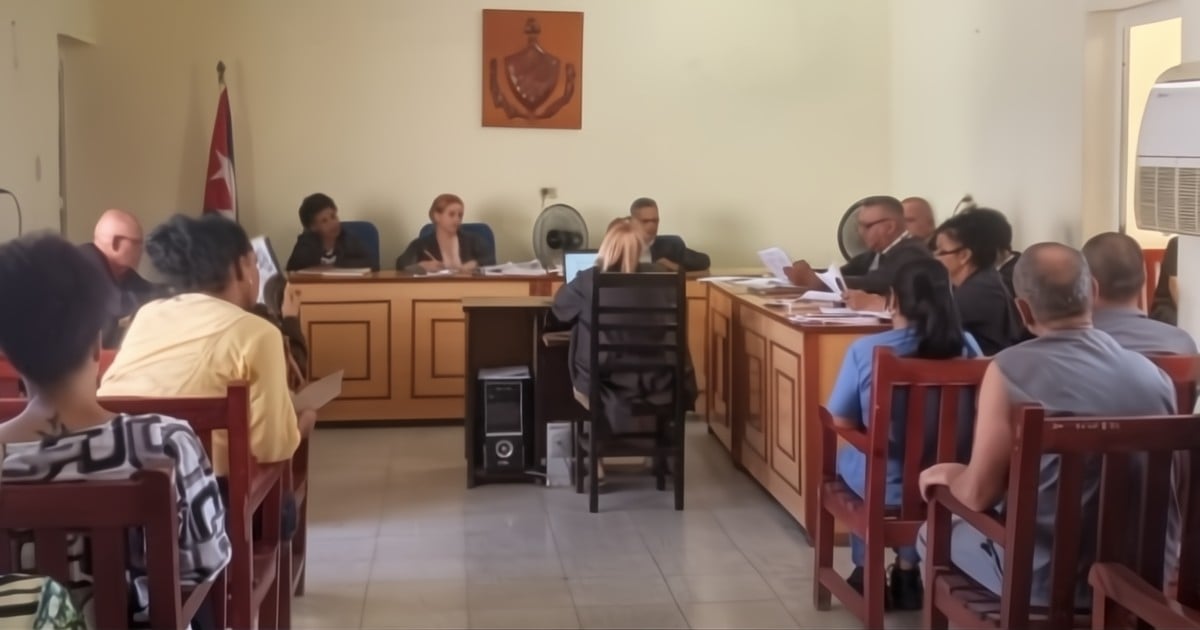
Five executives from the Agricultural Supplies Company in Sancti Spíritus have been penalized due to negligence and embezzlement, resulting in losses exceeding 97 million pesos. This judicial process highlights the lack of oversight and the impact of corruption in crucial state-run entities for the Cuban economy.
According to the state-run newspaper Escambray, Case No. 64 of 2025 was publicly deliberated on August 22 and 23 in the Criminal Chamber of the Provincial People's Court of Sancti Spíritus. The hearings disclosed incidents from 2023 to 2024 involving resource mismanagement and irregular contracts with external parties, causing substantial financial harm.
A particularly notable incident involved the meat refrigerator meant for employees' internal consumption at the UEB Commercialization and Services supply warehouse. The refrigerator malfunctioned twice, failing to preserve the necessary cooling. Despite awareness of the issue, the executives did not implement effective measures to save large quantities of salami, sardines, hamburger patties, ground beef and pork, and fish fillets, resulting in a loss exceeding three million pesos.
Unraveling a Major Financial Scandal
The most economically damaging case involved operations with a self-proclaimed independent contractor, who acted as a representative of a Local Development Project. Despite regulations requiring immediate payment for goods, the officials repeatedly provided supplies without payment, hoping to boost the company's revenue and ensure employee salaries. However, the individual absconded with products worth over 94 million pesos and fled the country, making recovery impossible.
The Provincial People's Court found the accused guilty of failing to safeguard assets in economic entities and embezzlement. The penalties were severe: the former general director, who served until April 2024, received a 20-year prison sentence; the UEB Commercialization director, 18 years; the commercial director, 16 years; and the legal advisor, 10 years. The prior general director, in charge during 2023, was sentenced to two years and six months of imprisonment, replaced with corrective labor with internment.
Additional sanctions included the loss of rights, a travel ban, passport issuance restrictions, and a prohibition on holding similar positions in the future. Civilly, they were mandated to jointly compensate the Agricultural Supplies Company for the losses incurred.
Wider Implications of Corruption and Mismanagement
The judgment, subject to appeal before the Supreme People's Court, underscores the gravity of the situation and the authorities' intent to deliver a cautionary message. Amidst a profound economic and supply crisis, this trial exposes how mismanagement and corruption can drain public funds and exacerbate societal shortages.
This case adds to a series of corruption scandals in Cuba, highlighting its pervasive impact on daily life. Recently, it was revealed that GAESA had debts exceeding 18 billion dollars, illustrating financial mismanagement within state structures. Institutional decay is evident in legal proceedings, where two former Housing officials were convicted of resource management crimes.
These cases reveal not only high-level corruption but also illegal practices within agencies responsible for meeting basic needs. Meanwhile, the crisis and lack of state control manifest on the streets. In Matanzas, the clandestine sale of newspapers shows citizens seeking information alternatives in a growing informal market amid official shortages. Similarly, in Havana, a state bus driver was caught charging 100 CUP per passenger, illustrating corruption's reach into basic services.
Together, these events paint a picture of fraud, impunity, and an underground economy intertwining, further eroding public trust and worsening essential sectors' precariousness for the Cuban populace.
Frequently Asked Questions on Corruption and Mismanagement in Cuba
What were the consequences for the officials involved in the embezzlement case?
The officials received prison sentences ranging from 2.5 to 20 years, alongside additional penalties such as loss of rights, travel bans, and restrictions on holding similar positions in the future.
How did the mismanagement impact the Agricultural Supplies Company financially?
The company suffered losses exceeding 97 million pesos due to negligence and irregular contracts with external parties.
What broader issues does this case highlight about the Cuban economy?
This case highlights systemic corruption, ineffective oversight, and financial mismanagement within crucial state entities, worsening the country's economic and social challenges.