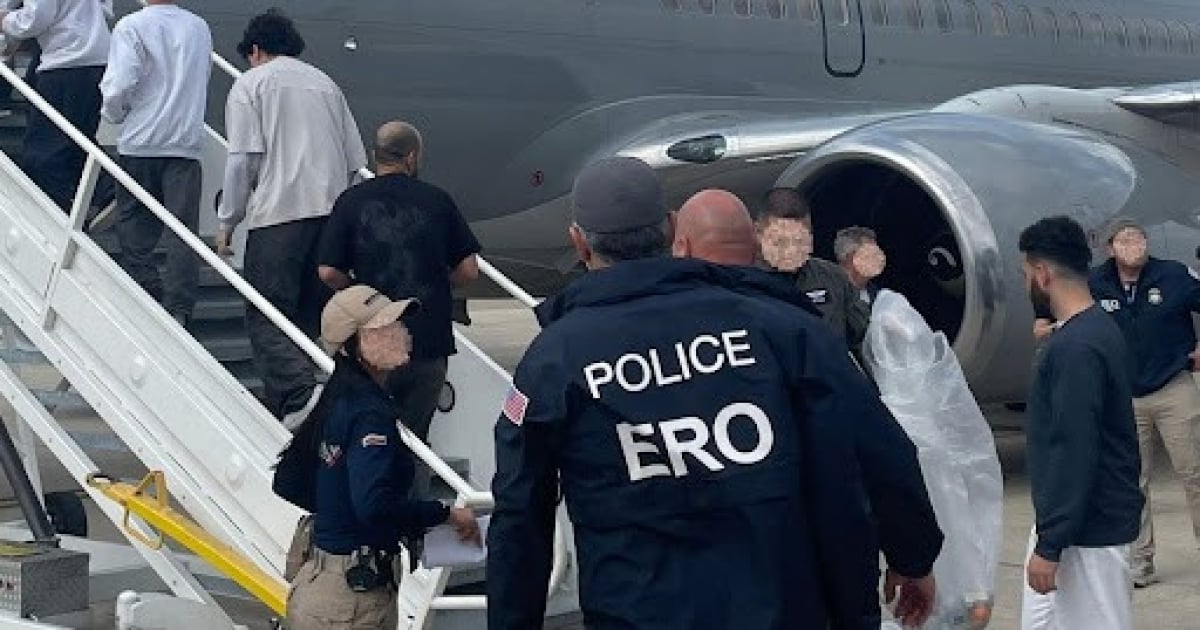
A decision by the Board of Immigration Appeals on July 23 (Matter of OYAE) has reversed the protection granted under the Convention Against Torture by an Immigration Judge on December 4, 2024, to a former lieutenant and ex-counterintelligence officer from Venezuela. She asserted that deportation would lead to imprisonment and torture. The Department of Homeland Security appealed the ruling, which was overturned because the Board determined that the last threats she received occurred years prior to her departure from Venezuela, and she suffered no harm after those incidents.
Attorney Willy Allen commented to CiberCuba that this ruling, applied to a former oppressor seeking refuge in the United States, could negatively impact Cuban human rights activists and opponents awaiting asylum cases. The Board concluded that although the former Chavista officer was threatened in July 2021 by a military unit commander for refusing to falsify a document, she left Venezuela in 2024 without facing any threats or harm in the three years prior. She claims that after the second visit from the commander, she retired, and the intimidation stopped.
Implications for Cuban Activists
For the Board of Immigration Appeals, the harassment she experienced in Venezuela does not demonstrate a personalized risk in her case. Translated to the Cuban context, this implies that a political police detention occurring three years before leaving Cuba would not suffice to win an asylum case. Currently, there are 13 Cuban activists and the minor daughter of jailed opposition leader José Daniel Ferrer facing "challenges with their immigration status."
In May, Anamely Ramos, who participated in the San Isidro hunger strike that sparked the July 11 protests, shared a letter on social media highlighting the "immigration vulnerability" of prominent regime opposition activists such as Omara Ruiz Urquiola, Oscar Casanella, El Funky, Esteban Lázaro Rodríguez López, and herself. The letter, also signed by Daniela Patricia Ferrer Reyes, was addressed to Senator Marco Rubio, Florida representatives, and Kristi Noem, Secretary of the Department of Homeland Security (DHS).
Seeking a Resolution
The letter aims to "raise awareness and explore pathways to find a migration solution" for their cases. The request seeks to prevent further victimization of activists who have actively opposed the totalitarian regime in a democratic setting. They are essentially asking for a meeting with Marco Rubio and the halting of their deportation orders.
The 14 signatories emphasize that their exodus is "political and forced." "Many activists on the list were given an ultimatum to leave the country as the only way to avoid criminal prosecution, and some were even released from prison to be sent directly to the airport. The strategy of emptying the country of peaceful opposition to the Castro regime is clear, a new repressive pattern confirmed by the activists who have not been allowed to return to Cuba without declared reasons," they argue.
The Broader Context of Cuban Exile
The letter also seeks to "highlight the political nature of the Cuban people's exile," recalling "the closure of the political refugee program in 2017, which has not been reopened under any subsequent presidency, not even when the U.S. Embassy in Havana reopened in 2022." According to the affected opposition members, this has led to political activists and former political prisoners' cases being lost in a vast wave of migration, whether through irregular means or programs like the humanitarian parole. Although the latter's name is almost identical to the former U.S. Refugee Admissions Program (USRAP), it is widely recognized that its criteria were much more flexible concerning case presentation, evaluation, and selection, besides not being limited to Cuba.
The letter is signed by the following individuals: Eliexer Marquez Duany (El Funky), Daniela Patricia Ferrer Reyes (daughter of José Daniel Ferrer), Oscar Antonio Casanella Saint-Blancard, Lázaro Yuri Valle Roca, Eralidis Frómeta Polanco, José Rolando Casares Soto, Yamilka Abascal Sánchez, Esteban Lázaro Rodríguez López, Julio Góngora Millo, Alexeys Blanco Díaz, Anamely Ramos González, Omara Isabel Ruiz Urquiola, Yaneris Redondo León, Mariana de la Caridad Fernández León.
Understanding the Impact of U.S. Immigration Rulings on Cuban Activists
How does the recent U.S. immigration ruling affect Cuban activists?
The ruling may set a precedent that undermines asylum claims of Cuban activists, as it demonstrates that past threats without recent harm may not suffice to prove individual risk, potentially leading to deportation.
What actions are Cuban activists taking in response to their immigration challenges?
They have signed a letter to U.S. officials, including Marco Rubio, seeking to halt deportation orders and address their immigration vulnerabilities, emphasizing their forced political exile.