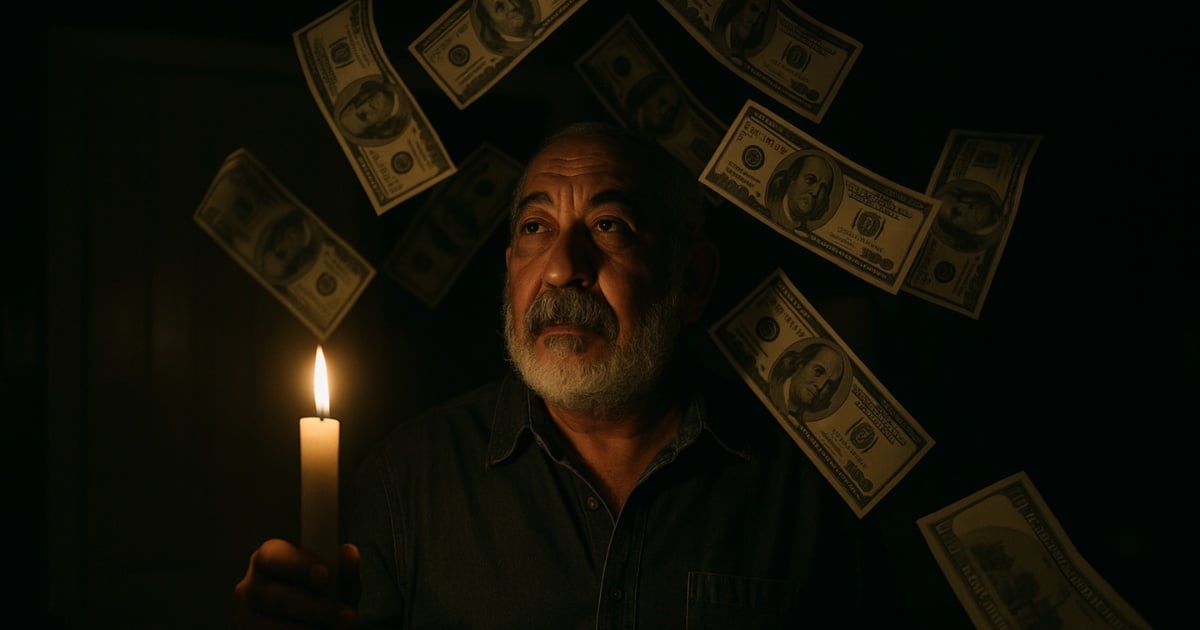
Cuban author Leonardo Padura, recipient of the 2015 Princess of Asturias Award for Literature, recently disclosed that he had to install a solar panel system with a battery at his home to cope with the frequent blackouts plaguing Havana. This setup, costing $4,000, is beyond the reach of many Cubans who rely on average wages and pensions.
In an interview with Jorge Morla for the newspaper El País, Padura shared that the extended power outages forced him to make this substantial investment. He acknowledged during the phone conversation that such an installation is a luxury few can afford in Cuba, given the country's severe economic crisis. "Not everyone can afford this," the author remarked, aware that most of his neighbors endure power cuts lasting up to 20 hours daily.
Known for his detective series featuring Mario Conde, Padura highlighted the grim reality facing Cubans, who have had to integrate hardship into their daily lives while often remaining silent. "Day after day, we have no choice but to incorporate this misery into life, and in many cases, to remain silent," he stated.
Padura also reflected on how many Cubans feel poorer than ever after years of sacrifice and dedication to the revolution, now relying heavily on remittances from abroad to get by. He emphasized that certain cultural phenomena in the island, particularly the urban music genre known as "reparto," mirror the ongoing social, economic, and cultural decline since the Special Period of the 1990s. The repercussions of that era, he asserted, continue to affect millions of Cubans today.
While promoting his new novel, Morir en la arena (Dying in the Sand), Padura noted that his fiction seeks to capture the contemporary Cuban reality—a nation worn down by hardship, censorship, and dwindling hope for imminent change. He cautiously referenced the context of repression, mentioning the harsh sentences imposed on participants in the July 11, 2021 protests: "Exemplary sentences; ten years in prison for breaking a window. People suffer and stay quiet, because the alternative…".
As for the future, Padura expressed skepticism: "The present is so dismal that something has to happen, a major change, though I'm not sure if it will be for better or worse," he concluded.
Understanding Cuba's Energy Crisis
Why did Leonardo Padura install solar panels in his home?
Leonardo Padura installed solar panels to manage the prolonged blackouts affecting Havana, which have become a significant challenge for residents.
What does Padura say about the affordability of solar panels in Cuba?
Padura acknowledges that installing solar panels is a luxury that most Cubans cannot afford due to the severe economic crisis.
How does Padura describe the current state of life for Cubans?
Padura describes life in Cuba as one where misery has become part of the daily routine, with people often remaining silent about their struggles.
What cultural phenomena does Padura link to Cuba's decline?
Padura links cultural phenomena like the urban music genre "reparto" to the social, economic, and cultural decline in Cuba since the Special Period.