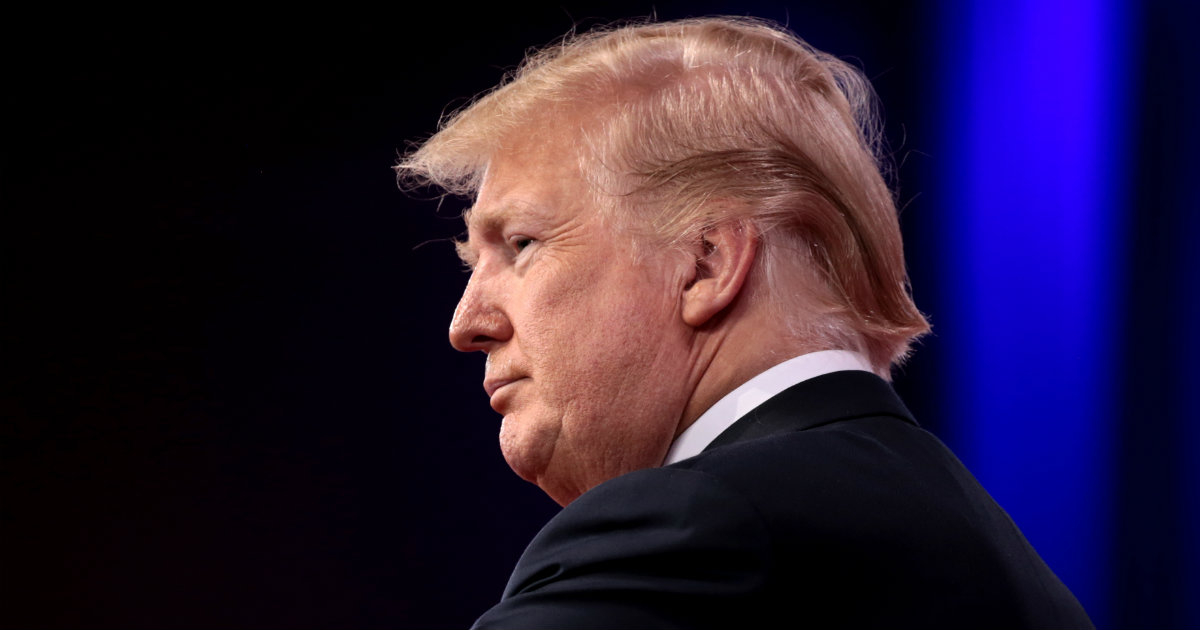
In a statement that has sparked intense legal and political debate, former U.S. President Donald Trump announced his Administration's plan to propose the death penalty for anyone committing murder in Washington D.C. This declaration was made during the seventh meeting of his Cabinet, as part of a broader strategy to tackle what he describes as an "out-of-control crime wave" in the nation's capital.
Trump was unequivocal during his address: "If someone murders in the capital, the penalty is death." He defended this proposal as an extreme preventive measure, stating, "It's a very strong deterrent." He further added, "I don't know if we're ready for this in this country. But we have no other choice."
This insistence throughout his speech underscored the urgency and determination with which he intends to address security issues in Washington: "If someone kills, it's going to be the death penalty," he reiterated. According to Trump, his entire Administration supports this initiative, although the announcement has elicited mixed reactions, particularly due to the potential collateral effects and constitutional implications of such a measure in a city without a local death penalty and under shared federal jurisdiction.
Federal Control Over the Capital
This announcement is not an isolated incident but part of a broader federal intervention in Washington D.C.'s security matters. On August 11, Trump enacted a measure allowing him to take control of the city's public safety for 30 days, citing a legal provision that authorizes intervention in emergencies.
The intervention was justified by an alleged spike in violence and crime in the capital, even though statistics indicate that while crime levels are high, overall rates are at their lowest in three decades.
Massive Deployment of Security Forces
As part of this intervention, Trump ordered an unprecedented deployment of military and police resources in the city. Initially, 800 members of the Washington National Guard were activated, joined by troops from six states led by Republican governors: West Virginia, South Carolina, Ohio, Mississippi, Louisiana, and Tennessee. In total, approximately 2,000 National Guard personnel have been deployed in the city.
In addition to military personnel, several federal agencies are patrolling the capital: the FBI, the Drug Enforcement Administration (DEA), Immigration and Customs Enforcement (ICE), and the Metropolitan Police. Attorney General Pam Bondi reported that under this joint operation, 1,094 individuals have been arrested, and at least 115 illegal weapons have been confiscated.
Civil Rights Organizations Raise Concerns
The increased federal control has drawn criticism from activists and civil rights organizations. They argue that the so-called "war on crime" is being used as a pretext to increase surveillance on vulnerable communities, particularly undocumented immigrants. Various voices have warned about arbitrary detentions by federal agents, especially ICE, in operations seemingly unrelated to combating homicidal violence.
Fear among immigrant communities has grown, fueled by the rhetoric and restrictive measures of the current government.
Legal and Constitutional Concerns
Trump's death penalty proposal raises significant questions about its legal viability. Washington D.C. formally abolished the death penalty in 1981, and although, as a federal capital, it has a special status, implementing a measure of this magnitude would require deep legislative changes and would likely face numerous court challenges.
Moreover, the selective application of the death penalty based on jurisdiction and crime type—in this case, only for murders committed in a specific area of the country—would raise questions about equality before the law, proportionality, and respect for due process. For legal experts, activists, and public policy analysts, this proposal reflects a punitive approach that overlooks the complexity of urban crime and may infringe on fundamental rights.
Key Questions on Trump's Death Penalty Proposal
Why does Trump propose the death penalty in Washington D.C.?
Trump suggests the death penalty as a strong deterrent to combat what he describes as out-of-control crime in the nation's capital.
What are the implications of this proposal?
The proposal raises legal and constitutional challenges, as well as concerns about equality before the law and due process.