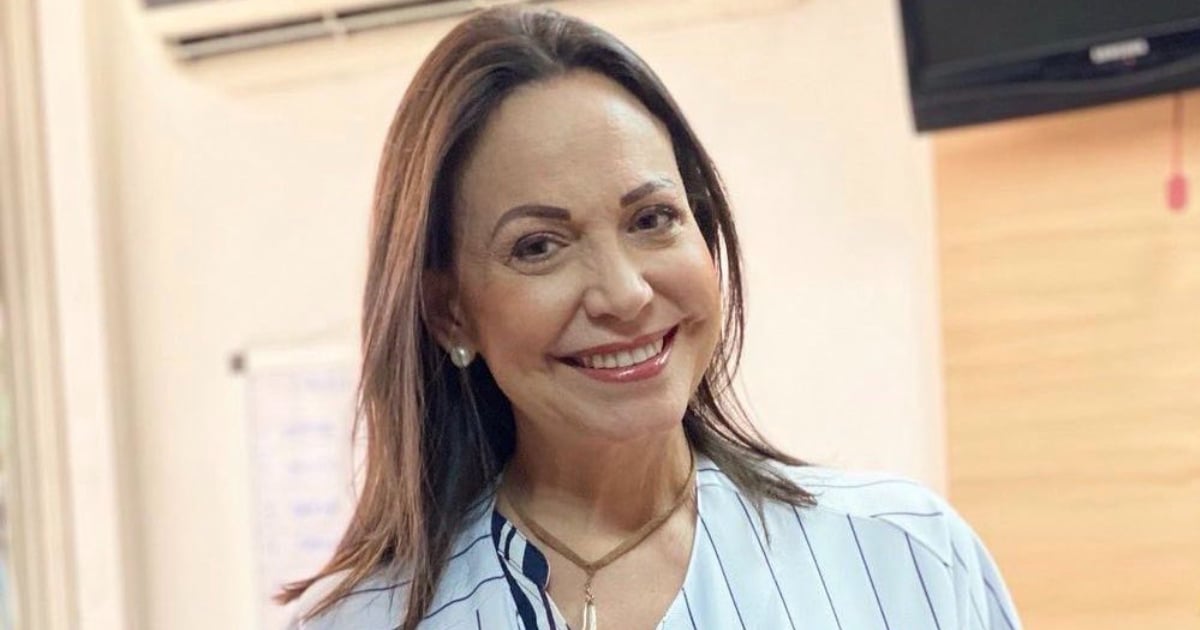
Amid heightened political and military tensions in Venezuela, opposition leader María Corina Machado expressed that the likely ousting of Nicolás Maduro will not only pave the way for freedom in her country but also herald the end of Cuba's regime. Operating from secrecy, Machado has amplified her messages on social media and through international interviews, warning about the Chavista structure.
On her X account, Machado labeled Maduro's government as a "criminal structure" responsible for the region's severe humanitarian crisis. She highlighted how the Chavista dictatorship forced a third of the population to flee, destabilized neighboring countries, and posed a direct threat to U.S. security. "Once we free Venezuela, millions will return home, and our nation will become the U.S.'s chief ally in security, trade, energy, and investment in the region. The time has come. Freedom is near," she stated.
Trump's Strategic Moves
During a Sunday interview with FOX News, Machado claimed Maduro is "very worried, and rightly so," emphasizing the Venezuelan people's unity and determination to move forward. She mentioned that only a small group of high-ranking military officials still support the regime, but they will eventually have to decide, as "Trump is not playing around." This comment followed the deployment of U.S. warships in the Caribbean, part of President Donald Trump's anti-narcotic operations in Latin America.
The White House has consistently accused Maduro of leading the Cartel of the Suns, considered a terrorist organization by Washington. Machado endorsed Washington's offensive, pointing out that the Trump administration has prioritized Venezuela as a national security concern. "This is quite serious. It's a criminal structure using Venezuela to channel tons of drugs into the United States," she stated.
International Isolation and Pressure
Tensions escalated following the announcement of additional U.S. naval forces, including the USS San Antonio, USS Iowa Jima, and USS Fort Lauderdale, joining maneuvers off the Venezuelan coast with over 4,500 troops. The deployment also included Arleigh Burke-class guided missile destroyers, nuclear submarines, and P8 Poseidon reconnaissance aircraft.
White House spokesperson Karoline Leavitt emphasized that Trump is "prepared to stop drug trafficking and bring those responsible to justice," unambiguously labeling the Chavista regime as a "drug cartel." The international pressure is reinforced with judicial and economic measures. In early August, the U.S. State Department and the Department of Justice announced a historic increase in the reward for information leading to Maduro's capture, from $25 million to $50 million.
Attorney General Pam Bondi accused the Venezuelan leader of being at the center of a narco-terrorism conspiracy with links to the FARC, the Tren de Aragua, and the Sinaloa cartel.
The Cuban Connection
Machado has repeatedly stated that Maduro's downfall will directly impact Havana. Last July, ahead of the presidential elections claimed by Chavismo, she expressed that Cuba would follow Venezuela's path to freedom. "Very soon, I know Cuba will be like us, on the brink of freedom," she asserted then.
Today, she maintains that the political, economic, and intelligence framework binding Caracas to Havana will collapse once a power shift occurs in Venezuela, significantly weakening the Cuban regime.
Mobilization and Resistance
The opposition leader has maintained an active role on the streets. In January, she participated in protests that mobilized thousands of Venezuelans across various cities, despite being pursued by the regime. "This is over. Venezuela will be free," she proclaimed to the crowd accompanying her in Caracas.
In recent days, as the U.S. reinforced its naval presence and announced new sanctions, Maduro released 13 political prisoners in an attempt to ease international pressure. However, the opposition views this gesture as insufficient, continuing to demand a real transition to democracy.
For Machado, the combination of international pressure, regime isolation, loss of military support, and citizen mobilization will inevitably lead to Maduro's downfall. This, she assures, will end more than six decades of dictatorship in Cuba. "We will transform Venezuela from a den of criminals into a safe haven for all the Americas, with incredible energy and resource opportunities for the entire continent," she promised on FOX News.
Machado concludes that Venezuela's immediate future will be crucial not only for its people but also for the political balance of the continent: "The time has come. Freedom is near."
Insights on Venezuela's Political Climate
What does María Corina Machado believe the fall of Maduro will lead to?
Machado believes that Maduro's fall will not only bring freedom to Venezuela but will also lead to the collapse of Cuba's regime.
How has the U.S. responded to the Venezuelan crisis?
The U.S. has deployed naval forces and reinforced sanctions, while accusing Maduro of leading a terrorist cartel. They have also increased the reward for his capture.
What role does Machado see for Venezuela in relation to the U.S.?
Machado envisions Venezuela becoming a major ally of the U.S. in security, commerce, and energy once it is free from Maduro's regime.