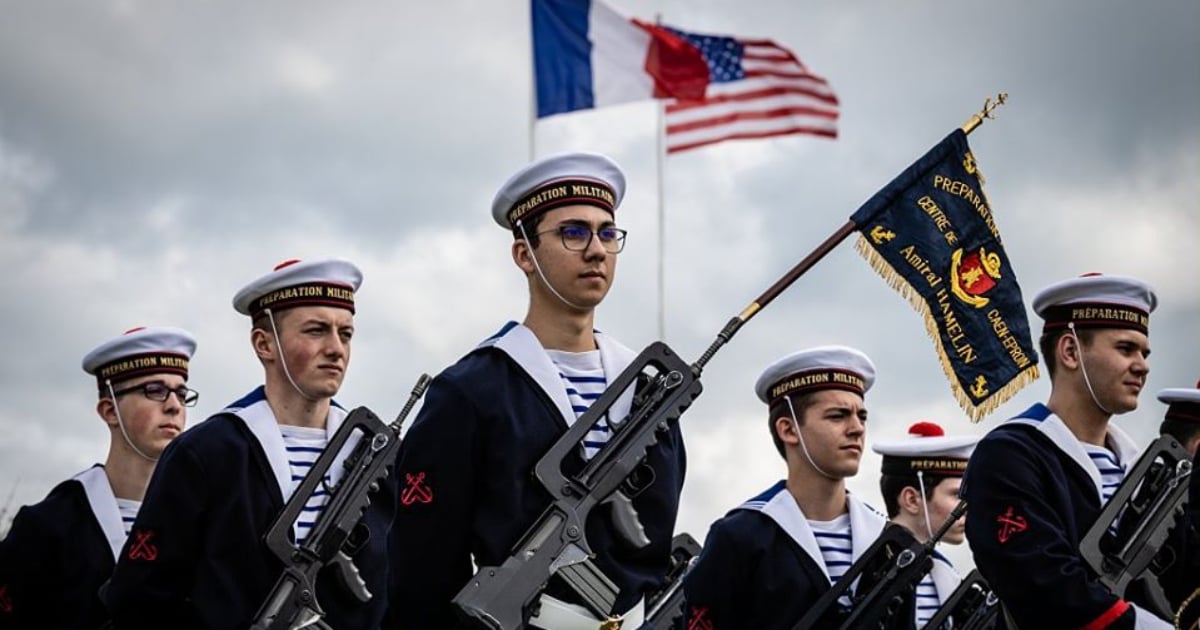
In a significant move, the French government declared on Sunday an unprecedented boost to their military and police presence in Guadeloupe, a strategic overseas territory in the Caribbean. This initiative, announced by France's Interior Minister, Bruno Retailleau, aims to intensify the fight against drug trafficking amidst an increasingly tense regional environment, echoing similar measures taken by the United States.
Retailleau detailed the deployment of 13 additional investigators from OFast, the central anti-narcotics agency, alongside the installation of a ballistic analysis lab on the archipelago, eliminating the need to send confiscated weapons back to mainland France. Furthermore, he introduced mobile squads, two nautical brigades in Gourbeyre and Pointe-à-Pitre, strategic channel radars, and a drone to monitor over 700 km of coastline across six Guadeloupean islands.
This reinforcement includes stringent passenger controls at airports and the Grand Maritime Port of Guadeloupe, as well as at the port of Fort-de-France in Martinique, under the "Hub Antilles" project. According to AFP, Guadeloupe's authorities had already raised alarms in July 2023 regarding increased drug trafficking following enhanced controls in French Guiana.
“They emerge from containers, postal mail, and leisure boats... A new route involving 'mules' is being documented,” explained the customs director, who reported the seizure of at least 5 tons of cocaine in a recent operation.
Paris's Strategic Alliance with U.S. Policies
Last month, during visits to Martinique and Guadeloupe, Retailleau emphasized that France no longer has "blind spots" in the drug trade battle. He disclosed that in the first half of 2025 alone, cocaine seizures in France surged by 45%, with 37.5 tons intercepted between the mainland and overseas territories.
These moves by Paris seem to align with the firm stance promoted by the U.S., which recently stationed 4,000 marines in the Caribbean as part of its anti-drug operation near Venezuela. With this deployment, President Emmanuel Macron's administration seeks to strengthen control over its overseas territories and prevent them from becoming gateways for drug trafficking into Europe.
The operation highlights how anti-drug efforts are becoming a strategic pillar shared among Western allies in the region.
Regional Tensions Intensify: Trinidad and Tobago's Stance
The regional climate grew more complex for Caracas following a surprising statement from Trinidad and Tobago's Prime Minister, Kamla Persad-Bissessar, who publicly supported U.S. warship deployments in the Caribbean over the weekend. In a televised address, she assured that her country would provide "unreserved" access to Trinidad’s territory if requested by Washington to respond to any Venezuelan aggression against Guyana.
“If the Maduro regime launches any attack on the Guyanese people or invades Guyanese territory, and the U.S. government requests access to Trinidadian territory to defend the people of Guyana, my government will grant it without reservation,” declared the Prime Minister.
Implications for Caribbean Security
This declaration comes at a time of heightened regional tension, marked by the arrival of U.S. destroyers off Venezuela’s coast and the planned deployment of amphibious ships capable of landing marines. Persad-Bissessar justified the policy shift by recalling that Trinidad and Tobago has suffered the impacts of drug trafficking, human trafficking, and arms smuggling for two decades.
According to Insight Crime, the nation concluded 2024 with 625 homicides, a rate of 45.7 per 100,000 inhabitants, with nearly half linked to gang activities. The Prime Minister also highlighted the infiltration of criminal networks in several Caribbean nations' institutions and demanded increased international cooperation.
Her message was perceived as a direct warning to Nicolás Maduro, amidst the territorial dispute over the Esequibo region, rich in oil and minerals, which Venezuela claims and attempted to annex in a December 2023 referendum.
Trinidad and Tobago's stance was quickly supported by Washington sectors. Cuban-American Congressman Carlos Giménez praised the move, calling it a "strategic decision" that enhances collective security in the Caribbean. Simultaneously, Jamaica is considering declaring gangs as terrorist organizations, which would facilitate joint operations with international partners.
Frequently Asked Questions on Caribbean Anti-Drug Operations
What actions is France taking in Guadeloupe to combat drug trafficking?
France is deploying additional OFast investigators, setting up a ballistic lab, creating mobile squads, and installing radars and a drone to monitor the coastline, among other measures.
How does Trinidad and Tobago's policy shift impact regional security?
The shift supports U.S. military presence and poses a direct challenge to Venezuela, reinforcing regional security measures against drug trafficking and potential aggression.
What is the significance of the U.S. deploying marines in the Caribbean?
The deployment is part of a broader anti-drug strategy aimed at curbing trafficking near Venezuela, signaling strong U.S. commitment to regional security.