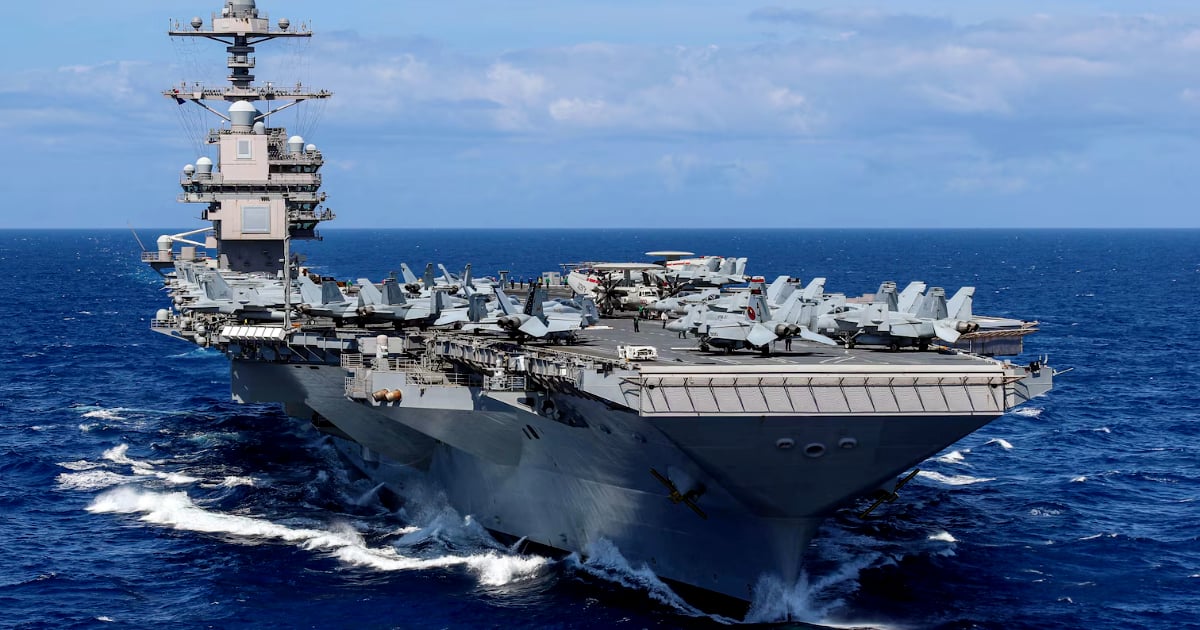
The recent announcement of the United States sending additional naval forces, including destroyers and amphibious ships, towards the coast of Venezuela has ignited a heated discussion among followers of CiberCuba News on Facebook. The responses, ranging from humorous to hopeful, skeptical to outright fearful of war, reveal the Cuban civil society's yearning for freedom, their disdain for dictatorial regimes, and the polarizing effect of military actions in the region.
Excitement and Anticipation: A Hope for Change
A significant portion of the feedback came from those who view this military movement as a precursor to the downfall of Nicolás Maduro and, by extension, the weakening of Cuban influence in Caracas. Many see the U.S. naval presence as a historic chance to topple dictatorships.
One commenter summed up this enthusiasm with, “All we need now is an aircraft carrier and the plan is complete—let’s go after Maduro and his miserable accomplices.” This sentiment resonated widely, setting the tone for a wave of excitement. Others expressed their eagerness more fervently, declaring, “No more criminal dictators. Let’s go all out. Down with communism. Long live freedom and democracy. God bless America. Trump is the man.”
Fears of War: Concern for Innocent Lives
Contrasting the enthusiasm, a significant number expressed fear over the potential for war. Their main concern: dictators seldom fall, but innocent people pay the price of invasion. “War kills thousands of innocent people... I bet they’re talking because they’re not in Venezuela,” one comment cautioned, highlighting that families and children with no political ties would suffer.
A particularly poignant response challenged those calling for intervention: “Ask for an invasion while you’re there, so you can hear the bombs and see your loved ones die before your eyes. You must have a very hardened heart to wish for that.” This group emphasized that wars do not distinguish between the guilty and the innocent, and those advocating for attacks do so from afar, distant from the real repercussions of violence.
Sarcasm and Skepticism: Doubts About Intervention
A smaller, yet noticeable group met the news with sarcasm, convinced that no real intervention would occur. “It’s all just talk—they know where to stop,” someone commented mockingly. Others dismissed it as mere spectacle, intended more for media consumption than for actual military action. “Same old threats, nothing ever happens,” another user wrote, recalling past military displays that never escalated to war.
Motivations Behind the Move: Oil or Narco-State?
The debate also delved into Washington's motivations. Some believe the goal is to dismantle a “narco-state” and end Maduro’s alleged leadership of the Cartel of the Suns. “Nicolás Maduro is a drug trafficker, head of the Cartel of the Suns. Every dog has its day,” a widely supported comment declared.
Conversely, others were skeptical: “Do you really think they’re going for Maduro? How naive. They want unlimited oil, gold, and more resources,” one user argued, interpreting the operation as another instance of U.S. interventions driven by strategic resources.
The Trump Factor: Savior or Dictator?
President Donald Trump, the mastermind behind the deployment, was a polarizing figure in the discussion. His supporters view him as a determined leader capable of ending regional dictatorships. “Trump the tough one, down with the killers of Cuba, Venezuela, and Nicaragua,” one comment reiterated with praise.
However, others saw no difference between Maduro and the Republican leader. “Maduro is a dictator, and Trump is another,” read one of the more controversial remarks, sparking a flurry of indignant replies. The discourse around Trump highlighted the political divide within a community where visceral rejection of Chavismo and communism coexists with distrust of U.S. foreign policy, led by Secretary of State Marco Rubio.
A Conversation Reflecting Deep Divides
The dialogue on Facebook demonstrated how the Venezuela issue touches sensitive nerves in the Cuban community, both on and off the island. For some, intervention offers a quick path to freedom. For others, it signifies a tragic repeat of past mistakes, plunging the region into further suffering. What’s clear is that, unlike other topics, the U.S. naval deployment left no one indifferent. Amidst hope, fear, mockery, and skepticism, the conversation captured the intense way Cubans and Venezuelans experience each move in the Caribbean chessboard.
Understanding the Implications of U.S. Naval Actions in the Caribbean
Why are Cubans interested in the U.S. naval deployment near Venezuela?
Many Cubans see the U.S. naval presence as a potential catalyst for change in Venezuela, which could weaken Cuban influence in the region and signal a shift towards greater freedom and democracy.
What are the main concerns about a potential conflict in Venezuela?
The primary concern is the potential for significant civilian casualties. Many fear that innocent people, including families and children, would suffer the most in any military conflict.
How do opinions differ on President Trump's role in this situation?
Opinions are divided: some view Trump as a decisive leader capable of ending regional dictatorships, while others see him as no different from the leaders he opposes, questioning his motives and actions.