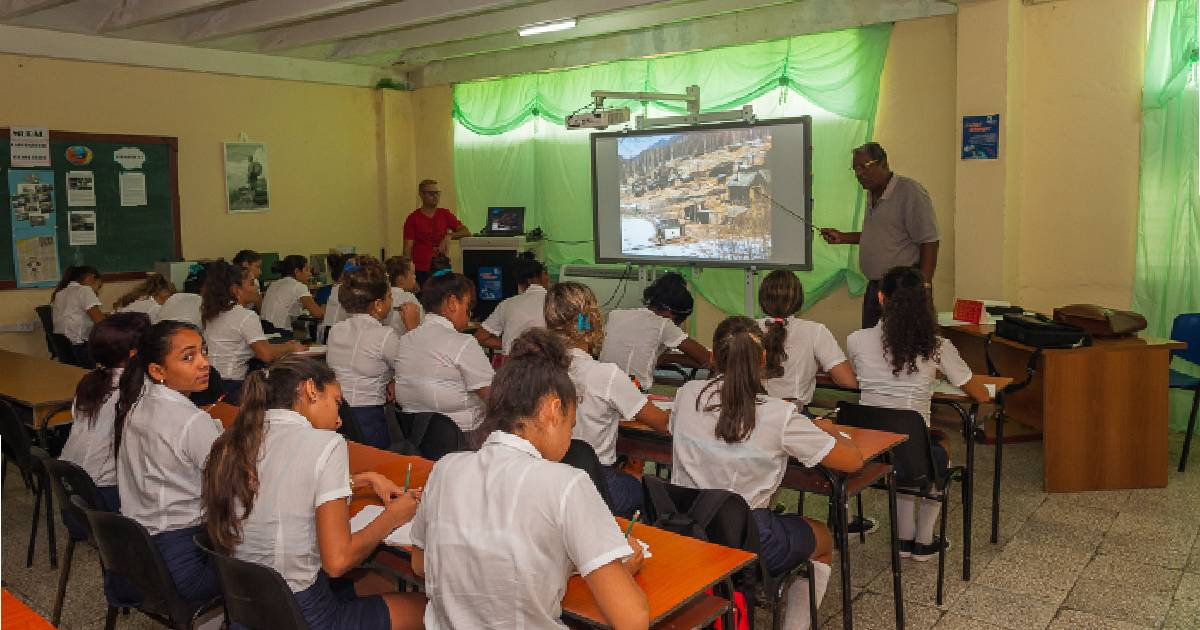
As the 2025-2026 school year looms, Camagüey faces a dire shortage of over 2,000 teachers, reflecting the systemic failure to fully staff classes for approximately 98,000 enrolled students. Official reports reveal that only 75.5% of teaching positions are filled, leaving a significant portion of students without comprehensive instruction, according to the official publication Adelante.
The sectors suffering the most are Technical and Professional Education with a mere 51% coverage, and pre-university levels at 62.9%. Subjects like Mathematics, Physics, English, and Political Culture are particularly understaffed. Local authorities have acknowledged that the shortage is linked to professionals migrating to the private sector and low enrollment in teaching careers.
Addressing the Teacher Deficit
To tackle this issue, the province plans to implement over 1,000 part-time contracts and retain those already working under such agreements. A special call has been issued to recruit professionals from other fields to temporarily engage in teaching roles, aiming to "improve the province's situation," though these are merely stopgap measures that fail to address the root causes.
Education Minister Naima Ariatne Trujillo Barreto recently visited several schools in Camagüey, urging support from institutions, families, and communities to compensate for material and organizational deficiencies. She emphasized the importance of "transparent communication" among educational leaders, schools, and families to explain the situation and justify the restructuring measures.
Nationwide Challenges
In Sancti Spíritus, teacher coverage for the upcoming school year is at 68.2%, impacting over 60,000 students, as reported by the official newspaper Escambray. Previously, a group of teachers from the mixed center Alberto Fernández Montes de Oca in Matanzas voiced their dissatisfaction over unpaid overtime, highlighting a glaring contradiction: teachers are asked to work more to fill gaps but are denied the compensation stipulated by regulations, while responsible entities remain silent.
Cuba began the 2024-2025 academic year with a deficit of 24,000 teachers amid a high rate of emigration, rampant inflation, and low wages and pensions, highlighting the island's deepening multisystem crisis. The shortage is most acute in secondary education and pre-university science programs, affecting Havana and other western and central provinces.
In 2014, the government passed the Labor Code permitting multiple jobs to supposedly alleviate the impacts of an aging population, encourage employment, and enable people to earn more. In recent years, hundreds of Cuban teachers have returned to the classroom, including retired professionals who, in addition to their pensions, benefit from new payment models.
The Economic Strain on Educators
Months ago, Cuban content creator Sheyla Reyes (@sheyreyes03) shared on TikTok what a teacher can afford with their monthly salary in Cuba. Reyes explained that the average teacher earns between 2,500 and 3,000 Cuban pesos, significantly eroded by uncontrolled inflation and the devaluation of the CUP in recent years.
In April, Cuba's Ministry of Labor and Social Security announced a salary increase to enhance the stability and retention of staff in educational institutions and the National Health System. The education system has deteriorated recently due to the teacher shortage, declining teaching quality, and the physical decline of school infrastructure.
Understanding Cuba's Educational Crisis
What is the current teacher shortage in Camagüey?
Camagüey is currently facing a shortage of over 2,000 teachers, affecting approximately 25% of its student population.
Which educational levels are most affected by the teacher shortage?
Technical and Professional Education, as well as pre-university levels, are the most affected, with coverage at 51% and 62.9%, respectively.
How is the Cuban government addressing the teacher shortage?
The government is implementing part-time contracts and recruiting professionals from other sectors to temporarily engage in teaching roles.