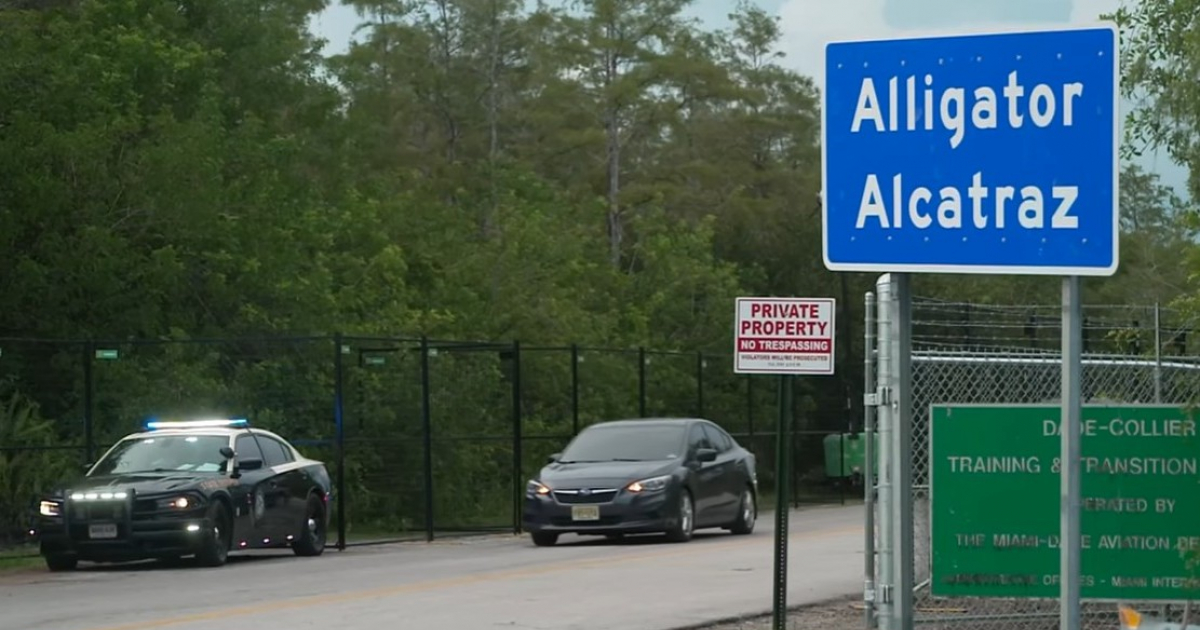
Florida is once again under judicial scrutiny as a new federal lawsuit questions the legality of the immigrant detention center known as Alligator Alcatraz, nestled in the Everglades. The case, uncovered by Telemundo 51, marks the third significant legal challenge against the facility, which Governor Ron DeSantis has championed as part of his stringent immigration policies.
This lawsuit, filed in the U.S. District Court for the Middle District of Florida, is spearheaded by the ACLU, the ACLU of Florida, the Community Justice Project, and the National Immigrant Justice Center. The legal complaint argues that Florida lacks the authority to operate an immigrant detention center under the 287(g) agreements, which only allow state police to receive federal training for immigration enforcement tasks, but do not permit states to detain individuals during deportation proceedings.
The plaintiffs claim that the camp—dubbed Alligator Alcatraz by state officials—operates outside the regulations set by the Immigration and Customs Enforcement (ICE). The lawsuit highlights systemic rights violations, including detentions without formal charges, absence of custody or bond hearings, exclusion from the official detainee tracking system, and significant barriers to accessing legal counsel or appearing before immigration courts.
Filed on behalf of a detainee identified as M.A., the organizations behind the lawsuit aim to certify it as a class action, which would allow all immigrants detained at the facility to be represented. The plaintiffs demand a temporary restraining order and an injunction to halt detentions immediately and declare that Florida has no legal authority to operate such a center.
The complaint states, “In the thirty years since Section 1357(g) was enacted, no state has claimed the authority to run detention centers. Florida is the first to attempt this, doing so without oversight, without trained personnel, and by outsourcing immigration duties to private contractors. This is precisely what Congress sought to prevent.”
Previous Legal Battles and Environmental Concerns
This new lawsuit adds to two prior legal disputes. The first was initiated by civil rights attorneys who accused the state of pressuring migrants to sign deportation orders without access to legal representation, along with severe restrictions on communication with their lawyers. The second lawsuit, filed by the Miccosukee tribe and environmental groups, cited violations of federal laws and irreversible damage to endangered species in the Everglades.
Just days ago, Federal Judge Kathleen Williams ordered the permanent closure of the center, citing its construction as causing irreversible environmental harm. The ruling mandates dismantling the facility within 60 days, though the state plans to appeal. Adding to the controversy, reports from the Miami Herald revealed that five companies contracted by Florida to build and operate Alligator Alcatraz have histories of fraud, overcharging, and public fund misappropriation.
Controversial Model for Immigration Control
Since its opening in July 2025, Alligator Alcatraz has been promoted by DeSantis and Donald Trump as a model for future immigration facilities. However, detainees and lawyers paint a starkly different picture: inhumane conditions, non-ventilated tents, overflowing toilets, worm-infested food, frequent power outages, and mosquito infestations in the sweltering swamp heat.
Rather than being a symbol of "efficient immigration control," the center has become a hallmark of abuse, opacity, and mismanagement. For environmentalists and indigenous groups, Judge Williams' closure order is a historic victory. For civil rights advocates, the new lawsuit is a chance to set a precedent that could halt future state attempts to manage immigration detention centers beyond federal law.
The fate of Alligator Alcatraz seems destined to be decided in the courts. The current battle is not only about shuttering a contentious facility but also about the broader national debate on the limits of state authority in immigration matters and the human, environmental, and financial costs of mass deportation policies.
Key Questions on Florida's Alligator Alcatraz Detention Center
What is the primary legal argument against Alligator Alcatraz?
The lawsuit contends that Florida lacks the authority to operate an immigrant detention center under the 287(g) agreements, which only allow state police to assist with immigration enforcement but not to detain individuals during deportation proceedings.
Why did Judge Kathleen Williams order the closure of the facility?
Judge Williams ordered the closure due to irreversible environmental damage caused by the facility's construction, ruling that it violated federal environmental laws.
What controversies surround the contractors involved with Alligator Alcatraz?
Several contractors have faced allegations of fraud, overcharging, and misuse of public funds. Notably, some have been involved in dubious practices during other government projects, raising concerns about their role in operating the detention center.