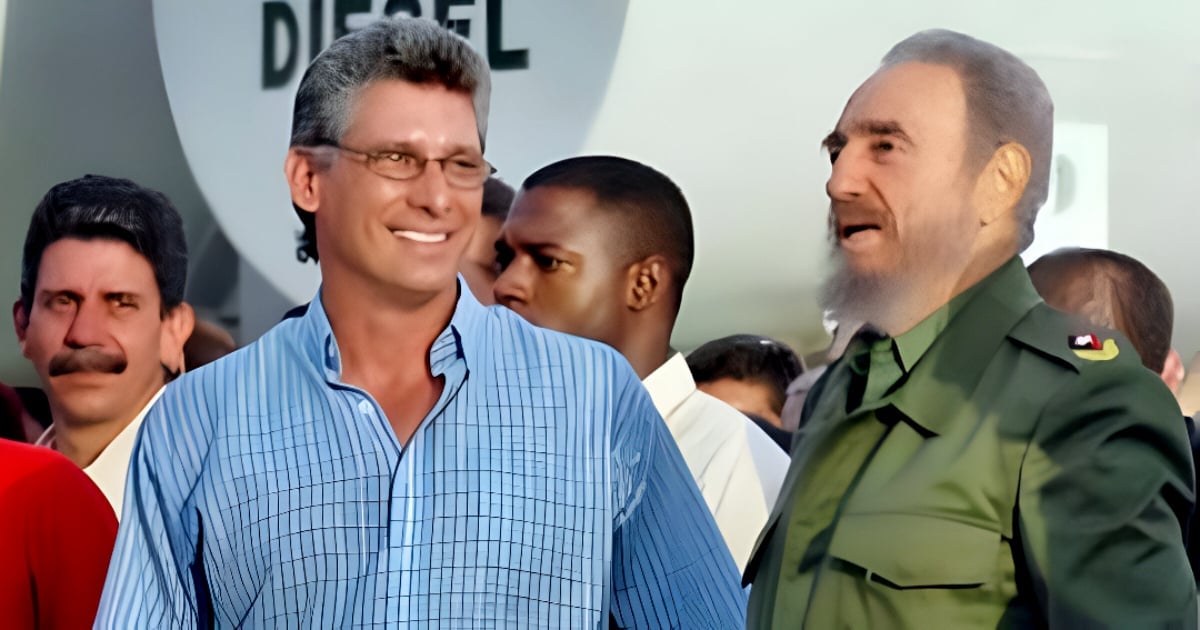
Father Alberto Reyes, a vocal critic of the Cuban government, recently shared an analysis on Facebook targeting the legacy of Fidel Castro. He attributes to Castro the responsibility for embedding a "culture of audacity" within Cuban politics and society. Drawing on the memoirs of Alina Fernández Revuelta, Castro's daughter, Reyes explains what she described as her father's "charm of audacity."
According to Reyes, what initially appeared as boldness or strong character was actually a pattern of behavior marked by disrespect for others' dignity, rights, and sensitivity. He argues that audacity became a tool of power, not just a personal trait of Castro, but a pervasive element in the governance of Cuba.
The Influence of Audacity in Governance
Beyond dismantling the myths around Fidel Castro, Reyes poses a significant challenge: to cleanse a nation whose roots have been tainted by deceit, violence, and audacity turned political norm. He asserts that this attitude shaped Castro's dealings with the Cuban people: "He spoke of freedom and democracy while weaving the threads of dictatorship; he vowed to reject communism even as he prepared to establish it; he claimed he had no presidential ambitions, yet clung to power indefinitely."
Reyes points out some of Castro's major deceptions: promising land to peasants only to nationalize nearly all agricultural property, pledging decent housing for every family—a commitment never fulfilled—and assuring economic prosperity contradicted by ongoing crises. He also cites violent acts ordered by Castro, like the sinking of the "13 de Marzo" tugboat in 1994 and the 1996 shootdown of "Brothers to the Rescue" planes, exposing a stark contrast between his humanitarian rhetoric and his repressive, violent rule.
Institutionalizing Audacity as Governance
Reyes warns that Castro's greatest legacy was institutionalizing audacity as a governing strategy, which became the cornerstone of Cuba's political framework. "Audacity is not a suitable trait for leading a nation, let alone perpetuating a governance system. Regrettably, Fidel not only dealt with the people audaciously but managed to embed it within the political roots of our leaders. We will have to work tirelessly to restore the healthy foundations of our nation," he emphasized.
CiberCuba shared the full text of Reyes' publication, providing a deeper insight into his perspective.
"I have been pondering... (126) by Alberto Reyes Pías
I have been thinking about the construction of a myth III
When Alina, the daughter of Fidel and Natalia Revuelta, describes in her memoirs how Fidel managed to win over Mirta Díaz-Balart, the 'jewel' of Banes' high society, she says: 'Fidel had the charm of audacity.'
Audacity is the attitude of a person who disregards the dignity, rights, or sensitivity of others. It is someone focused on their objectives, pursuing what they want without hesitation, even if it means trampling over others, brazenly but openly.
Indeed, audacity might have a certain allure, the charm of a 'tough' individual, without limits, capable of achieving anything at any cost... but it is a short-lived appeal. Eventually, people recognize its uncivilized nature, and over time, partners become disenchanted, friends drift away, and admirers turn into critics. But it takes time.
This is the process we have experienced because Fidel engaged with this nation audaciously. He spoke of liberty and democracy, of the need to end Batista's dictatorship, while secretly establishing the longest dictatorship in the hemisphere and one of the world's longest in history.
Repeatedly and publicly, he denied communism and claimed the presidency was not his goal, while laying the groundwork for Marxist doctrine in Cuba and securing his power indefinitely.
He vowed to dismantle large estates and give land to peasants, dismissing fears of industry nationalization as 'stupid,' only to place almost 80% of the country's arable land and all private enterprises, Cuban or foreign, under state control.
He promised to build a 'decent home' for every family, claiming unprecedented economic development for Cuba, yet the reality increasingly contradicted his words, and he insisted on public trust in his promises.
He criticized the lack of principles in wealthy nations while progressively indebting the country through unrepayable loans.
He condemned the inhumanity of capitalism, yet under his orders, the "XX Aniversario" ship was sunk in the Canímar River, killing 56 people, including children; he ordered the sinking of the "13 de Marzo" tugboat, killing 72 people, including children; and he commanded the shootdown of the "Brothers to the Rescue" aircraft, resulting in four deaths.
He endlessly criticized the 'interference' of major nations while sending thousands of Cubans to wars in Asia, Africa, and Latin America, and Cuba served as the training ground for Latin American guerrillas.
He endlessly spoke of the lack of values among 'capitalist' youth while the anthropological damage grew generation after generation, eroding the ability to distinguish and respect the boundary between right and wrong.
No, audacity is not an appropriate trait for governing a nation, much less for perpetuating it as a system, because, unfortunately, Fidel not only treated this people audaciously but succeeded in institutionalizing it, embedding it into the political roots of our leaders. We will have to work hard to restore the healthy foundations of our nation someday."
Understanding the Legacy of Audacity in Cuban Politics
What is the "charm of audacity" described by Alina Fernández Revuelta?
Alina Fernández Revuelta referred to her father Fidel Castro's audacity as a trait that initially seemed bold and charismatic but ultimately revealed a pattern of disrespect for others' rights and dignity.
How did Fidel Castro use audacity as a method of power?
Fidel Castro used audacity to manipulate his interactions with the Cuban people, promising freedom and democracy while secretly establishing a long-lasting dictatorship and implementing communism, thus deceiving the nation.
What are some examples of Fidel Castro's broken promises?
Examples include promising land to peasants while nationalizing agriculture, pledging housing for all families without delivering, and claiming economic prosperity that never materialized.
How did audacity become institutionalized in Cuban governance?
Fidel Castro's approach of using audacity as a tool for control and manipulation influenced the political structures in Cuba, embedding this trait into the governance system and political culture.