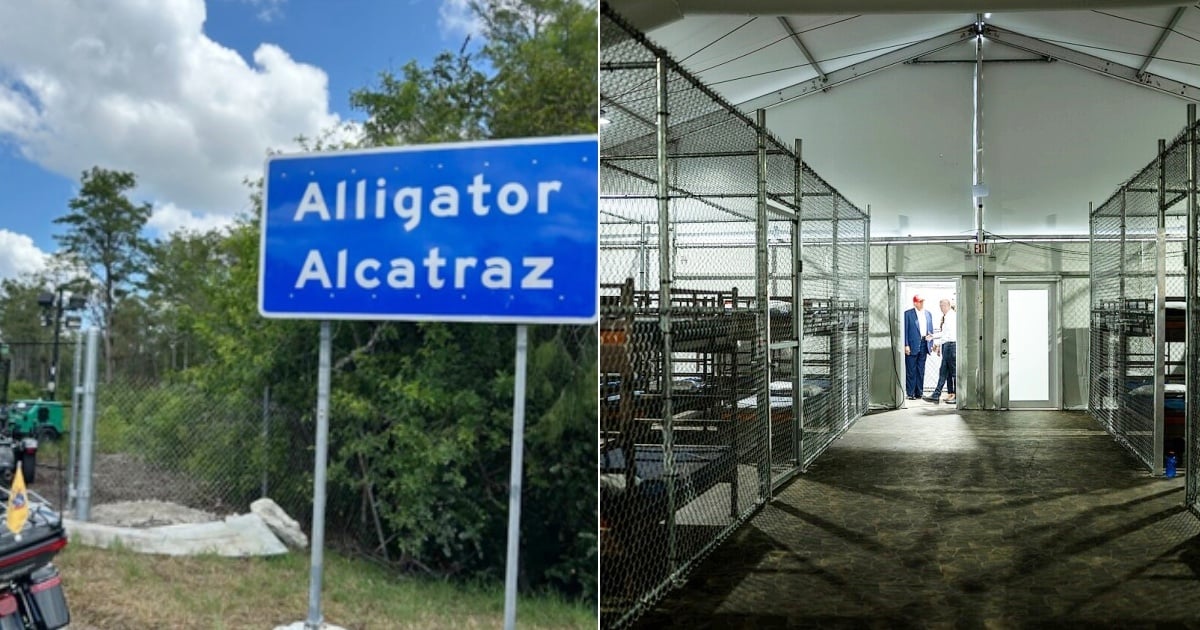
A United States federal judge has handed down a pivotal ruling, mandating the complete shutdown of the controversial immigration detention center known as "Alligator Alcatraz," established during the Trump administration within the protected wetlands of the Everglades, west of Miami. Judge Kathleen Williams from the Southern District of Florida has decreed that the facility must be dismantled within 60 days, with no new detainees allowed, due to "irreparable" harm to the ecosystem, according to news agencies.
The comprehensive 82-page ruling addresses a lawsuit led by environmental groups Friends of the Everglades, the Center for Biological Diversity, and the indigenous Miccosukee tribe. They argued that the facility violated essential environmental laws, threatening over 30 protected species.
"Every Florida governor, senator, and countless political figures, including presidents, have publicly pledged their unwavering support for the restoration, conservation, and protection of the Everglades," Williams stated. "This order merely enforces the basic requirements of legislation designed to fulfill those promises," she added.
Strict Prohibition on Expansion and New Detainees
The court order explicitly forbids the admission of additional detainees, aside from those already present when the order was issued. It also bans any expansion or alteration of the premises: no new tents, buildings, offices, or fences can be erected, and no paving, excavation, or modification of existing infrastructure is permitted.
After the 60-day grace period, the Florida state government, operating the center in coordination with federal agencies, must:
- Remove all perimeter fences and allow free access to the Miccosukee tribe.
- Dismantle electric generators, gas systems, waste, and drainage.
- Eliminate industrial lighting and other non-natural elements introduced to the environment.
Judge Williams emphasized that this is a firm halt to expansion, replacing a preliminary order from two weeks prior, which temporarily banned camp enlargement.
Environmental Impact on the Everglades
The Everglades, known for their sensitivity and symbolic status in the U.S., are home to unique species like the Florida panther, American stork, Mississippi alligator, and American crocodile, all classified as endangered or vulnerable. Expert reports and testimonies during the hearing highlighted that the facility's construction resulted in:
- Paving over at least 20 additional acres, disrupting the soil's water absorption capacity.
- Increased runoff of chemicals and nutrients into protected areas.
- Damage to habitats of threatened wildlife and forced migration of species.
Amy Castaneda, director of water resources for the Miccosukee tribe, testified that the center disrupts the area's water balance: "The nutrient runoff from the detention center could flow into tribal lands, altering vegetation growth, affecting wildlife, and hindering human and animal movement," she stated.
Inhumane Conditions for Migrants
Despite the ecological focus of the ruling, the center's internal conditions have also raised public alarm. Various organizations, journalists, and Congress members reported severe human rights violations within the facility.
At its peak, Alligator Alcatraz housed 1,400 migrants, many in tents lacking ventilation and adequate amenities. Detainee and attorney testimonies concurred on issues such as:
- Food infested with worms and collapsed toilets.
- A massive presence of mosquitoes and insects.
- Constant electrical failures in extreme temperatures.
- Detainees going days without access to showers, medicine, or legal aid.
"The toilets were not functional, sewage was on the floor, and the food was rotten," one testimony during the hearing revealed. Judge Williams recalled that a major airport project was rejected in the same area in the 1960s due to its environmental impact. "What was deemed unviable over 50 years ago for its environmental impact cannot now be considered suitable for such a facility," Williams concluded.
Political Context: Trump, DeSantis, and Judicial Resistance
The detention center was directly promoted by President Donald Trump, who visited the site weeks before its opening, presenting it as a national model. Florida Governor Ron DeSantis publicly supported it as part of a hardline immigration policy and has announced plans for a second center at an abandoned prison near Gainesville.
The Florida Department of Emergency Management operates the center in coordination with Immigration and Customs Enforcement (ICE). However, state lawyers argued during the trial that federal environmental laws did not apply because "the center was a state project to house federal detainees."
Judge Williams dismissed this argument, reaffirming federal jurisdiction over the case, sparking a political backlash. State Attorney General James Uthmeier and DeSantis have questioned the judge's impartiality, noting her appointment by former President Barack Obama.
"It seems the state itself understands it could be ordered to shut this down, whether this week, next, or in the future," said Democratic Congressman Maxwell Frost after visiting the center and confirming the detainee count had dropped to just 336.
A Legal Victory with Lasting Environmental Impact
The ruling is an unprecedented victory for environmental organizations and indigenous communities who have fought for decades to protect the Everglades. "This is a historic triumph for the Everglades and countless Americans who believe this endangered ecosystem must be protected, not exploited," said Eve Samples, executive director of Friends of the Everglades.
"It sends a clear message that environmental laws must be respected by leaders at the highest levels of our government and that there are consequences for ignoring them," she added.
The plaintiffs also noted that the center was built without environmental impact studies, risk assessments, or public consultation processes, clearly violating federal law. What's next?
Although Judge Williams has set a two-month deadline, authorities have already begun relocating migrants to other centers. However, Florida is expected to appeal the decision, prolonging the legal battle in federal courts. Meanwhile, pressure is mounting on federal agencies like ICE and DHS. Despite indirectly operating the center, they have yet to issue official statements on the closure, suggesting caution amid the judicial setback and political tension.
Questions about the Alligator Alcatraz Closure
Why is the detention center known as "Alligator Alcatraz" being closed?
The detention center is being closed due to a federal court ruling based on its detrimental environmental impact on the Everglades and violations of essential environmental laws.
What are the environmental concerns associated with Alligator Alcatraz?
The construction of Alligator Alcatraz has led to pavement of additional acres, increased chemical runoff, and damage to habitats of endangered species, disrupting the ecosystem of the Everglades.
How did the judge justify the order to close the detention center?
Judge Kathleen Williams justified the closure by highlighting the severe environmental damage and the center's violation of federal environmental laws, emphasizing the longstanding political commitment to protect the Everglades.