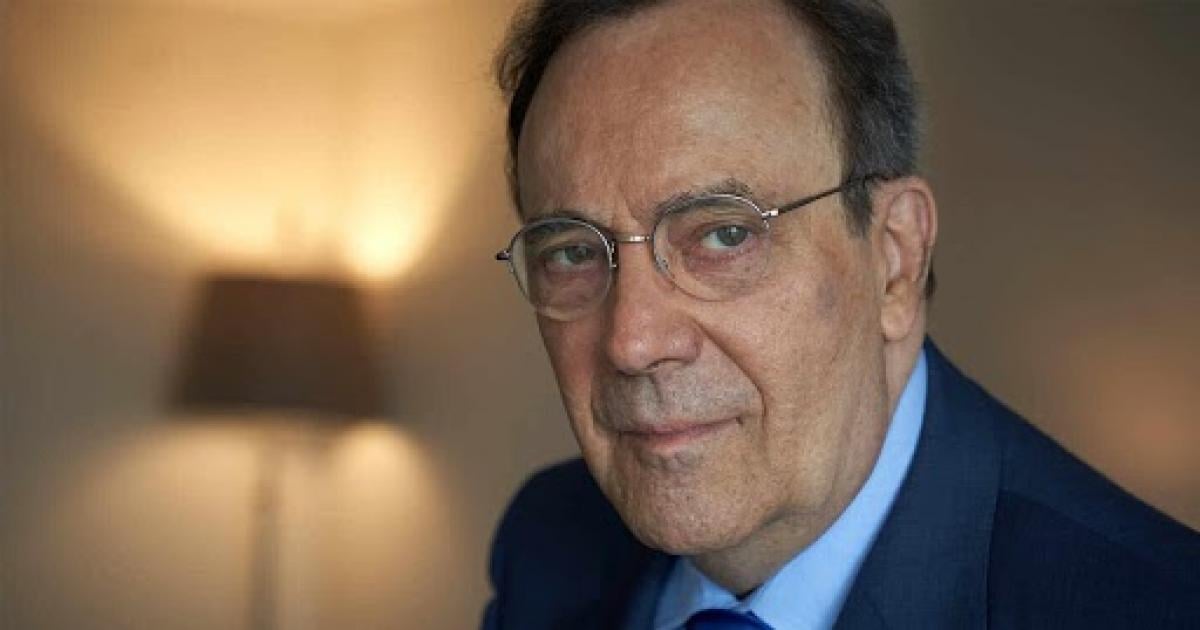
“I’m not moving to Spain to live; I’m moving to Spain to die.” With this phrase, filled with both irony and clarity, Cuban intellectual Carlos Alberto Montaner encapsulated his final decision. After leaving Miami in 2022, he settled in Madrid to exercise his right to euthanasia, following years of battling a severe neurodegenerative disease. The esteemed writer and essayist, a significant figure in the Cuban exile community, passed away on June 29, 2023, at 80 years old, surrounded by his wife Linda, his children, and grandchildren. He described this moment as his final fight for freedom.
The personal story of his farewell has been unveiled by his daughter, Gina Montaner, in her book “Deséenme un buen viaje. Memorias de una despedida” and an extensive interview with BBC Mundo conducted by Beatriz Díez on August 21, 2025. Gina Montaner recounts how she accompanied her father through every step of the process, from signing the living will to appealing when a neurologist challenged his access to euthanasia.
The Final Journey with Courage
“My father asked for my help, and I didn’t hesitate. It was an immense sacrifice, but also an act of love. I was his sherpa, the one who accompanied him up the most challenging mountain,” Gina confessed.
Diagnosed with progressive supranuclear palsy, a rare form of Parkinson’s that impairs mobility, speech, and mental clarity, Montaner refused to wait until he was bedridden. “I don’t want to be worse than I am now,” he declared, facing the bureaucratic hurdles of a law that, despite being in force in Spain since 2021, often requires extreme deterioration before approving the procedure.
A Farewell Full of Dignity
On June 29, 2023, Montaner chose to dress, shave, and bid farewell with serenity. As Gina describes, he spent the morning watching the news, conversing with his family, and then calmly stated, “I’m ready, I don’t want to wait any longer. Wish me a good journey.”
An Unbreakable Bond with Cuba
Born in Havana in 1943 and exiled since his teenage years, Montaner never stopped thinking about Cuba. In his final months, he penned two notable columns: one on the play “Jacuzzi” by Cuban playwright Junior García Aguilera, and another titled “Open Letter to Miguel Díaz-Canel,” in which he reiterated that there were possible ways forward for the island.
In his last column, published on CiberCuba, Montaner lamented dying without returning to his homeland but reaffirmed his faith that the future was in the hands of young Cubans. “He died with that sorrow but also with an unshakeable optimism. He never stopped believing in Cuba’s freedom,” Gina recalls.
Montaner was a man who staunchly defended the right to live and think freely. For his daughter, his final decision was not an act of desperation but one of consistency. “My father wasn’t braver than those who choose to stay until the end. What he was, was resolute in what he wanted and believed. He didn’t want to languish slowly; he wanted to say goodbye with dignity,” Gina explained.
His family, though deeply grieved, stood by him in peace. “We were shattered, but his calmness was so astounding it was contagious. He left us serene, with a relaxed demeanor, true to himself.”
Two years later, Gina assures that she has forgiven herself for helping him, viewing the process as a testament to absolute love. “Caring for him and, simultaneously, fighting alongside him so he could die soon was the hardest thing in my life, but also the most honest. Respecting his will was the only way to honor him.”
Carlos Alberto Montaner departed lucid, free, and profoundly connected to Cuba. His last journey was not only towards death but towards complete alignment with his beliefs, making him an indispensable voice for the exile community and a guiding light for generations of Cubans.
Insights into Carlos Alberto Montaner's Final Decision
What motivated Carlos Alberto Montaner to move to Spain for euthanasia?
Carlos Alberto Montaner moved to Spain to exercise his right to euthanasia after battling a severe neurodegenerative disease. He sought to make this decision on his terms, prioritizing dignity over prolonged suffering.
How did Gina Montaner contribute to her father's final journey?
Gina Montaner played an essential role by accompanying her father through the euthanasia process, supporting his decisions, and ensuring his wishes were respected. She viewed her involvement as both a significant sacrifice and an act of love.