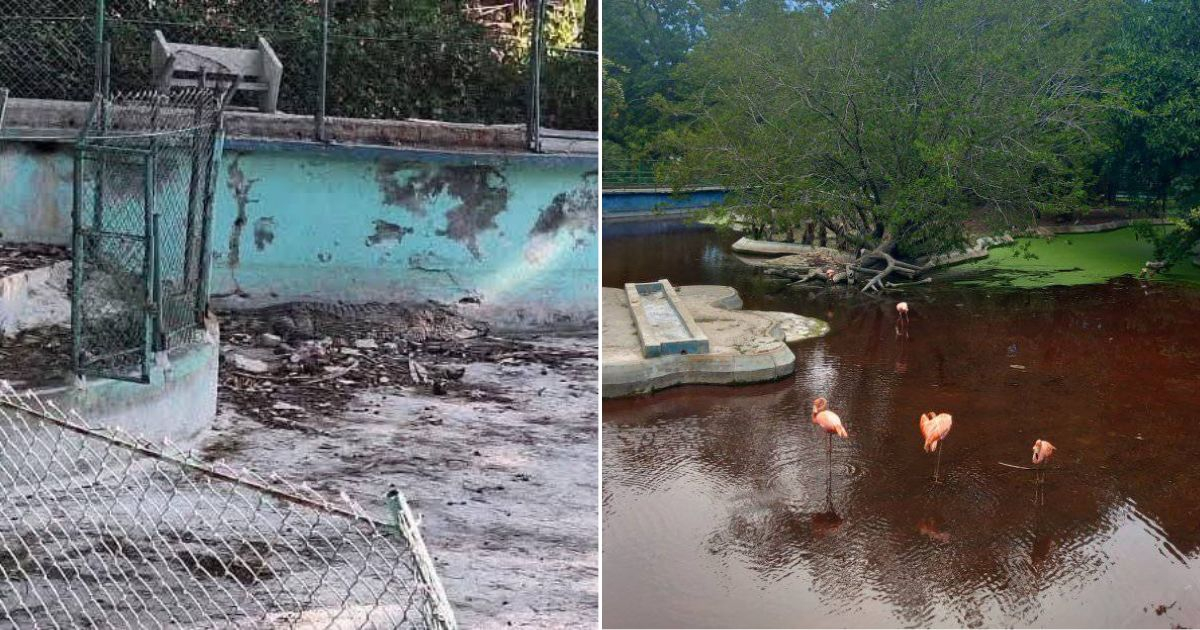
The decay of public spaces in Cuba is as visible as it is inevitable: overgrown weeds, rusted facilities, scarce services, and unaffordable prices. Yet, for some state-affiliated journalists, this devastation still comes as a surprise. In a recent article published in the newspaper Juventud Rebelde, reporter Yuniel Labacena Romero expressed his shock after visiting the Zoo of 26 and the Forest Park, also known as the Dinosaur Park, both located in Havana.
Labacena described finding broken equipment, empty cages, peeling structures, and grass growing "up to the chest," all contributing to an atmosphere of neglect. This stood in stark contrast to the laughter of children who, despite everything, sought enjoyment. The journalist lamented that recreational spaces, especially those meant for children and teenagers, have "lost their charm" and now exemplify a deterioration that goes "beyond the material."
To illustrate the extent of the disaster, he noted that the once-famous dinosaurs appear to have suffered "a cataclysm, not exactly of natural origin," and that the trees that used to produce sounds now only convey neglect and frustration. Beyond the physical state of the parks, Labacena also pointed out the lack of affordable consumer options, highlighting a market dominated by private entities with exorbitant prices and no quality assurances.
"Who is responsible for demanding better customer service and reasonable pricing?" he questioned, suggesting a lack of coordination between the state sector and new private actors. The journalist acknowledged Cuba's "extremely difficult" economic situation, attributing it to the U.S. embargo, though he admitted that this does not excuse negligence and lack of care.
Nonetheless, his "discovery" of the parks' and zoos' neglect astonished many readers, who have long been accustomed to living amidst collapses, blackouts, inflation, and dilapidated public services. While the official press speaks of resignation and the need to maintain "passion and will" to restore these spaces, the sentiment on the streets is different. Parks in Cuba are not merely a reflection of poor maintenance but also a symbol of a state incapable of providing the most basic needs.
The journalist's astonishment at the silent dinosaurs and empty cages seems to have come too late: ruin is no longer news; it is routine.
Understanding the Decay of Public Spaces in Cuba
What are the main issues facing public spaces in Cuba?
Public spaces in Cuba suffer from overgrown vegetation, rusted and broken facilities, scarce services, and unaffordable prices. The lack of maintenance and investment has led to a significant decline in their condition.
Why is the journalist's surprise significant?
The journalist's surprise is significant because it highlights a disconnect between state-affiliated media and the everyday reality faced by Cubans who are accustomed to living amidst deteriorating infrastructure and public services.
How do private entities impact the situation?
Private entities dominate the market with high prices and no quality guarantees, making it difficult for many Cubans to access affordable services and goods, further exacerbating the challenges faced in public spaces.