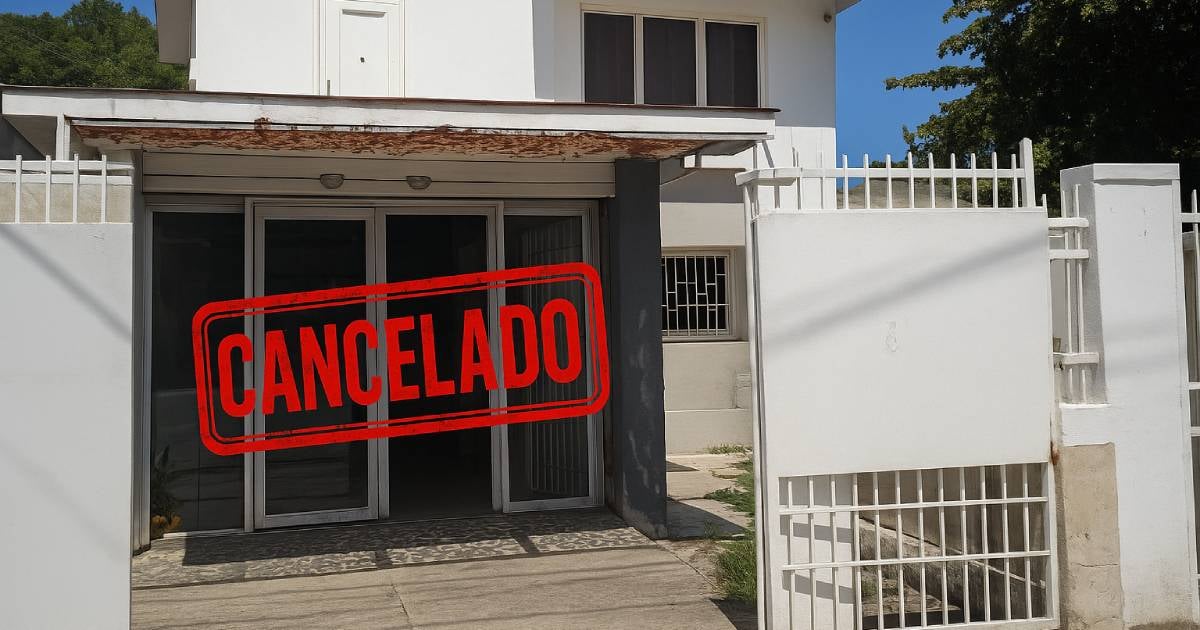
A private store located in the Diez de Octubre municipality of Havana faced closure after state inspectors uncovered alleged irregularities. This action underscores the regime's ongoing campaign against the non-state sector, which is increasingly burdened by stringent controls, hefty fines, and threats of shutdowns.
As reported by the state-run Tribuna de La Habana, the Provincial Directorate of Commerce dispatched inspectors to the Todotuti store, situated at Finlay 910 between Gestrudis and Lagueruela. This intervention followed a complaint from a resident about the store's refusal to accept payments via bank transfer—a common practice among private businesses due to distrust in the Cuban banking system and the complications associated with using the Fiscal Bank Account (CBF).
During the inspection, officials noted not only the refusal to accept transfers but also pricing violations. For instance, chicken was being sold at 350 pesos per pound, exceeding the official price of 312, and expired products like jam and sorbet were on sale. An employee was fined 30,000 pesos, and the store was ordered to close for seven days, facing potential charges of "disobedience" if the order was not followed.
The situation drew additional attention as the store owner resides in the United States and reportedly failed to present a health license or fiscal documents. Carlos Alberto Suárez Leyva, head of Non-State Management Forms at the Provincial Directorate of Commerce, told Tribuna de La Habana that inspections would continue to "ensure compliance with the legislation and guidelines," vowing to act "firmly" against any violations under the guise of promoting a "fair and transparent trading environment for the benefit of the people."
The closure of Todotuti is part of a broader government crackdown on private businesses. Just weeks earlier, the National Tax Administration Office (ONAT) issued a public warning that establishments evading taxes through personal accounts or refusing transfer payments would face closures, fines, and accusations of tax evasion, deemed a "crime" by the regime.
This crackdown also targets pricing. In 2024, the Cuban government imposed over 600 million pesos in fines on private businesses accused of violating price caps, in an effort to curb inflation through economic repression. Although these operations are framed as consumer protection, in practice, they intensify the pressure on a private sector crucial to the daily consumption of Cubans amid rampant inflation, chronic shortages, and a partially dollarized economy.
Understanding the Impact of Cuba's Crackdown on Private Businesses
Why was the Todotuti store in Havana closed?
The Todotuti store was closed following a state inspection that revealed alleged irregularities, including refusal to accept bank transfers, price violations, and sale of expired products.
How does the Cuban regime justify its actions against private businesses?
The Cuban regime claims that these actions are necessary to ensure a "fair and transparent trading environment" and to protect consumers, though they are also seen as efforts to tighten control over the private sector.
What penalties do private businesses in Cuba face for non-compliance?
Private businesses in Cuba can face closures, hefty fines, and accusations of tax evasion for non-compliance with state regulations, including failure to adhere to price caps and tax evasion.