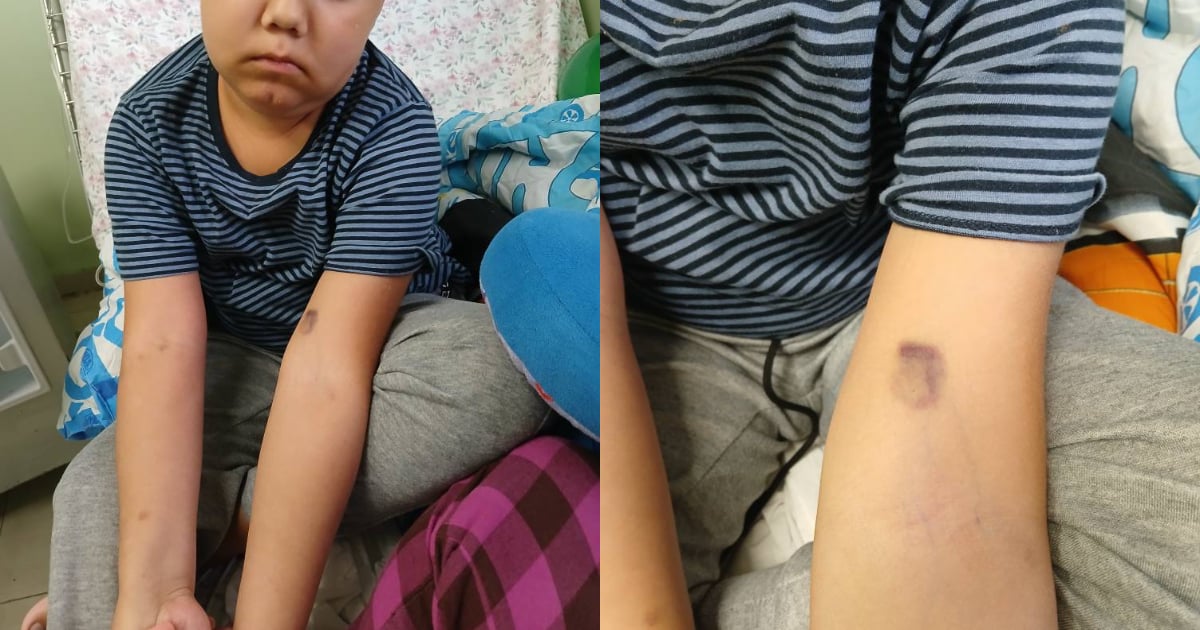
In a devastating turn of events, the family of Jorgito Reina Llerena received heartbreaking news. After a year-long wait, the United States Citizenship and Immigration Services (USCIS) has declined the humanitarian visa needed by this eight-year-old Cuban boy suffering from leukemia. This visa would have allowed him to leave Cuba, reunite with his father in Florida, and undergo a crucial bone marrow transplant unavailable on the island.
Back in 2024, Jorgito's father, Jorge Pastor Reina Pallarols, reached out to then-Senator Marco Rubio. Rubio, who is now the U.S. Secretary of State and interim advisor for the Department of Homeland Security (DHS), worked to ensure that USCIS would prioritize Jorgito's case. Despite the Cuban authorities addressing the situation on state television following Rubio's intervention, no resolution has been reached. Jorgito continues to battle cancer without the bone marrow transplant he desperately needs, and USCIS has not expedited the case as promised.
Within two weeks of Rubio's involvement, the family received a response from Immigration, accessed by CiberCuba, stating that Jorgito's case was marked "priority" and was under review. However, it was clarified that this did not guarantee immediate approval of the humanitarian visa, only that the case would be prioritized, which ultimately did not happen.
Under normal circumstances, the family would have expected a response from USCIS by March 2025. Instead, they received a decision this summer, significantly delayed beyond legal timelines and even later than non-priority cases.
Despite his father raising funds through Give a Hand for Jorgito's treatment at Nicklaus Children Hospital, which agreed to perform the necessary bone marrow transplant, the child remains in Cuba without a visa. In 2023, the family was also denied a tourist visa for Jorgito. The inability to transport him to the U.S. for treatment leaves the cancer unchecked. American authorities now demand proof that the bone marrow transplant cannot be performed in Cuba—an almost impossible task in a country where public healthcare has not been prioritized for years.
The ultimate irony would be if the Cuban Ministry of Public Health provided written confirmation that treatment is unavailable on the island, only for USCIS to remain unmoved. Jorgito continues to wait for the life-saving therapy he needs. Diagnosed with Acute Lymphoblastic Leukemia in January 2019, Jorgito has undergone chemotherapy and his Miami-based family has continuously sent necessary medications and medical supplies.
The child suffers from immunosuppression and experienced a relapse with testicular cancer, resulting in the removal of one testicle. Subsequent biopsies, lumbar punctures, and more chemotherapy were administered, but he relapsed again, this time in his remaining testicle. Over a year ago, a bone marrow transplant was identified as the only viable option.
FAQs on Jorgito's Situation and U.S. Visa Denial
Why was Jorgito's humanitarian visa denied by the U.S.?
USCIS has declined Jorgito's humanitarian visa despite his medical condition and the prioritization promised by Marco Rubio. The reasons for the denial have not been explicitly stated, adding to the family's frustration.
What efforts have been made to help Jorgito receive treatment?
Jorgito's father enlisted the help of Marco Rubio, who secured USCIS's commitment to prioritize the case. Additionally, the family raised funds for his treatment at Nicklaus Children Hospital, which agreed to perform the bone marrow transplant.
What are the current obstacles facing Jorgito's treatment?
The primary obstacle is the denial of the humanitarian visa needed for Jorgito to travel to the U.S. for treatment. Additionally, proving that the transplant cannot be performed in Cuba is challenging due to the state of the healthcare system there.