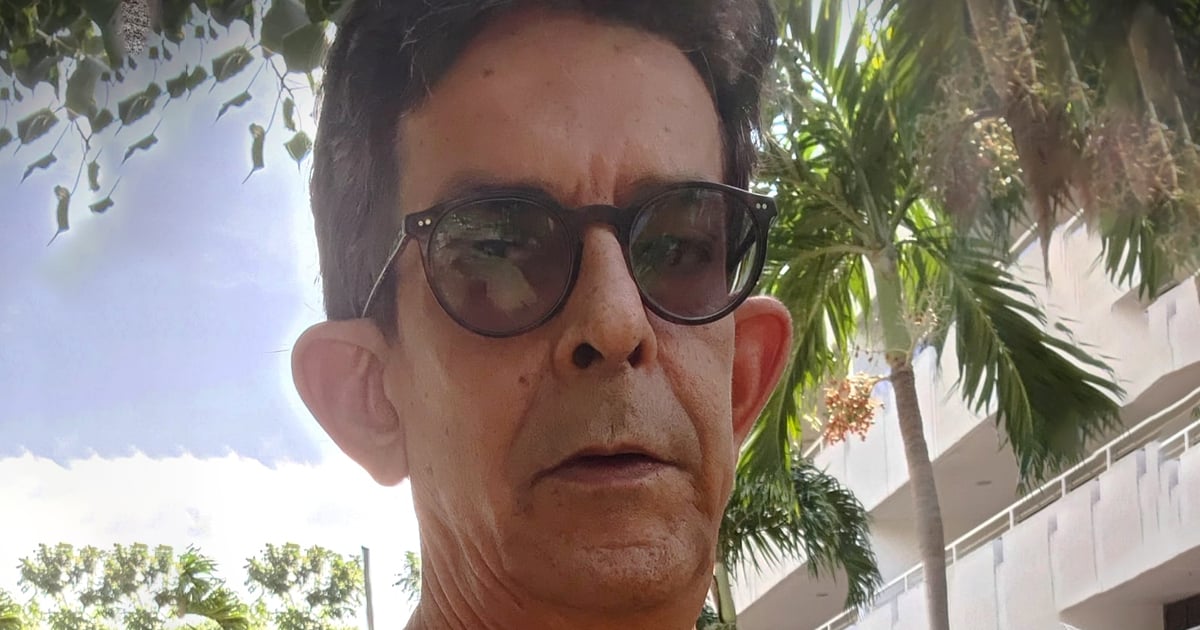
Cuban comedian Ulises Toirac has once again condemned the state's oppressive tactics following the recent forceful arrest of writer Jorge Fernández Era. The incident occurred as Fernández Era was heading to his monthly civic protest at Havana's Central Park. In a pointed and uncompromising message, Toirac highlighted the arbitrary nature of the arrest and praised Era's courage, describing him as "stubborn and brave" against a regime that "tolerates no dissent, independent thought, or civic honesty."
The Plight of "Fernández Era and the 18"
Toirac recounted how every 18th of the month, Era leaves his home and quietly sits by the José Martí monument. There are no slogans or disturbances; he first explains his motive on social media and then maintains a silent vigil. "They must be desperate for 'that crazy guy' to forget to show up…" Toirac quipped, pointing out how for several months now, he's been prevented from reaching his destination—often detained right from his doorstep and beaten.
Toirac shared a shocking episode: after enduring two beatings, an officer, "inflamed by his 'principles,'" allegedly asked Era to hit him back. For Toirac, this case illustrates the moral decay of those who, instead of upholding rights, violate them.
Legal and Constitutional Inconsistencies
From a legal standpoint, Toirac argued that there is no lawful basis to punish Era: his actions are expressions and thoughts protected under the Constitution, making it hard to "charge him… with one of the many laws that undermine 'the main law'." He also criticized the constitutional contradictions, calling it "the only Constitution in the world that, in its own text, indicates the supremacy of any law over itself."
The Arrest: A Display of State Power
Providing a detailed account, Jorge Fernández Era stated that he left his building at 2:10 p.m. and was stopped three blocks away by a police car with two officers (a man and a woman) and a State Security agent. Nearby, a lieutenant colonel was observing from a motorcycle. Using a supposed "routine ID check," they forced him into the car.
Fernández Era had intended to shout, "I am being illegally detained! I have committed no crime!" He was handcuffed and responded by loudly challenging his captors. He spent six and a half hours in detention, half of which was under the scorching sun in the police car. To endure, he sang the national anthem followed by songs by Silvio Rodríguez, Pablo Milanés, and Carlos Varela.
His left wrist sustained an injury from the handcuffs. Eventually, his ID was confiscated, and he was charged with resistance, facing another house arrest despite already being under one since April 2023. While some might find solace in the fact that he wasn't beaten this time, unlike the July 18 arrest, Fernández Era emphasized the gravity of the situation: the attempt to fabricate evidence, the sun exposure as torture, the disappearance of his ID, and the criminalization of his peaceful protest.
Toirac's Outcry: A Blow to the Regime's Image
Toirac sees any action against Era's peaceful intent as "a public (and shameless) declaration of repression against citizen rights." He contrasted Fernández Era's "intelligence" with the "intelligence" of those who only resort to violence and censorship, warning authorities to "change their approach… quickly because they're losing… with a zero on the scoreboard. Minus four, even." In late April, he had already condemned another violent arrest of Era, demanding an end to the "abuse of power and unjustified use of force."
The Broader Implications
The case of Jorge Fernández Era encapsulates the duality of systematic repression against a peaceful protest—silence, benches, signs—and the ethical response from a citizenry refusing to accept a state capable of fabricating charges, stealing identities, or bending medical practices for repression.
Toirac, one of Cuba's most respected comedians, not only supports Era but also exposes the moral defeat of a power that, unable to listen, resorts only to punishment. As Era faces new charges of "resistance" and doubled house arrest, his resolve to go to Central Park every 18th and recount everything suggests an ongoing struggle. Meanwhile, efforts to silence him reveal the regime's true aim: to punish the exercise of individual freedoms.
Should the regime continue to use force, it will further tarnish its narrative of social justice both in Cuba and globally.
Understanding the Repression in Cuba
Why was Jorge Fernández Era arrested?
Jorge Fernández Era was arrested for participating in a peaceful protest, which the authorities deemed as resistance. His actions are protected under the Cuban Constitution, but the regime often fabricates charges to suppress dissent.
What is Ulises Toirac's stance on the arrest?
Ulises Toirac has vocally criticized the state's oppressive actions, highlighting the lack of legal justification and condemning the moral decline of those who violate rights instead of protecting them.
How does the Cuban government justify these arrests?
The Cuban government often justifies such arrests under the guise of maintaining public order or security, but they are widely seen as attempts to stifle free speech and prevent political dissent.