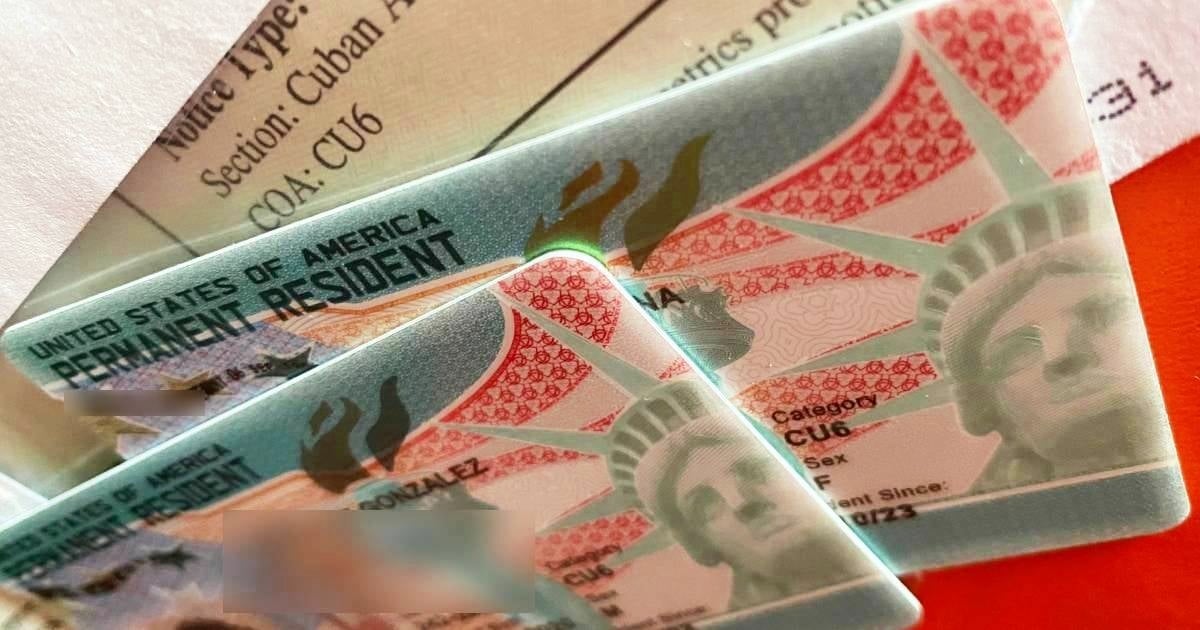
The United States Citizenship and Immigration Services (USCIS) revealed on Tuesday an update to its Policy Manual, tightening the criteria for evaluating immigration benefit applications in situations where officer discretion is necessary. The newly issued guidelines, available on the agency's website, specify that factors such as previous parole requests, connections to terrorist organizations, anti-American behavior, or anti-Semitic activities will be pivotal in deciding whether to approve or deny applications.
USCIS emphasized that any indication of anti-American sentiment will serve as an "overwhelmingly negative factor" during case evaluation.
Social Media Scrutiny Intensified
The agency also declared it would expand social media reviews to encompass a larger array of immigration applications, aiming to identify any anti-U.S. expressions or behaviors. This initiative takes immediate effect, impacting both current and future applications from the date of publication.
According to USCIS spokesperson Matthew Tragesser, "The benefits of the United States should not be granted to those who disdain the country and advocate anti-American ideologies. Immigration is a privilege, not a right."
Scope of the New Policy
The manual update also outlines guidelines for:
- Admissions or parole processes.
- Reviewing applications linked to the EB-5 investor program, particularly in cases of fraud, national security threats, or criminal misuse.
- Assessments where evidence of support for terrorist organizations or anti-Semitic ideologies exists.
USCIS reiterated that prior compliance with immigration laws would be a significant factor when deciding on a favorable outcome for an applicant. The guidance, found in Volume 1 of the Policy Manual, supersedes any previous instructions and now serves as the mandatory reference for all immigration officers.
Understanding Moral Character for Citizenship
Florida attorney Willy Allen recently clarified what USCIS considers "good moral character" for those seeking U.S. citizenship. In a conversation with CiberCuba, Allen explained that while much depends on the interviewing officer's judgment, factors such as traffic fines and debts—including tax obligations and child support—are crucial in determining an applicant's moral standing.
The federal agency overseeing the nation’s immigration system announced last Friday that officers should consider additional factors when granting U.S. citizenship to applicants, signaling a tightening of requirements to establish "good moral character."
Allen pointed out that, "If you are a man living in the United States before turning 28, you must register for the Selective Service, even though it doesn't currently exist. In an emergency, it might be required. You need to visit your local post office and register for the draft. If you are under 28, do it, as this could become an issue during your citizenship application."
He continued, "If you owe money to the IRS (Internal Revenue Service), remember, the IRS is like a deity. It's the only letter I fear. Owing the IRS is evidence of poor moral conduct. Similarly, if you owe child support, even if your children are in Cuba, France, or Belgium, it’s another sign of poor moral character. Owing money to an ex-spouse also reflects poorly."
Allen recounted a story about a truck driver who accumulated traffic fines across different counties in Florida and states over five years. The officer determined that the number of fines indicated disregard for U.S. traffic laws, evidencing poor moral character. He noted, "Even an arrest—though dismissed—can indicate poor moral conduct. Shoplifting, a minor offense not leading to deportation, still demonstrates poor moral character and could result in a citizenship denial."
Additionally, Allen mentioned, "You need at least five years of separation from such offenses before obtaining citizenship, which could become stricter. Being a former member of the Communist Party requires a ten-year separation before becoming an American citizen."
He also advised that while the citizenship test isn’t particularly complex, requiring only basic conversational English, it may become more challenging. "They are adding 28 more questions, slightly more difficult. However, the test isn't surprising if you prepare. You have the questions and answers beforehand. If you study properly, you'll pass," Allen reassured.
Allen suggested to his clients, "Currently, there are 100 questions. They will select ten, with one requiring you to read and write in English. If you practice by writing ten questions and answers daily, your mind will retain them. If you're from Arriete, maybe just once or twice, but for the rest of Cuba, perhaps 30 to 40 times. Consistency in preparation is key."
"Citizenship isn't rocket science," Allen concluded. "It's about understanding the rules and applying them to each case. For the citizenship test, you need to answer questions in English."
FAQs on USCIS Policy Changes and Citizenship Requirements
What are the new factors USCIS will consider in immigration applications?
USCIS will now consider anti-American and anti-Semitic behaviors, previous parole requests, and connections to terrorist organizations when evaluating immigration benefits.
How will social media be used in USCIS applications?
Social media will be reviewed more extensively to detect any anti-U.S. expressions or behaviors across a broader range of immigration applications.
What does USCIS consider as "good moral character" for citizenship?
Factors influencing "good moral character" include traffic fines, tax debts, child support obligations, and any criminal behavior, even if minor or dismissed.
Are there new requirements for the U.S. citizenship test?
The citizenship test may become slightly more challenging, with an additional 28 questions, but it remains straightforward if applicants prepare adequately.