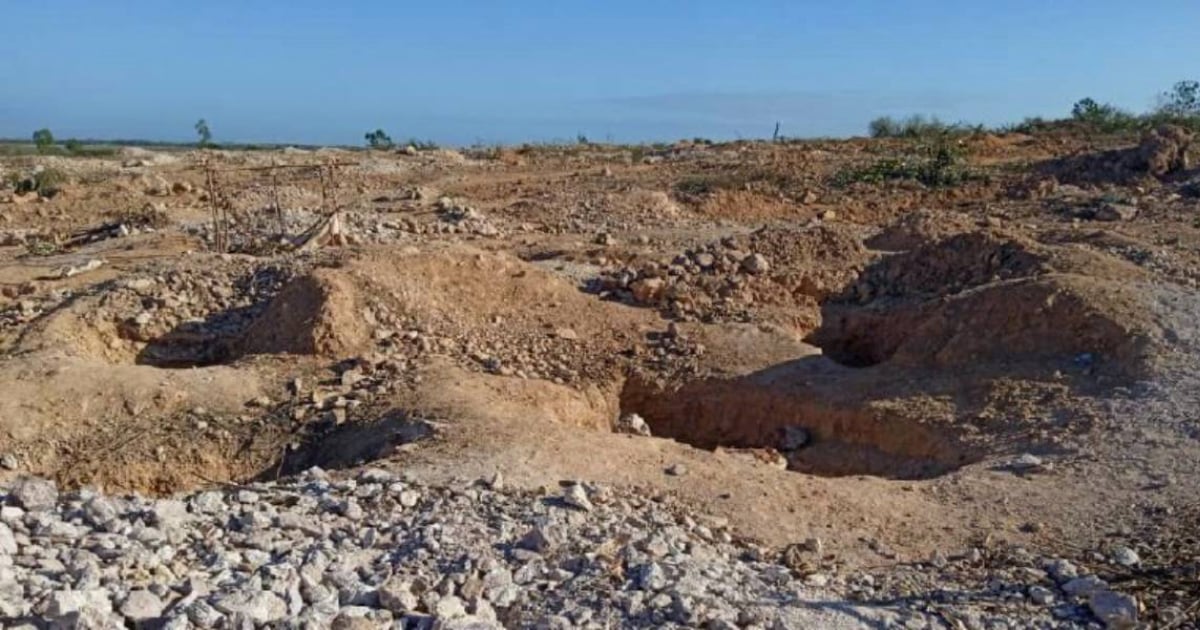
An individual was caught red-handed on his property in the El 45 neighborhood, Jobabo municipality, Las Tunas, while utilizing a makeshift "trommel," a rudimentary mill employed to extract gold from illegally sourced soil. This incident was highlighted by the pro-government outlet Claridad Tunera, which reported that the man was in the midst of processing the material when law enforcement arrived.
The report sarcastically noted that the soil appeared on the farm "as if by magic," hinting at its unlawful origin. This intervention is part of ongoing efforts in Las Tunas to combat illegal mining, a practice notorious for causing significant environmental harm and drawing increasing scrutiny from local authorities in recent months.
What the state-aligned source failed to address is the desperate economic situation in Cuba, worsened by the current regime, which drives individuals to engage in such activities to secure some form of financial relief. Although the detainee's identity has not been disclosed, it has been confirmed that the judicial system will now handle the case.
The official account described the incident as merely "a link" in a broader chain of illegal mineral extraction and trade operations in the province. Illegal mining remains a persistent issue in Cuba's eastern regions, impacting not only the natural environment but also intertwining with underground economic networks that undermine state resource control, subsequently affecting the regime's finances.
A few months ago, law enforcement in Jobabo arrested eight individuals accused of illegal gold dust extraction and trafficking. The Provincial Government of the People's Power of Las Tunas announced on Facebook that this operation was conducted by investigative and interior order forces, following public complaints and inspections by government and Party officials.
In March, Santa Clara police dismantled an unauthorized mining camp located at kilometer 7 of Maleza Road, highlighting the issue's prevalence in various Cuban provinces. According to pro-government spokesperson Henry Omar Pérez's Facebook post, the operation led to the arrest of two individuals and the seizure of equipment and tools used for gold and mineral extraction, including a mill.
A year prior, around thirty individuals faced legal proceedings in Camagüey for involvement in nine cases of illegal mining, as reported by Cubadebate, citing the Provincial Popular Court Presidency. Additionally, in March, Cuba's Customs thwarted an attempt to smuggle two kilograms of gold in four bars hidden in luggage at Havana's José Martí International Airport.
Understanding the Impact of Illegal Mining in Cuba
What are the environmental consequences of illegal mining in Cuba?
Illegal mining in Cuba causes severe environmental damage by degrading natural habitats, polluting water sources, and contributing to soil erosion. These activities often occur without any regulatory oversight, exacerbating their negative impact.
How does illegal mining affect Cuba's economy?
Illegal mining undermines the Cuban economy by creating black market circuits that evade state control, leading to a loss of valuable resources and revenue that could otherwise be directed toward the country's development.
Why do individuals resort to illegal mining in Cuba?
Many individuals in Cuba turn to illegal mining due to the severe economic crisis exacerbated by the current regime. With limited opportunities for legitimate income, people often resort to this practice as a means of financial survival.