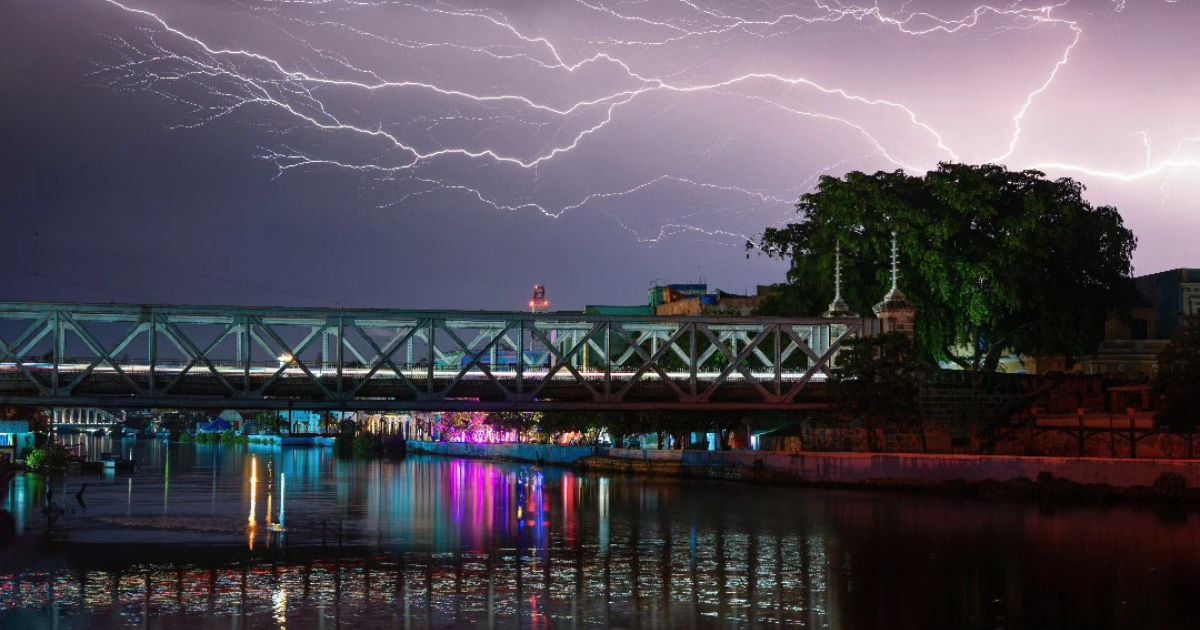
A recent study has unveiled a chilling reality: lightning storms have resulted in 1,892 fatalities in Cuba between 1987 and 2023, with an average of 51 deaths annually. This data was disclosed by Neobil Vega Batista, a Master of Science and head of the Department of Instrumental and Technological Development at the Institute of Geodesy and Astronomy (IGA), during an interview with the Cuban News Agency, as reported by the official newspaper Escambray.
Although there is a general trend towards a decline, Vega highlighted that the figures remain alarmingly high. In the 1990s, lightning storms claimed an average of 69 lives each year. This number decreased to about 56 annual deaths in the 2000s and 37 per year in the 2010s.
Mitigation Efforts and Economic Impact
Since 2024, Vega has been leading the Early Warning System project and studies related to vulnerabilities and disaster risks associated with lightning storms in Cuba. He emphasized that beyond the tragic loss of human life, the economic repercussions are substantial and hard to quantify, including equipment damage, halted operations, and the complexity involved in replacements.
In addition to the IGA, several institutions are actively involved in prevention programs, such as the Institute of Meteorology, University of Havana, Fire Department, Fire Protection Agency (APCI), and companies certified in lightning protection measures.
Five Basic Steps to Reduce Risk
The program advises five fundamental steps to mitigate risks: understanding the characteristics of lightning storms, identifying their proximity, assessing potential impact points and damages, and choosing safe locations for shelter.
Lightning: A Persistent Threat
Lightning, the most visible element of atmospheric electrical storms, can lead to fatalities, property loss, and technological disasters. It also significantly affects the atmospheric electric field during its formation and maturity cycle.
In June, following the tragic death of several children in the province of Artemisa due to a lightning strike, the official newspaper Invasor reiterated on social media a previously issued warning that lightning causes more deaths in Cuba than hurricanes.
According to a study by the Institute of Meteorology, from 1987 to 2017, lightning strikes resulted in an average of 54 deaths annually, with a total of 1,742 fatalities over three decades, as noted by expert Frank Fernández Castañeda. The provinces of Granma, Holguín, Camagüey, and Santiago de Cuba are the most affected, with mortality peaks in July, August, and June, which are months of heightened electrical activity.
Understanding the Impact of Lightning in Cuba
What is the average annual death toll from lightning in Cuba?
On average, Cuba experiences 51 lightning-related deaths each year according to recent studies.
Which regions in Cuba are most affected by lightning strikes?
The provinces of Granma, Holguín, Camagüey, and Santiago de Cuba are the most affected by lightning strikes.
How do lightning storms economically impact Cuba?
Lightning storms cause significant economic losses due to equipment damage, process disruptions, and the challenges of replacements.