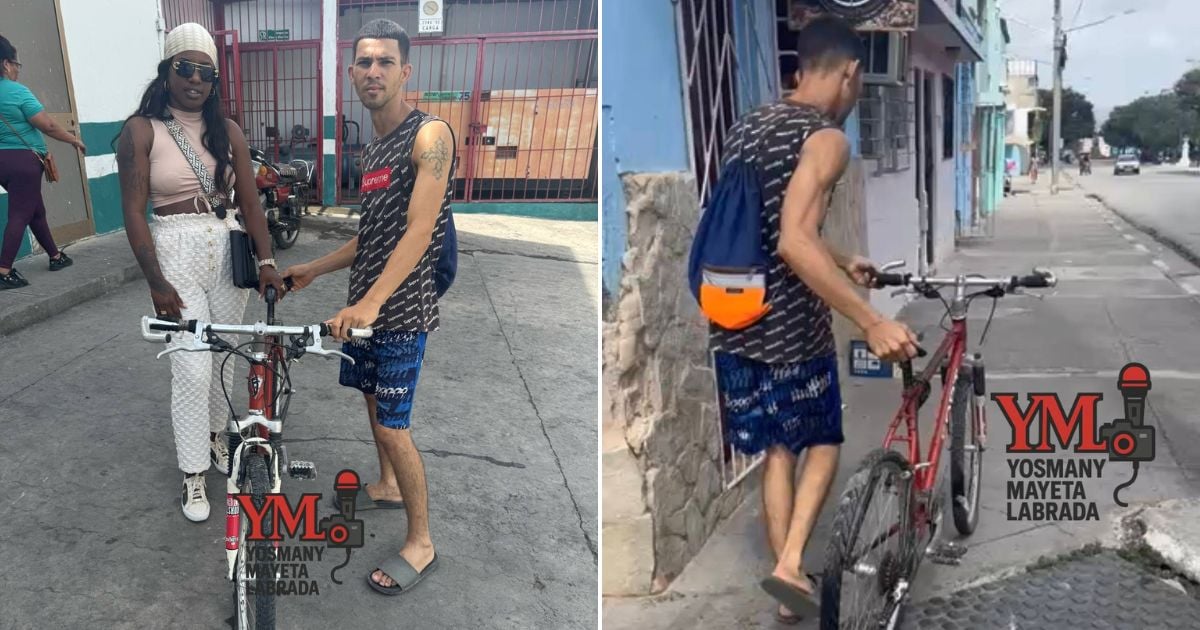
Amidst the economic turmoil and rising crime impacting Cubans, a touching act of generosity in Santiago de Cuba has rekindled hope for a humble family and moved an entire community. Independent journalist Yosmany Mayeta shared on Facebook the story of Odelkis Baró Mustelier, a 30-year-old woman who chose to give a bicycle to Yoeldis Zayas Suárez, a father from the Altamira neighborhood, after it became public knowledge that his own had been stolen from within the church where he also lives.
Zayas relied on the bicycle as his sole mode of transport and tool for work, delivering bread in the early hours to sell and ensure food for his two young daughters. Unfortunately, on Monday, he reported that unknown individuals broke into the church and took the bicycle, which was already loaded with a box of bread ready for the day. "I suspect it might have been neighbors, but I can't say who," commented the victim, even offering a financial reward for its return.
This theft not only deprived the father of his livelihood but also stirred outrage among Altamira residents, shocked that such an incident could happen within a religious space, widely seen as a safe haven. Many locals voiced concerns over the increasing thefts in the city, and the authorities' lack of action, which they feel fosters a climate of impunity and leaves citizens unprotected.
Community Resilience Through Acts of Kindness
The narrative took an unexpected turn when Odelkis Baró, moved by the story circulating on social media, chose to donate her own bicycle to Zayas. "I grew up very poor, with my mother selling candies and peanuts at parties to support me and my sister. This young man reminded me of my mother, honestly struggling to put food on the table. I don't want those girls to go hungry just because their father doesn't have a bicycle to sell bread," she shared when handing over the bike.
Odelkis’s gesture not only met an immediate material need but also imparted a valuable lesson to the community. "Today I can help; tomorrow maybe that very boy will lend me a hand. We should help from the heart, without expecting anything in return. Money isn't worth more than good deeds and a clean heart," she expressed.
The Power of Solidarity in Difficult Times
In a nation where most families scrape by on the bare minimum and money often takes precedence, this act of selflessness was seen as a profound reminder. "Let this be a teaching moment for us Cubans. Let’s not harm each other. Help your friend, help your neighbor if they need it. In unity lies strength. Actions speak louder than anything," emphasized Odelkis, who also received blessings from those who heard her story.
Thanks to her generosity, Yoeldis Zayas can continue working to support his daughters. For the community, this incident serves as a testament that empathy and solidarity persist in Cuba, even during the toughest times.
Examples of Generosity Across Cuba
Such community support gestures are echoed throughout the country. A few weeks ago, a child cleaning car windshields in Havana was gifted a bicycle, not only easing his daily travels but also serving as a beacon of hope for his family. Months earlier in Camagüey, residents gifted another bicycle to a child selling tamales to aid his household, showcasing how solidarity emerges even in the harshest conditions.
Similarly, in Sancti Spíritus, an activist turned a gift into a message of hope, underscoring that despite the crisis, there are still Cubans willing to share the little they have. These instances, alongside the gesture in Santiago de Cuba, illustrate that solidarity remains a fundamental value amidst the scarcity, insecurity, and economic challenges that define everyday life on the island.
Community Generosity and Its Impact in Cuba
How did the theft of the bicycle affect Yoeldis Zayas Suárez?
The theft left Yoeldis Zayas Suárez without his sole means of transportation and work, preventing him from delivering and selling bread to support his daughters.
What motivated Odelkis Baró Mustelier to donate her bicycle?
Odelkis Baró Mustelier was inspired by her own experiences of poverty and her mother's struggles, and she wanted to help ensure Zayas's daughters would not go hungry.
What broader message did the community take from this act of generosity?
The community was reminded of the importance of unity, helping each other, and the value of good deeds over material wealth.