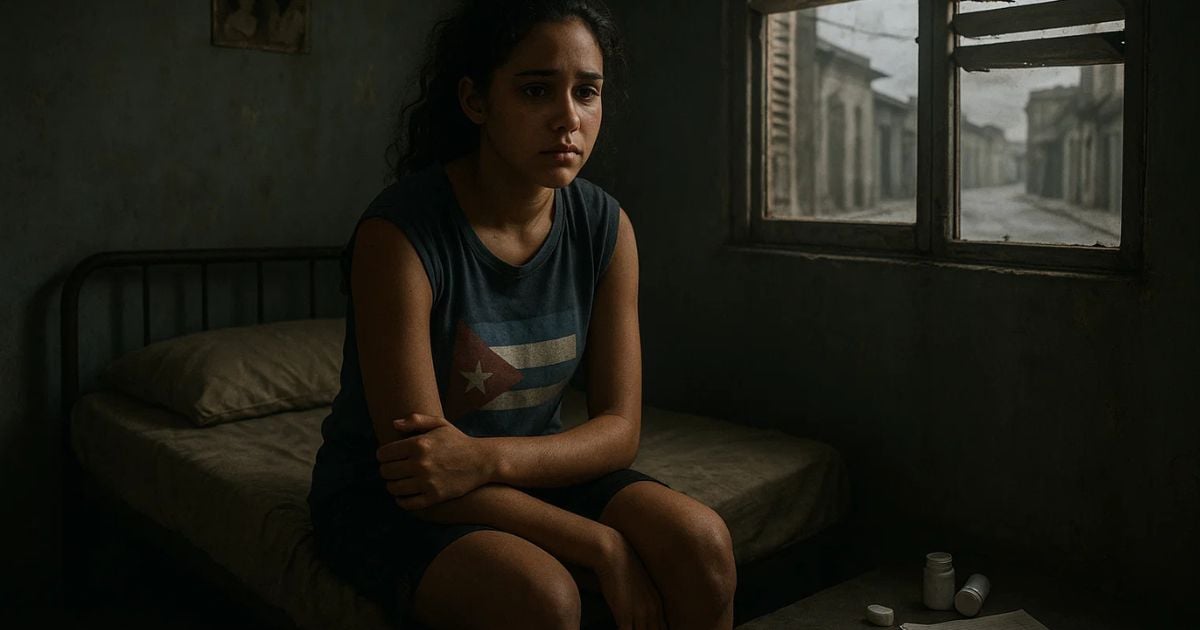
A feminist platform, Alas Tensas, has published a thought-provoking piece by sociologist Irela Casañas, highlighting an alarming rise in teen suicides in Holguín province. The article points to family exodus and drug consumption as major contributors to the worsening mental health of the region's youth.
The report shares the harrowing story of "Claudia," a 14-year-old who attempted suicide twice after her parents emigrated to the United States. Left in the care of her grandparents and aunts, Claudia's life was marred by feelings of abandonment and lack of support. Although she survived, her experience underscores the vulnerability faced by many teenagers in Holguín.
The investigation also recounts the struggles of "Alejandro," a 16-year-old who became heavily addicted to marijuana, easily accessible in his school and social environment. With debts piling up and threats looming, he attempted to take his own life in February 2024. His story highlights warnings from experts: that drug availability and insufficient family oversight are increasingly driving suicidal behavior among young people.
Rising Suicide Rates in Holguín
Statistics from the National Office of Statistics and Information (ONEI), referenced by Alas Tensas, reveal that suicide ranks as the fifth leading cause of death in Holguín. Between 2019 and 2023, 977 cases were reported in the province. Research cited in the article indicates that suicide attempt rates among Holguín adolescents exceed the national average and show a troubling upward trend.
This issue is part of a larger social crisis: mass migration has fragmented countless families on the island, leaving children and teens in the care of extended family members. Added to this are anxiety, uncertainty, and increased early access to drugs, exacerbated by drug trafficking routes along the eastern Cuban coastline, according to official sources.
Invisible Crisis of Teen Mental Health
The author further points out that underreporting obscures the issue, as many families choose to hide suicide attempts out of fear, shame, or ignorance, making it difficult to grasp the full scope of the problem. Through testimonies and data, Casañas' article sheds light on a silent crisis: the mental health of Cuban adolescents, impacted by isolation, addiction, and family disintegration—factors that continue to push many young people to the brink.
Wider Implications Across Cuba
Although alarming, this issue is neither new nor confined to Holguín. In 2023, Sancti Spíritus reported approximately 200 adolescents annually exhibiting suicidal behavior, as noted by health authorities in that Cuban province. Each year, patients aged 13 to 14 were admitted to the Child and Adolescent Psychiatry Service at the Provincial Pediatric Hospital José Martí Pérez, according to Dr. Conrado Ronaliet Álvarez Borges, a first-degree specialist in Child Psychiatry, in statements to the local state-run outlet Escambray.
Previously, in 2019, the Pan American Health Organization (PAHO) identified suicide as a leading cause of death among young people in Latin America, highlighting Cuba as one of the most affected nations. "The increase in suicide rates, for both genders, is particularly concerning in Argentina, Cuba, Honduras, Peru, Puerto Rico, and the Dominican Republic," the report noted.
In 2021, suicide was the tenth leading cause of death in Cuba and the third among those under 18, according to the Ministry of Public Health. Official data at the time showed a higher prevalence of suicide among males, while attempts were more common among females. The age group with the highest suicide mortality rate in 2021 was 20 to 59, with the provinces of Las Tunas, Holguín, Villa Clara, and Sancti Spíritus reporting the highest indices.
Understanding the Teen Suicide Crisis in Holguín
What factors are contributing to the rise in teen suicides in Holguín?
The increase is attributed to family exodus, leading to feelings of abandonment, and the easy access to drugs, which exacerbate mental health issues among teenagers.
How does the migration of families impact teenagers in Cuba?
The migration of family members often leaves teenagers in the care of extended relatives, resulting in a lack of support and increased feelings of loneliness and isolation.
Why is the issue of teen suicide underreported in Cuba?
Many families hide suicide attempts out of fear, shame, or ignorance, leading to underreporting and making it difficult to assess the real extent of the problem.