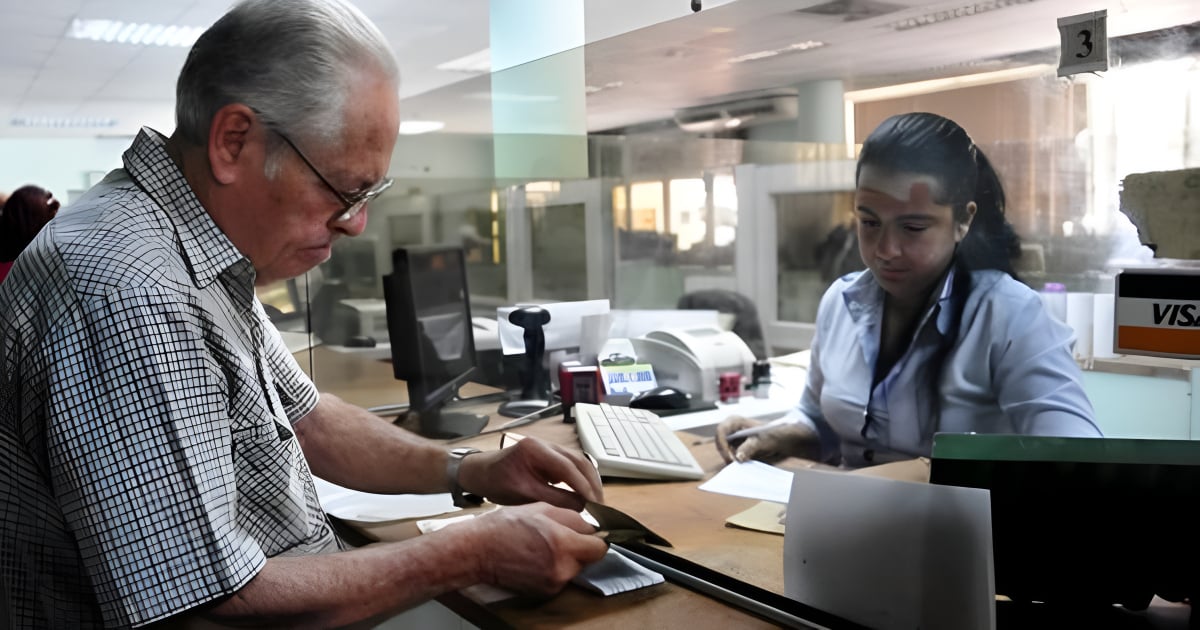
In mid-July, Cuba's government announced a pension increase aimed at benefiting over 1.3 million retirees starting in September. Prime Minister Manuel Marrero Cruz portrayed this initiative as a step to support the nation's most vulnerable. However, the reality of the exchange market turns this relief into an illusion. Just a month later, the U.S. dollar has soared beyond 400 Cuban pesos (CUP) in the informal market, setting a new record and diminishing the real value of pensions.
On July 15, when the announcement was made to the National Assembly by the government led by Miguel Díaz-Canel, the U.S. dollar was trading at approximately 385 CUP. Since then, its value has only continued to rise: closing July at 390, reaching 397 at the start of August, hitting a historic high of 400 CUP on August 12, and breaking past 402 pesos on August 19. In just one month, the peso depreciated over 4%, a rate that swiftly erases any nominal increase in pensions.
The reform stipulates that retirees with incomes up to 2,472 CUP will receive an increase of 1,528, while those earning more will have their pensions adjusted to a maximum of 4,000 pesos. Numerically, the minimum pension will double, but the maximum will not exceed this limit.
In practical terms, the difference is stark: previously, a retiree with a minimum pension of 1,528 CUP could purchase only 3.97 U.S. dollars on the informal market. After the reform, the pension will rise to 3,056 CUP, which currently equals 7.60 dollars. Although the purchasing power in dollars nearly doubles (a 91% increase), this temporary relief is destined to be short-lived if the devaluation trend persists.
A simple calculation highlights the dilemma: if the dollar continues to climb at the same rate as the previous month (about 18 CUP every 36 days), in roughly 22 months the purchasing power of retirees will revert to pre-increase levels. In other words, within less than two years, the government's proclaimed effort will be entirely nullified.
Foreign Minister Bruno Rodríguez Parrilla described the measure as emblematic of the so-called "revolutionary" policy of "leaving no one behind." Yet, the gap between this rhetoric and daily life widens: reports of elderly citizens claiming they "cannot eat three times a day" are abundant, and images of retirees scavenging through trash are increasingly common.
Economists summarize the situation with popular sayings: it's "bread for today and hunger for tomorrow," or worse, "plowing the sea." The pension hike is nullified by inflation and the partial dollarization of the economy.
The situation is even more appalling considering reports that the military conglomerate GAESA holds over 18 billion dollars in liquid assets. While the country's resources are concentrated in the hands of the ruling elite and massive investments are made in low-occupancy luxury hotels, the state barely provides pensions that fail to cover basic needs.
In practice, the "inviolable principle of leaving no one behind" is in question. The government continues to trumpet its accomplishments, but the market data and the daily experiences of millions of Cubans tell a different story: retirees are left behind, increasingly distant, trapped in the cycle of a devaluing currency and an economic model that normalizes poverty as part of the national landscape.
Impact of Currency Devaluation on Cuban Pensions
How has the dollar's rise affected Cuban pensions?
The increase in the dollar's value has significantly undermined the real value of pensions, despite the government's announced increases. As the dollar climbs, the purchasing power of retirees diminishes.
What was the government's intent with the pension increase?
The government intended to support the most vulnerable segments of society by increasing pensions, but the rapid devaluation of the peso has largely negated these efforts.
Why is the pension increase considered ineffective?
The pension increase is seen as ineffective because the continuous rise in the dollar's value erodes the real purchasing power, leaving retirees no better off than before the increase.