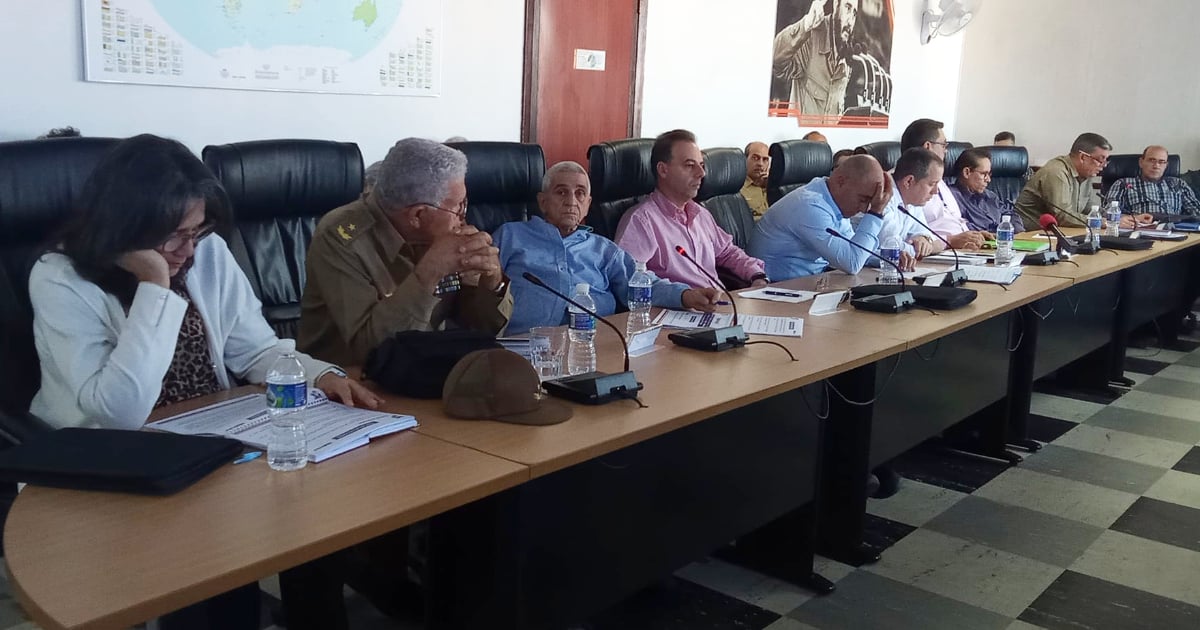
In May 2025, the Cuban regime assured its citizens that the summer blackouts would not exceed four hours daily per customer. This statement, made by the First Deputy Minister of Energy and Mines (MINEM), Argelio Jesús Abad Vigoa, was published on May 21 in Granma, the official newspaper of the Communist Party of Cuba. The aim was to alleviate social discontent just before the hottest months of the year.
The plan included increasing power generation by 13 GWh daily, restoring essential thermal units like Felton 2, Mariel 7, Nuevitas 4, and Renté 4, and curbing consumption growth. However, even the official data showed that available generation would be inadequate (1,120 MW against a demand exceeding 3,000 MW, even at night), yet the narrative of a "summer with only four-hour blackouts" persisted.
Extended Power Outages and Public Discontent
The reality on the ground was starkly different. Many residents experienced daily blackouts lasting over 12 hours, complicating food preparation, damaging appliances, and forcing families to sleep outside to escape the heat. Additionally, the National Electric System (SEN) faced total collapses and imbalanced power distribution among provinces, disproportionately affecting most Cubans, except those in Havana, who endured even longer outages.
The scarcity of liquefied gas pushed numerous households to rely on electric stoves, further straining demand spikes when power returned. Meanwhile, countless Cuban families turned to charcoal for cooking due to the lack of electricity and gas.
Government Backtracks Within Weeks
By May's end, the regime had already started to soften its stance. On May 27, just six days after their initial promise, the government adjusted its rhetoric. The official newspaper Trabajadores acknowledged that blackouts would persist through July and August due to an unresolvable structural deficit.
Lázaro Guerra Hernández, the Director of Electricity at MINEM, reported that available capacity would be a mere 1,935 MW compared to a potential demand of 3,500 MW. The shortfall of over 1,500 MW made it clear that longer blackouts were unavoidable. This early concession indicated that the four-hour blackout promise was untenable from the start. Nevertheless, the official narrative continued to speak of "improvements," "gradual strategies," and "intensive work" for weeks.
Official Admission of Failure
On July 19, during a plenary session of the National Assembly of People's Power, the Minister of Energy and Mines, Vicente de la O Levy, publicly confirmed what millions of Cubans already knew: the goal to reduce summer blackouts had not been met.
"We will return to the levels of disruption prior to the exit of the Antonio Guiteras thermoelectric plant," he declared. The plant, recently synchronized with the SEN, had raised hopes that quickly faded.
The minister attributed the failure to fuel shortages, high international costs, and accumulated technical issues. Yet, he offered no concrete timeline for recovery nor took responsibility for the broken promises. By June, some regions reported blackouts lasting up to 20 hours a day, exacerbating public frustration.
No Structural Solutions in Sight
By early August, the situation remained largely unchanged. While some plants like Guiteras, Felton 1, or Carlos Manuel de Céspedes (Cienfuegos) were operational, others were still offline or in urgent need of maintenance. Thermal generation continued to fall short, distributed generation hadn't met its targets, and while solar farms were expanding, they lacked the stability needed to support the system.
Meanwhile, the regime continued to push communicative strategies calling for "popular understanding" and promoting energy conservation, without addressing accountability or offering substantial solutions. The "gradual recovery strategy" touted since August 2022 was dissolving without providing any real relief to a crisis experts deem insurmountable without significant public investment.
The Hidden Wealth of GAESA Amidst Crisis
Amid this prolonged crisis, public outrage grows over the nation's resource management. Investigative reports and leaked documents have revealed that the military conglomerate GAESA—Grupo de Administración Empresarial S.A.—controls more than 18 billion dollars, resources not being invested in energy infrastructure or public relief.
With that money, 12 modern combined-cycle plants of 500 MW each could be constructed, covering the country's electrical demand. Alternatively, it could finance enough fuel purchases to ensure over 15 years of generation at the current rate.
Even a fraction of those funds—about 250 million annually—could stabilize the electric grid and drastically reduce blackouts, as stated by Vice Prime Minister Ramiro Valdés Menéndez in October 2021. However, the money remains immobilized or allocated elsewhere. In February 2025, as Cubans endured lengthy daily blackouts, the regime inaugurated the Torre K23 in Havana, a luxury hotel financed by GAESA consuming nearly 2 MW continuously. Its cost, estimated between 226 and 565 million dollars, could have funded repairs for several thermoelectric plants.
Economists like Pavel Vidal have criticized GAESA for functioning as a parallel central bank, receiving state budgets but not paying taxes, avoiding transparency, and operating outside civilian control. Instead of investing in energy, health, or food, its funds go to tourism mega-projects with no real impact on the average citizen's life.
A Political Blackout, Not Just an Electrical One
The timeline makes it clear: the regime made a promise on May 21, began backtracking on May 27, and acknowledged failure on July 19. This is not merely a technical crisis but a structural collapse exacerbated by political decisions prioritizing military and tourism interests over social welfare.
As long as hidden capital remains unmonitored and unredistributed, blackouts will not be just an energy issue. They will also be a symptom of a policy that dims the hope of the Cuban people every day.
Frequently Asked Questions about Cuba's Energy Crisis
What was the Cuban regime's promise regarding summer blackouts in 2025?
The Cuban regime promised that summer blackouts would not exceed four hours daily per customer.
Why did the government fail to meet the blackout reduction goal?
Factors such as fuel shortages, high international costs, and accumulated technical issues contributed to the government's failure to meet the blackout reduction goal.
How could GAESA's resources impact Cuba's energy crisis?
GAESA's resources, if allocated to energy infrastructure, could significantly alleviate Cuba's energy crisis by funding new power plants or ensuring long-term fuel supply.
What are the broader implications of Cuba's blackout crisis?
Cuba's blackout crisis symbolizes a broader political issue, reflecting structural failures and prioritization of military and tourism interests over public welfare.