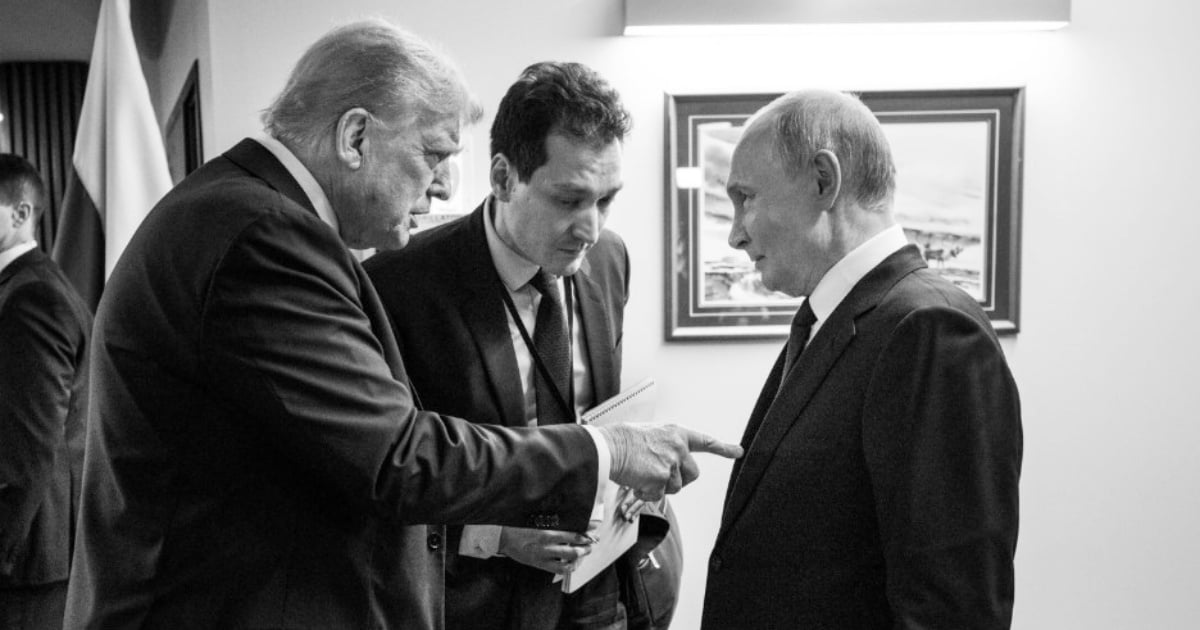
A surprising discovery of eight pages of official documents related to the summit between Trump and Putin was made by three guests at the Hotel Captain Cook in Anchorage, Alaska. The documents, left in a public printer, exposed potentially sensitive details on the same day the leaders met at Joint Base Elmendorf-Richardson, Friday, August 15. This incident adds another embarrassing chapter to the Trump administration, drawing renewed criticism for its handling of security protocols.
Unforeseen Diplomatic Repercussions
The broadcaster NPR, which uncovered the story, reported that the documents bore official seals from the State Department and the White House Chief of Protocol's Office. Though not classified, they contained sensitive information not meant for public consumption, including detailed schedules, meeting room names within the military base, phone numbers of both American and Russian officials, seating arrangements, and the protocol lunch menu in honor of Putin. One document referenced a planned gift: a bald eagle desk statue, the national bird of the U.S., to be presented "From the President of the United States to President Putin."
The White House quickly downplayed the significance of the find, dismissing it as merely a "multi-page lunch menu." However, this statement fueled more outrage among security experts and opposition lawmakers than it alleviated.
Insight into the Diplomatic Day
The retrieved documents provided a comprehensive map of the diplomatic activities:
- Meeting Itinerary: From private bilateral discussions to a joint press conference and an exclusive interview with Trump by Sean Hannity from Fox News. The press conference, scheduled for an hour between 3:30 and 4:30, was unexpectedly cut short after just 12 minutes.
- Delegation and Protocol: The documents listed names and phone numbers of three U.S. officials and thirteen representatives from the U.S. and Russia. For the Russian guests, there was even a phonetic pronunciation guide, including for Putin: “Mr. President POO-tihn.”
- Seating Plan for Lunch: Trump was to be flanked by Marco Rubio (Secretary of State), Pete Hegseth (Defense), Susie Wiles (Chief of Staff), Scott Bessent (Treasury), Howard Lutnick (Commerce), and Steve Witkoff (Peace Missions). Putin would be accompanied by his Foreign Minister, Sergey Lavrov, and other senior officials, including his foreign policy advisor, Yuri Ushakov.
- Protocol Menu: A three-course meal was planned, starting with a green salad with champagne vinaigrette, followed by a choice between filet mignon with brandy sauce or Olympia halibut with asparagus and mashed potatoes. Dessert was to be crème brûlée with ice cream. The lunch was ultimately canceled without an official public explanation.
From Downplaying to Severe Criticism
The White House and the State Department have minimized the incident, stating the documents contained no classified information nor posed a national security threat. Anna Kelly, deputy spokesperson for the administration, reiterated it was merely "a lunch menu," a stance echoed by Tommy Pigott from the State Department: “NPR is trying to turn a lunch menu into news. Ridiculous!”
However, academic and political voices rose sharply in response. Jon Michaels, a UCLA law professor specializing in national security, criticized the incident. “It’s yet another example of the administration’s negligence and incompetence. You don’t leave anything on the printer. It’s that simple,” he told the American press. Democratic Congressman Darren Soto was even more direct on social media, questioning, “How many more headlines are we going to read about the Trump administration’s incompetent security breaches?” Elliot A. Cohen, a former State Department advisor under the Bush administration, stated, “They lack processes. A well-organized bureaucracy doesn’t do these things.” While he acknowledged the documents did not appear to contain state secrets, he noted the issue lies in the repeated lack of professionalism.
A Pattern of Negligence: Previous Incidents
This episode is not isolated. In March, the Trump administration faced criticism for another leak: Secretary of Defense Pete Hegseth shared information about a bombing in Yemen through a Signal group chat, to which a journalist was accidentally added. The scandal, dubbed "Signalgate," led to the dismissal of National Security Advisor Mike Waltz. Additionally, the same week, ICE members mistakenly added a civilian to a group chat discussing the pursuit of a fugitive. These events highlight a troubling trend within the Trump-led governmental structure.
Diplomatic Context and Potential Implications
The summit aimed to advance a resolution to the conflict between Russia and Ukraine, now in its third year since the Russian invasion. Trump, who claimed “significant progress” following the meeting, also hinted at moving beyond a simple ceasefire to pursue a peace agreement directly. The Ukrainian response was mixed: President Volodymyr Zelensky announced a meeting with Trump in Washington, yet expressed concern over the apparent territorial concessions proposed by Putin.
While the White House attempts to downplay the Alaska incident, the leak of these documents reflects a recurring pattern of recklessness in handling sensitive information during the Trump administration.
Questions on the Trump-Putin Summit Document Leak
Why were the Trump-Putin summit documents found in a hotel?
The documents were left in a public printer at the Hotel Captain Cook in Anchorage, indicating a lapse in security protocol during the Trump administration.
What did the documents contain?
The documents contained sensitive but non-classified information such as schedules, contact details, seating arrangements, and menu details related to the Trump-Putin summit.
How did the administration respond to the document leak?
The administration downplayed the incident, describing the documents as a "lunch menu," but this response caused more outrage among experts and lawmakers.